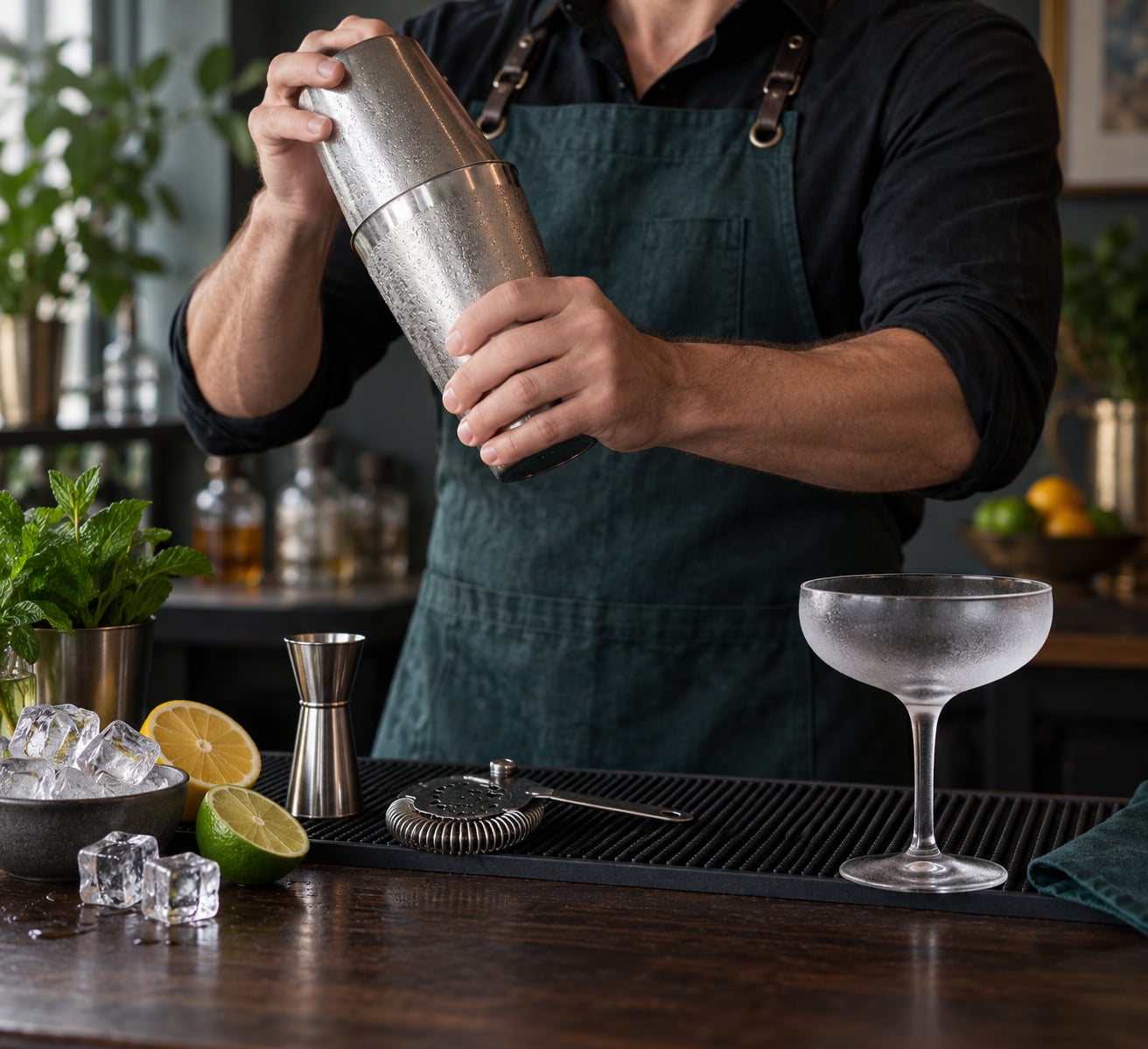
To shake a cocktail properly, add the liquid ingredients to a Boston shaker, fill it two-thirds to three-quarters full with fresh ice, seal it, and shake hard above shoulder level for 10 to 15 seconds using your arms and wrists. Then tap the joint, open it, and strain. That is the whole routine, and it takes under a minute once you have done it a few times.
The reason it matters is that shaking controls three things at once: how cold the drink ends up, how much water the ice gives up, and how much air gets folded into the liquid. Get the balance wrong and you get a warm, flat, watery drink that tastes like someone mixed it in a hurry.
You will also hear bartenders argue about the details. One r/bartenders regular puts it at “8-10 second shake for most drinks, and 15 seconds, with more force, for things that use dense ingredients like cream.” Another points out that in a tin, ice type matters less than people think because the liquid and ice reach an equilibrium quickly. Those are both reasonable, and I will flag where the disagreement sits rather than pretend there is one magic number.
Table of Contents
- What You Need
- Step-by-Step: How to Shake a Cocktail Properly
- Set Up the Shaker: Liquids First, Ice Second
- Seal the Shaker and Choose a Secure Grip
- Use Your Arms, Not Just Your Wrists
- Shake Until Cold and Properly Diluted
- Strain and Finish the Drink
- Common Mistakes to Fix as You Go
- How to Know When the Shake Is Right
- Tips for Different Kinds of Cocktails
- Common Mistakes
- Frequently Asked Questions
- How long should you shake a cocktail?
- What is the difference between a wet shake and a dry shake?
- Why do bartenders shake drinks above their head?
- Should I shake a martini or a Negroni?
- How do I open a shaker that will not come apart?
- Does it matter which ice I shake with?
- Conclusion
What You Need
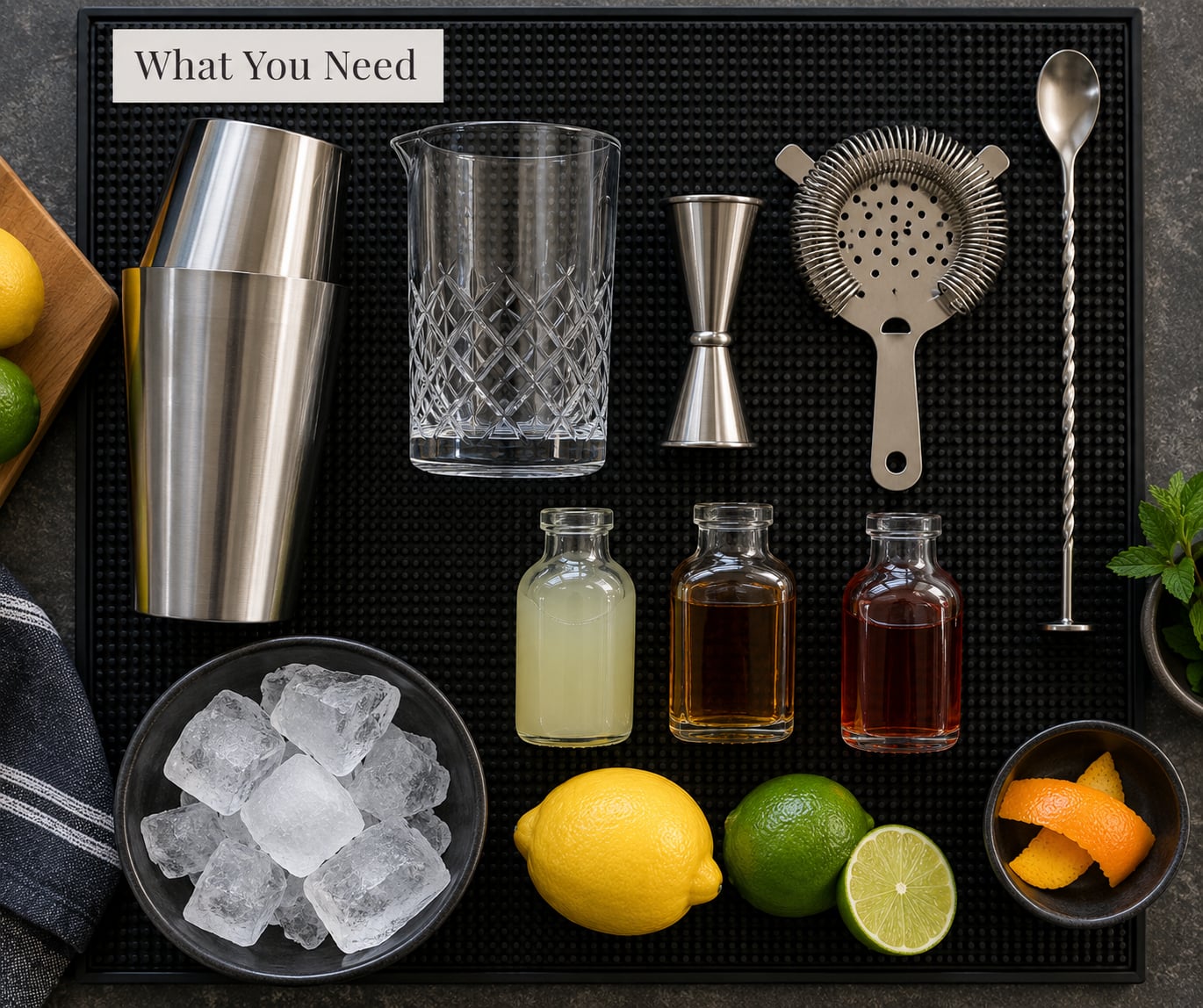
You can get a good shake with very little, but these are the pieces that make it repeatable.
- Boston shaker (two-piece tin set). The tin that holds ice and the smaller tin that goes on top. Buy weighted tins rather than plain sheet metal, because thin tins flex, leak and fatigue. This is the one piece worth spending money on.
- Hawthorne strainer. The perforated disc with a spring around it that sits inside the small tin. This is what separates the drink from the ice.
- Fine mesh strainer. Optional, but it catches pulp, seeds and ice chips that a Hawthorne lets through. Buy one if you make drinks with fresh citrus or muddled herbs.
- Jigger. A 1 oz / 0.5 oz jigger is enough. Measuring by eye is the single most common reason home drinks taste wrong, and it has nothing to do with shaking.
- Bar mat. A rubber mat catches drips, stops the tins from skating across the counter, and gives you a place to set the strainer down mid-drink.
- Fresh hard ice. Blocks or cubes made from clean water, kept in a sealed bin so they do not pick up odors. Bagged ice from a grocery freezer is wet and cloudy, which means it dilutes faster.
Tin-on-tin is the no-brand-name alternative to a Boston shaker and works identically. A cobbler shaker has a built-in strainer and a cap, which is convenient and easier to leak. A Parisian shaker is a two-piece pitcher with a lid, popular with beginner kits. None of them shake differently. The technique below works in any of them.
Before you start, chill your serving glass in the freezer, set out the Hawthorne strainer, and measure every ingredient into the small tin first. If you measure as you go, you will run out of ice before you finish the recipe.
Step-by-Step: How to Shake a Cocktail Properly
Set Up the Shaker: Liquids First, Ice Second
Pour the spirit, then the liqueur, then the citrus juice or other mixer, then the syrup, into the smaller tin. Order matters less than people think chemically, but spirits first means less chance of splashing syrup and citrus out of an empty tin.
Now add the ice. Fill the small tin roughly two-thirds to three-quarters full, leaving enough headroom that the larger tin seats without forcing. Under-filling is the most common error at home, and it shows up as a drink that is only half cold. Over-filling causes the seal to blow, which is a mess to clean at the counter.
Seal the Shaker and Choose a Secure Grip
Tap the large tin down onto the small one so it locks in a slight twist. It should feel like resistance, not a loose fit. Then check the seam: if you can see daylight between the tins, or the small tin wiggles free when you pull, the seal will fail mid-shake.
Hold the small tin in one hand and the base of the large tin in the other, and keep your hands close together. Some bartenders add a strip of kitchen paper around the joint as a gasket, which is a cheap fix when a tin no longer seals well.
Use Your Arms, Not Just Your Wrists
Hold the shaker where you would hold your hands to clap: elbows bent, roughly shoulder width apart, close to your chest. The force comes from your shoulders and upper arms driving short, sharp movements back and forth, with your wrists snapping at the end of each stroke to keep the ice moving.
Raise it to about shoulder height, parallel to your body, and shake. Working at chest height works too, but higher means gravity helps move the ice and you get more out of each stroke without needing to swing harder. Keep your hands pressed toward each other so the seal is held shut by compression the whole time.
Shake Until Cold and Properly Diluted
Ten to 15 seconds is the working range for most drinks. Simple three-ingredient sours like a Daiquiri sit at the short end. Drinks with cream, egg white, or dense syrups need closer to 15 seconds and more force.
Watch for three cues rather than the clock. Frost should spread across the outside of the tins. The ice should sound different, from loose rattling early on to a dense, sloshing rumble. And your grip hand should feel noticeably colder than it did when you started.
PUNCH ran a measured experiment on dilution, weighing daiquiris before and after shaking. Natasha David hit about 20 percent dilution at 10 seconds and around 33 percent by roughly 19 seconds, which is close to an ounce of water. Haley Traub came in just under 20 percent at 10 seconds. Ricky Agustin’s shaker added more than an ounce of water after just 10 seconds of unchecked shaking. That spread is the argument in one place: your shaker, your ice and your pace decide your dilution, which is why a stopwatch helps more than instinct.
Strain and Finish the Drink
Set the large tin down, tap the metal junction firmly with the heel of your hand, then twist the small tin to break the vacuum. That tap matters: the pressure difference inside a cold shaker creates enough suction that pulling the tins apart without knocking them can throw liquid across your counter.
Rest the Hawthorne strainer in the small tin and pour into your chilled glass. When a drink has citrus, fruit or herbs in it, push the whole contents through a fine strainer over the Hawthorne, a double strain, so no foam or sediment follows the liquid.
Serve with fresh ice. Never pour over the ice you shook with, which is already partly melted and diluted. If you want the glass cold, chill it in the freezer for ten minutes before straining into it.
Common Mistakes to Fix as You Go
Weak grip, wrist-only shaking, too little ice and a loose seal cause most of the bad shakes. Watch for the first signs: the seal starting to leak, the drink sounding thin rather than sloshing, or the tins staying warm and dry after 10 seconds. Any of those means stop and fix the setup rather than shaking harder for longer.
How to Know When the Shake Is Right
A properly shaken drink comes out visibly colder and slightly lighter in body than the same recipe stirred, because air is folded into the liquid. The surface of the tins is frosted. The strainer catches chips and pulp rather than letting them fall into the glass. And there is no loose foam on top unless you asked for foam.
Tips for Different Kinds of Cocktails
- Spirit-forward and stirred drinks. A Negroni or a Martini is stirred, not shaken. Shaking aerates spirit and dilutes it, which fights the intent.
- Sours. Daiquiri, Whiskey Sour, Margarita and Cosmo all take a standard wet shake of 10 to 15 seconds. Egg white drinks get the dry shake treatment below.
- Espresso Martini and anything with crema. Shake longer and harder, around 15 seconds, because the foam needs energy to build.
- Highballs. Shake only the spirit and citrus parts, then pour over fresh ice and top with the lengthener. Shaking the soda or ginger beer kills the bubbles.
- One large rock. r/bartenders threads discuss this often. A single dense cube survives a normal shake if you fill the rest of the tin with a handful of smaller cubes to stop it rattling against the tin wall. Tap the top down firmly so it sits at the bottom rather than at the joint, where impact cracks it.
- Egg white drinks. Dry shake first, with no ice, for about 10 seconds to whip the whites into foam. Then add ice and shake again for 15 seconds. Some bartenders do a reverse dry shake, adding a small splash of water to the dry foam first, then ice, which loosens a foam that refuses to emulsify. Forums.egullet users report leaks during dry shaking that trace back to a worn seal, so check the joint before you blame the technique.
Common Mistakes
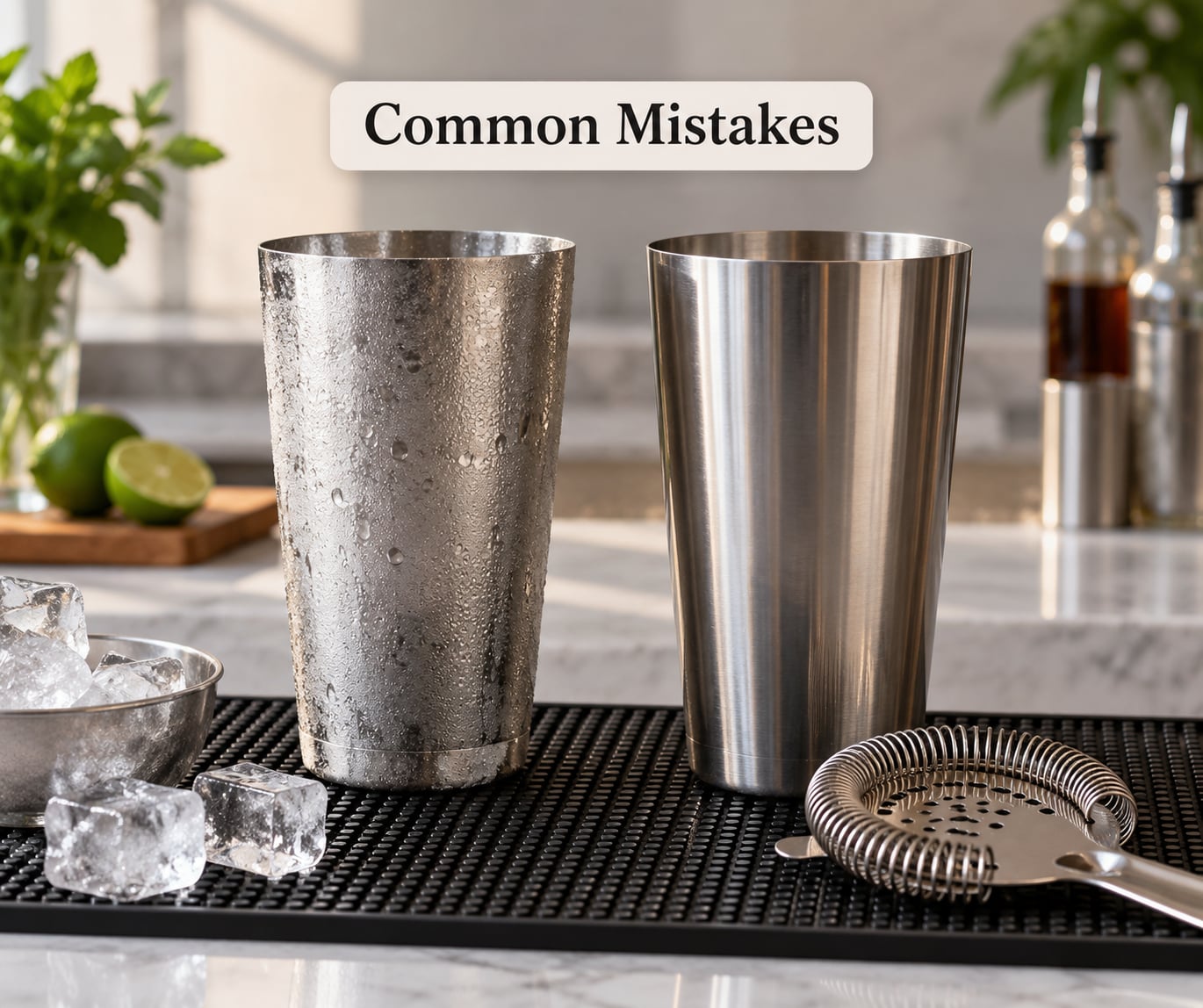
Here is the scannable version. Find your symptom, apply the fix, and try again.
- Too little ice in the shaker. The drink lands only half cold and tastes thin. Fix: fill the small tin two-thirds to three-quarters full.
- Shaking with the wrists only. The ice rattles but barely moves, so you get a weak chill and poor dilution. Fix: elbows bent, drive from the shoulders and upper arms for 10 to 15 seconds.
- Loose two-piece grip. Leaking, spilled drink, lost carbonation. Fix: keep both hands close and pushing toward each other for the whole shake.
- Ingredients added in the wrong order. Nothing serious, but a messy pour and uneven mixing. Fix: most watery liquid first, ice last.
- Overfilling the shaker. The seal blows off mid-shake. Fix: leave headroom for the top tin to seat.
- Under-shaking. A warm drink, a harsh spirit bite, foam that never forms. Fix: frost on the tins and a colder grip hand are your cues.
- Over-shaking. A watery drink, especially with bagged or soft ice. Fix: stop at 15 seconds unless you are making an egg white drink.
- Pulling the tins apart without tapping. The vacuum seal sprays liquid across the counter. Fix: tap the junction with the heel of your hand, then twist.
- Serving over the shaking ice. A flat drink that gets hotter fast. Fix: strain, then add fresh ice to the glass.
- Ice chips in the glass. A gritty texture and uneven dilution. Fix: double strain through a fine strainer.
One more habit worth building. Twice a week, put ice and water in a Boston shaker and shake for 15 seconds. You are not making a drink, you are training the motion so it feels controlled when you are also trying to pour two things at once. The tell that you have it is that the shaker is still quiet under your hands after it is done.
Frequently Asked Questions
How long should you shake a cocktail?
Most drinks need 10 to 15 seconds of hard shaking above shoulder level. Simple three-ingredient sours sit at the short end; drinks with cream, egg white or dense syrups need closer to 15 seconds and more force. Use the tin itself as the timer: when frost spreads across the outside and the sloshing turns into a dense rumble, stop. Shaking far longer mainly adds water.
What is the difference between a wet shake and a dry shake?
A wet shake includes ice, which chills and dilutes the drink while mixing it. A dry shake contains no ice, so it is used to whip egg white into a stable foam before any liquid ice is added. The standard order for an egg white sour is a 10 second dry shake, then ice goes in and the shaker gets another 15 seconds.
Why do bartenders shake drinks above their head?
Shaking higher means gravity moves the ice with more force, so you chill and dilute without needing a wilder swing. It also keeps the motion in a plane that will not swing into a guest standing across the bar, and it is easier to recover control if the seal lets go. At home, shoulder height is plenty. Higher is traditional, not required.
Should I shake a martini or a Negroni?
Neither one. Both are stirred drinks, and shaking aerates spirit, softens the texture and dilutes quickly, which works against what these cocktails are for. A dirty Martini served shaken is a deliberate departure, not an error. Rule of thumb: shake anything with citrus, juice, egg white, cream or syrup; stir anything built entirely on spirit and vermouth or bitters.
How do I open a shaker that will not come apart?
Set it down and tap the metal junction firmly with the heel of your hand, then twist the small tin in the direction that locks it. The tap breaks the vacuum created as the contents chilled. If it still will not budge, run the joint under warm water for ten seconds or rest it on a towel and press gently while twisting. Never force it, because the small tin can buckle.
Does it matter which ice I shake with?
Less than people expect in a tin, because the liquid and ice reach equilibrium quickly, as bartenders on r/bartenders and bar channels point out. It matters more for the serving glass and for drinks with dense ingredients. Fresh, dense, dry ice dilutes slowly and tastes cleaner; wet, cloudy bagged ice melts fast and flattens the drink in under a minute.
Conclusion
If you change one thing tonight, do this: fill a Boston shaker two-thirds full with fresh ice, seal it properly, hold it close with both hands, and shake hard above shoulder level for 10 to 15 seconds until the tins frost over. Then tap the joint, strain, and serve over new ice. That single routine is what separates a drink that tastes deliberate from one that tastes mixed.
Everything past that is refinement. Learn to read the frost instead of the clock, run the ice-and-water drill until the motion feels boring, and the rest takes care of itself. Updated for 2026.