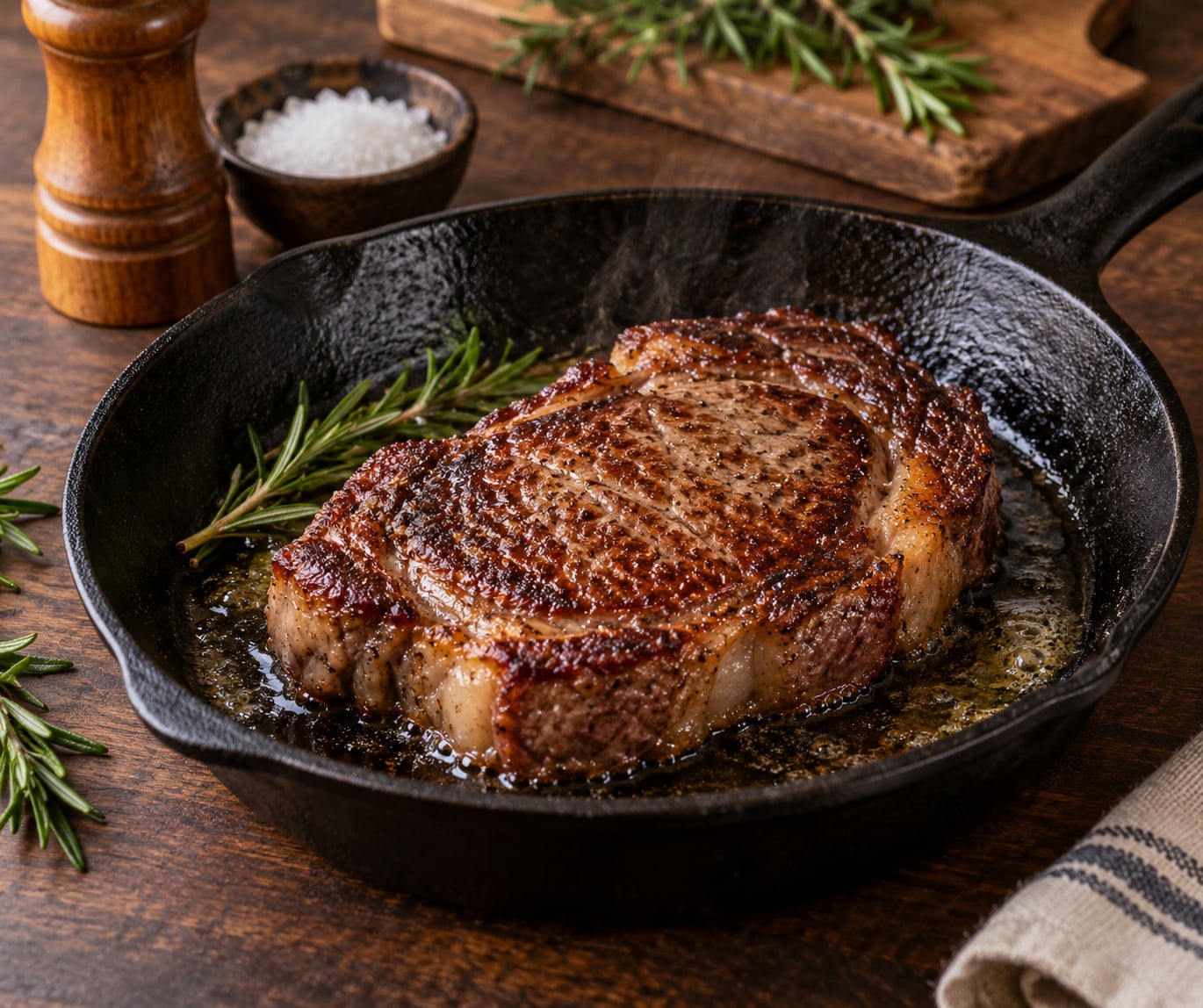
To cook a ribeye in a cast iron pan, give it about 3 to 4 minutes per side, then 5 to 10 minutes of rest. That works for a steak around 1.5 inches thick at medium-rare, and cast iron gives you the deep brown crust you cannot get in a thin nonstick pan.
Most steaks turn out badly for one of two reasons: the pan was not hot enough, or the cook guessed instead of checking. Both are easy to fix. Here is the method I use, with the timing and doneness cues so you stop guessing.
Table of Contents
- What You Need
- Step-by-Step: How to Cook a Ribeye in a Cast Iron Pan
- Step 1: Bring the steak to room temperature and dry the surface
- Step 2: Season the ribeye
- Step 3: Preheat the pan until it is smoking
- Step 4: Sear the first side without moving it
- Step 5: Cook to your preferred doneness
- Step 6: Baste with butter and aromatics
- Step 7: Rest the steak, then slice against the grain
- Pan sear or reverse sear?
- Common Mistakes
- Starting with a cold pan
- Overcrowding the pan
- Moving the steak too early
- Seasoning too late or too lightly
- Cooking the entire steak on low heat
- Skipping the rest
- Judging by color alone
- Frequently Asked Questions
- Do I need to season a cast iron pan before cooking a ribeye?
- Should I salt a ribeye before putting it in the pan?
- How long should I cook a ribeye in cast iron?
- Can I use butter in a cast iron pan when cooking steak?
- Should I cover a ribeye while cooking in cast iron?
- Conclusion
What You Need
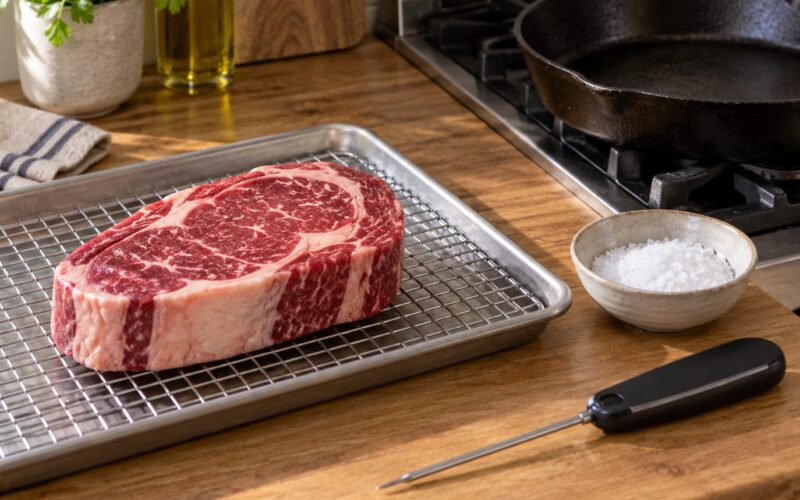
A ribeye between 1 and 2 inches thick. Thick enough to develop a crust, thin enough to finish on the stovetop without an oven. Bone-in has more fat and flavor but cooks unevenly along the edge, so boneless is easier for a first attempt.
You also need a cast iron skillet, a high smoke point oil such as avocado, canola, or grapeseed, coarse kosher salt, freshly ground black pepper, a pair of tongs, and an instant-read thermometer. The thermometer is the one tool people skip and then guess at.
A well-seasoned pan needs nothing before cooking. If your skillet is new or the seasoning looks patchy, wipe it with a thin film of oil, heat it until it just begins to smoke, wipe off the excess, and repeat. Two or three rounds of that give you a surface that releases a steak instead of tearing it.
Optional extras: unsalted butter, a couple of smashed garlic cloves, and a few rosemary or thyme sprigs for basting.
Step-by-Step: How to Cook a Ribeye in a Cast Iron Pan
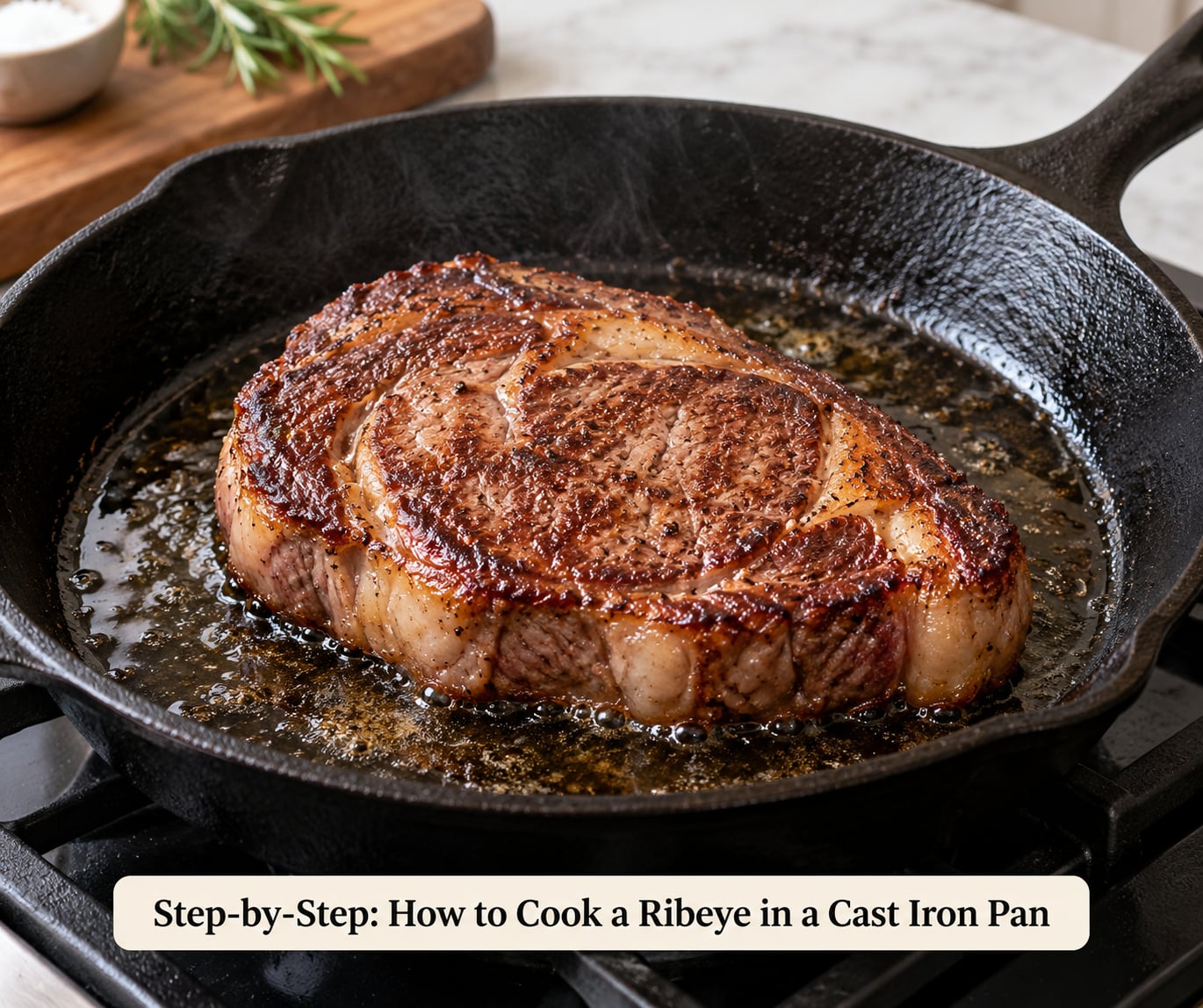
Step 1: Bring the steak to room temperature and dry the surface
Take the ribeye out 30 to 45 minutes before you cook. A steak straight from the fridge sears unevenly because the cold center pulls heat out of the pan and steams the crust.
Pat it dry with paper towels, sides and edges. Surface moisture is the enemy of browning, since water keeps the meat below the temperature needed for the Maillard reaction. Dry steak browns; wet steak grey-boils.
Step 2: Season the ribeye
Salt it generously on both sides and the edges just before it goes in the pan. Coarse kosher salt seasons in the time a single sear allows, while fine table salt dissolves too fast and mostly falls off.
Grind pepper on top now, or wait and add it in the final minute. Black pepper burns at searing temperatures, and burnt pepper tastes bitter across the whole steak.
A dry brine is worth the extra planning if you cook steak often. Salt the ribeye 1 to 24 hours ahead and refrigerate it uncovered on a rack. The salt draws a little moisture out, then reabsorbs it, and you get deeper seasoning and a slightly firmer texture.
Step 3: Preheat the pan until it is smoking
Set the skillet over medium-high and wait 5 to 10 minutes. Cast iron has real thermal mass, so it heats slowly and holds heat better than anything else in a home kitchen.
The pan is ready when you see a faint shimmer of smoke from the oil and can almost feel heat rising off it. A drop of water should skitter and vanish rather than sit and bubble.
Add a tablespoon of oil and let it run down the sides to coat the whole surface. Lay the steak away from you and listen. A proper sear sounds like a strong sizzle that stays steady. Silence or a weak hiss means the pan is still too cool.
Step 4: Sear the first side without moving it
Leave the ribeye alone for 2 to 3 minutes. Resist flipping early and resist the urge to press the edges down. Moving the steak releases the crust you are trying to build.
Check by lifting a corner with tongs. When the bottom shows a deep brown crust and the juices running off are clear rather than red, it is time to turn. A gray ring around the edge means it is moving too fast and needs another 30 to 60 seconds.
Cookers on r/steak and r/castiron split on flip frequency. Single flips give the deepest crust, while flipping every 30 to 60 seconds produces a more evenly browned surface on thick cuts. Either works, as long as you are deliberate about it.
Step 5: Cook to your preferred doneness
After the flip, cook the second side until a probe thermometer reads your target. Cast iron keeps cooking after the steak leaves the heat, so pull it 5 degrees early and let carryover cooking finish the job.
| Doneness | Pull at | 1 inch | 1.5 inch | 2 inch |
|---|---|---|---|---|
| Rare | 125F / 52C | 2 min | 3 min | 4 min per side, sear shorter |
| Medium-rare | 130F / 54C | 2 to 3 min | 3 to 4 min | 4 to 5 min |
| Medium | 135F / 57C | 3 to 4 min | 4 to 5 min | 5 to 6 min |
| Medium-well | 145F / 63C | 4 to 5 min | 5 to 7 min | 7 to 8 min |
| Well done | 160F / 68C | 5 to 7 min | 8 to 10 min | 10 to 12 min |
Times are per side after a proper 2 to 3 minute sear. Anything past medium loses the buttery texture that makes ribeye worth buying, so 130 to 135F is where most cooks stop.
If you cannot find doneness without a thermometer, press the steak gently. Rare feels soft, medium-rare gives slightly, medium springs back with a firm feel, and well done feels hard like the meat is set solid. It is a rough tool, but far better than guessing from a photo.
Step 6: Baste with butter and aromatics
Tilt the pan and drop in a tablespoon of butter with a smashed garlic clove and a rosemary sprig. Let the butter melt and foam, then spoon it over the steak repeatedly for about 30 seconds.
Add butter only at this stage. It burns at searing heat, and burnt butter turns a good steak acrid.
Step 7: Rest the steak, then slice against the grain
Move the ribeye to a wire rack or a warm plate and wait 5 to 10 minutes. Resting lets the juices redistribute instead of running out onto the cutting board the moment you cut. Tenting it softens the crust slightly, so for a seared crust leave it uncovered.
Find the grain by looking at the long fibers running along the side of the steak. Cut perpendicular to them. Slicing the wrong way makes a tender ribeye feel chewy.
Pan sear or reverse sear?
A reverse sear finishes the steak gently in a low oven until it is 10 degrees below your target, then sears it for about 75 seconds per side in a ripping hot pan. It produces the most even pink from edge to edge, which is why it wins for thick cuts. A straight pan sear is faster, gives more crust, and is what most home cooks want on a weeknight.
Common Mistakes
Starting with a cold pan
A lukewarm pan temperature is the number one reason for a grey, sad crust. Preheat for a full 5 to 10 minutes and trust the smoke, not your sense of the burner knob.
Overcrowding the pan
Two ribeyes in one skillet drop the temperature below searing range. Cook one at a time. It takes three extra minutes and saves the crust.
Moving the steak too early
If the steak drags when you lift it, it is not adhered yet. Wait the full 2 minutes. The fond that builds underneath is part of the flavor, not waste.
Seasoning too late or too lightly
Salt applied minutes before cooking seasons the surface only. A dry brine seasons the whole steak. Either is fine, but be deliberate.
Cooking the entire steak on low heat
Low heat produces an even cook with no crust. Sear hot, then drop the heat if you need more time, or move a thick ribeye to a 400F oven to finish.
Skipping the rest
Cutting straight into the steak bleeds the juices out. Five minutes of patience fixes it, and the steak keeps cooking toward medium-rare while it sits.
Judging by color alone
Color depends on the pH of the meat, the myoglobin level, and what it was cooked alongside. A probe thermometer reading is the only reliable measure, and it costs almost nothing.
One more note on the pan itself. What ruins cast iron is soaking it in water, putting it in the dishwasher, or leaving it wet on the stove. Hand wash, dry on the burner for a minute, and rub a tiny amount of oil over the surface.
Frequently Asked Questions
Do I need to season a cast iron pan before cooking a ribeye?
A lightly seasoned cast iron pan can cook steak successfully, but the surface should be free of loose flakes and rust. If your pan is new or looks patchy, wipe it with a thin film of oil, heat it until it just begins to smoke, wipe off the excess, and repeat. Two or three rounds build enough seasoning for a clean release.
Should I salt a ribeye before putting it in the pan?
Yes. Season the steak with salt and pepper immediately before cooking, after patting its surface dry. Salt on the surface improves browning and flavor in the short window of a pan sear. Coarse kosher salt works better than fine table salt because it does not dissolve instantly. For deeper seasoning, dry brine the steak 1 to 24 hours ahead and refrigerate it uncovered.
How long should I cook a ribeye in cast iron?
Cooking time depends on thickness, starting temperature, and desired doneness. A typical 1.5-inch steak may need about 3 to 4 minutes per side for a sear, followed by a 5 to 10 minute rest. Pull the steak 5 degrees below your target temperature, because carryover cooking adds heat while it rests. A probe thermometer beats any timer.
Can I use butter in a cast iron pan when cooking steak?
Yes, but add butter only after the steak has seared and the pan is no longer extremely hot, because butter can burn. Tilt the pan and spoon the foaming butter over the steak for about 30 seconds. Garlic, rosemary, or thyme added at the same point infuses the butter without turning it black.
Should I cover a ribeye while cooking in cast iron?
Covering is usually unnecessary for a standard sear because it traps moisture and softens the crust. For a very thick steak that needs more time to reach temperature, move it into a 400F oven, which finishes the cook with dry heat and keeps the crust intact. A tight foil tent helps only during the resting period.
Cooked ribeye keeps 3 to 4 days in the fridge, and reheating it gently in a skillet with a splash of butter is far better than the microwave, which dries the crust out.
Conclusion
How to cook a ribeye in a cast iron pan comes down to three things that matter: pat the steak dry, salt it well, and heat the cast iron until it is visibly smoking before the ribeye goes in.
Sear 2 to 3 minutes per side, watch the thermometer rather than the clock, pull 5 degrees early, and rest the steak before you slice it against the grain. Treat the timings above as a starting point, not a rule, and adjust from there.