A whiskey sour with egg white is the Boston Sour, the cocktail in its original form: 2 oz bourbon, 3/4 oz fresh lemon juice, 1/2 to 3/4 oz simple syrup and about 1/2 oz egg white, dry shaken for 30 seconds before any ice goes in. That first shake is what builds the foam.
Skip it and you get a flat, watery drink that tastes sharper than it should. Do it properly and the egg white turns into something close to a meringue cap that carries lemon aroma to your nose, softens the bite of the whiskey, and gives the whole thing a creamy texture.
I make this most weekends, usually after a batch of meringues leaves me with an awkward bowl of whites in the fridge. It takes about five minutes of active work, and the shaker does the rest. I have tweaked the syrup and the whiskey choice plenty since I started, and these are the numbers and timings that finally made it repeatable.
Table of Contents
- What You Need
- Step-by-Step: How to Make a Whiskey Sour with Egg White
- Dry Shake Before Adding Ice
- Add Ice and Shake for Chilling
- Double Strain and Pour
- Garnish and Serve
- Common Mistakes
- Skipping or rushing the dry shake
- Too much egg white
- Using cracked or small ice
- Pouring the foam away
- Getting the balance wrong
- Frequently Asked Questions
- Do I need to shake a whiskey sour with egg white dry first?
- Is egg white safe in a whiskey sour?
- What can I use instead of egg white?
- Why is my whiskey sour foam not creamy?
- How much simple syrup should I add?
- What whiskey works best for a whiskey sour?
- Conclusion
What You Need
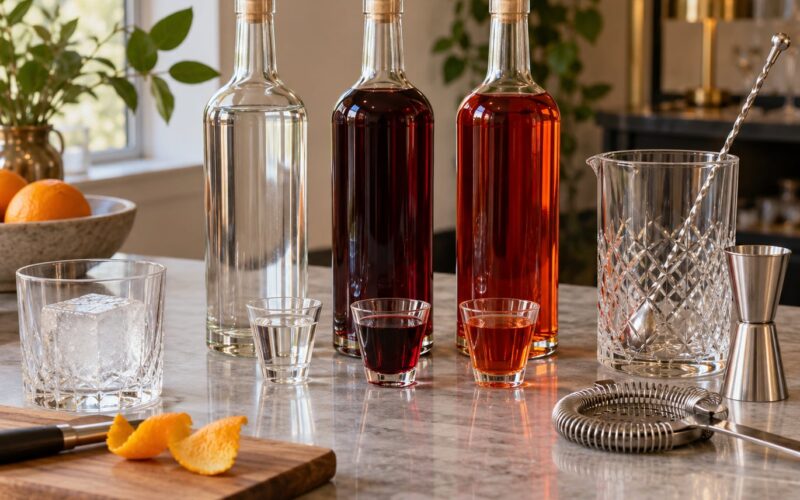
The ingredient list is short, and every item earns its place. Measure everything before you start, because once the egg white is in the shaker the clock is running.
- 2 oz (60 ml) bourbon — anything from 80 to 90 proof works well. A wheated bourbon leans caramel and vanilla; a higher rye content pushes it spicier and sharper.
- 3/4 oz (22 ml) fresh lemon juice — room temperature, and squeezed the same day. Bottled juice tastes flat next to fresh and dulls the foam.
- 1/2 to 3/4 oz (15 to 22 ml) simple syrup — start at 1/2 oz and add more to taste.
- About 1/2 oz (15 ml) egg white — roughly the white of one large egg, or 1 oz of pasteurized carton egg whites.
- Ice — a good handful of solid cubes for the wet shake, plus fresh cold water ice for the glass if you serve over ice.
- Optional: 2 to 3 dashes Angostura bitters and an orange twist or lemon peel for the garnish.
Simple syrup is equal parts sugar and water by weight, which is easier to remember than volume. Warm 1 cup water, add 1 cup sugar, stir until clear, then cool and bottle it. A refrigerated half batch lasts about a month.
For equipment, you need three things: a jigger, a cocktail shaker with a lid that seals, and a strainer. A Hawthorne strainer (the perforated spring-loaded kind) sits on the shaker and holds back ice. A small fine-mesh strainer, the kind used for tea or for straining sous-vide liquid, sits on the glass for the second pass. That pair is what makes a double strain possible, and a double strain is worth the extra ten seconds.
Which egg white should you use? Carton egg whites are pasteurized, which removes the salmonella concern and makes them the sensible default for a party. One large egg white is roughly 1 oz, so pour 1 oz of carton whites per drink. If you are vegan or just do not want egg at all, aquafaba — the liquid in a can of chickpeas — behaves almost identically. Use 1 oz of aquafaba for one drink.
- White of one large egg — about 1 oz (30 ml). Best foam, but raw and it takes time to separate.
- Carton pasteurized egg whites — 1 oz (30 ml). Pour straight from the carton, no measuring fuss.
- Aquafaba from canned chickpeas — 1 oz (30 ml). Vegan, whips to a very close foam.
Step-by-Step: How to Make a Whiskey Sour with Egg White
Six short stages, and the first one takes the longest. Get everything measured into the shaker before you start shaking, because the foam forms fast and you do not want to stop halfway to find the jigger.
Dry Shake Before Adding Ice
A dry shake is shaking every ingredient except ice. It is the step that makes this drink work, because egg white is protein and friction beats air into it. Shake hard enough and the proteins unwind and re-link around the air bubbles, which is the same thing that happens when you whip meringue.
Add the whiskey, lemon, syrup and egg white to an empty shaker, seal it, and shake for 30 seconds. Go harder than feels necessary. A dry shaker is light and the sound should be slappier than a wet shake.
You are looking for three changes at once. The mixture turns pale and glossy instead of thin and watery, the volume roughly doubles, and it coats the inside of the shaker. If nothing has changed after 30 seconds, keep going. Under-aerated foam is thin foam, and thin foam collapses in the glass within a minute.
Add Ice and Shake for Chilling
Now fill the shaker about two-thirds with ice, seal it again, and shake for another 10 to 15 seconds. This shake is about temperature and dilution, not foam.
Fifteen seconds gets a rocks glass to somewhere near 40°F, which is cold enough to hold but not so cold that the aromatics freeze shut. You are also diluting the whiskey by about a quarter, which is what stops it from tasting like straight bourbon with lemon.
Keep the lid on tight the whole time. A shaker that leaks while you are working hard is a fast way to end up with a warm, weak drink and a sticky counter. The cues are the outside of the metal going frosty and a layer of condensation under your gripping hand.
Double Strain and Pour
Strain once through the Hawthorne strainer to hold back the ice, then again through the fine-mesh strainer held over the glass. That second pass catches lemon pulp and tiny ice shards that would otherwise dull the texture and, in a drink this foam-dependent, would sit on the surface as grit.
Pour slowly down the side of a chilled rocks glass rather than straight from height. Dropping the drink from two inches up will knock the foam flat, and you worked thirty seconds for that foam. Hold the glass at an angle under the strainer and let the liquid run down the wall.
Taste it before the garnish goes on. If it is too sharp, that is almost always the lemon, so add a quarter ounce more syrup rather than more lemon. If it is cloying, a half ounce of lemon usually fixes it. Adjust with the glass, not by dumping the whole thing into a second shaker.
Garnish and Serve
A whiskey sour with egg white is already a good-looking drink, so keep the garnish restrained. An orange twist or a lemon peel is enough. The cherry and the Angostura dashes are traditional and both work, but skip anything big enough to cover the foam head.
To finish, twist the peel over the surface so the citrus oils spray across the foam. Those oils carry lemon and orange aroma, and the foam is exactly the surface that holds them where your nose will find them. If you are using bitters, dash them onto the foam rather than into the drink.
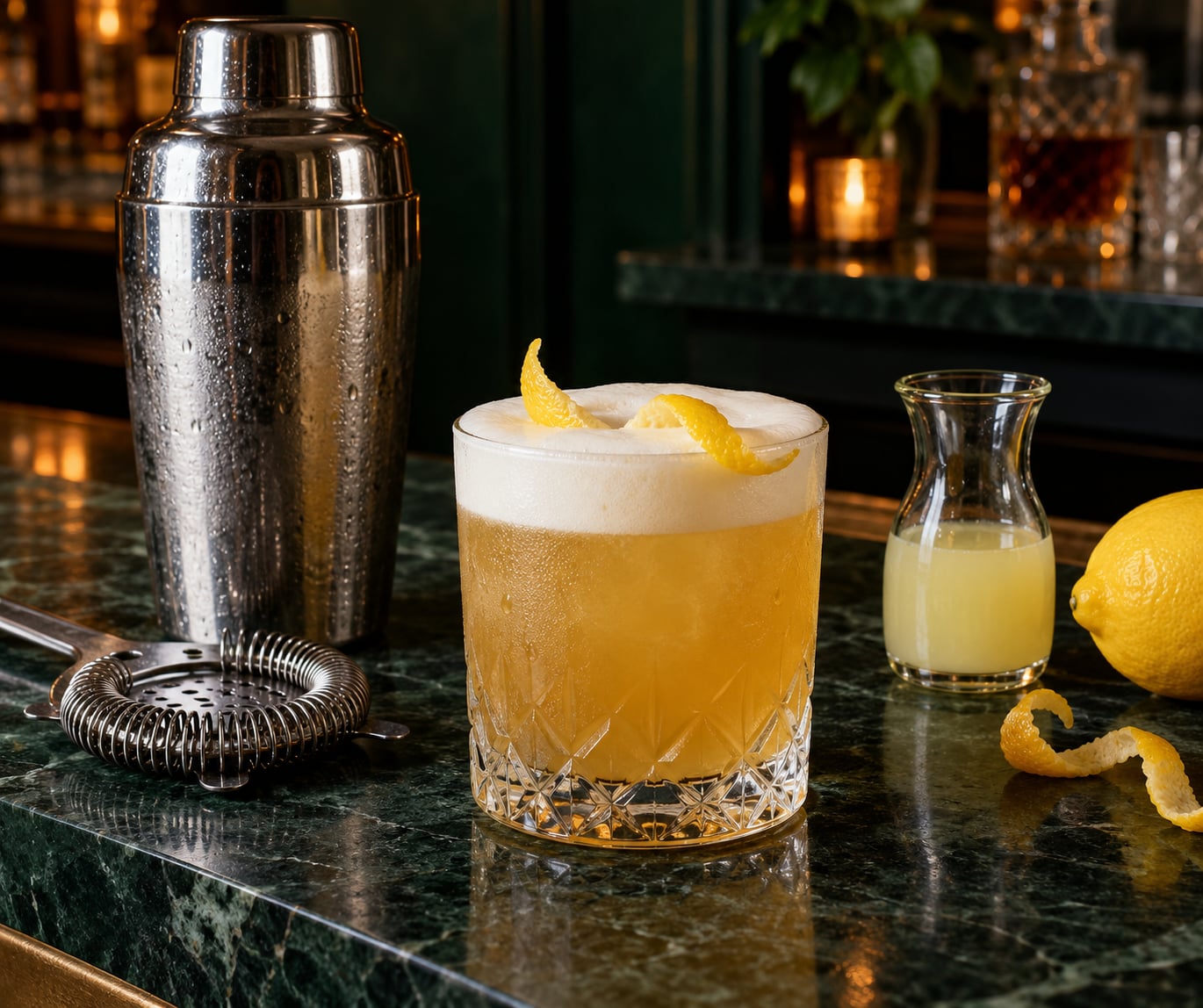
The finished pour should look like this: a clear amber drink with a dense white cap sitting about an inch above the liquid, the foam glossy rather than bubbly, and the glass cold to the touch. If the foam has already collapsed by the time it reaches the table, the dry shake was too short.
Common Mistakes
Almost every disappointing whiskey sour with egg white comes down to one of five things. Here is how to spot each one and what to do about it.
Skipping or rushing the dry shake
The most common failure, and the reason home versions so often taste thin. Fix: 30 full seconds before ice, hard, until the mixture is visibly paler and roughly doubled in volume. Time it rather than counting shakes.
Too much egg white
More than about 1 oz per drink gives you a foamy, faintly eggy, clinging texture that masks the whiskey. Fix: stick to 1 oz of carton whites or one large egg white, then taste the next one before you adjust.
Using cracked or small ice
Crushed ice chills fast but dilutes hard and can shear the foam you just built. Fix: use solid cubes for the wet shake. Keep small or crushed ice for the glass only if you are serving over ice.
Pouring the foam away
Streaming the drink from height, or straining too aggressively, takes the foam with it. Fix: strain twice, then pour slowly against the inside wall of the glass.
Getting the balance wrong
Too sweet means you started at the high end of the syrup range. Too sharp usually means not enough dilution or a slow wet shake. Fix: begin at 1/2 oz syrup, shake the wet shake the full 15 seconds, and adjust one variable at a time.
A couple of tips that help more than people expect. Taste your lemon juice before you commit, because a bitter or very tart lemon wrecks the drink and no amount of shaking fixes it. And freeze your glasses ahead of time if you have the space, since a pre-chilled glass buys you five extra minutes before the drink warms and the foam slackens.
Frequently Asked Questions
Do I need to shake a whiskey sour with egg white dry first?
Yes. The dry shake, meaning all the ingredients except ice shaken together for about 30 seconds, is the step that aerates the egg white into foam. Skipping it gives you a thin layer that collapses in the glass and leaves the whiskey and lemon tasting sharper and more separate. Without ice the shaker is light, so the shaking is faster and the foam builds in seconds.
Is egg white safe in a whiskey sour?
Raw egg white carries a small but real salmonella risk, and alcohol does not reliably kill it because the drink is only briefly mixed. Most home bartenders use pasteurized carton egg whites, which are heat-treated and carry no such warning. Avoid raw egg if you are pregnant, elderly, immunocompromised, or serving guests in those groups. Aquafaba works if you would rather not use egg at all.
What can I use instead of egg white?
Aquafaba, the liquid from canned chickpeas, is the closest swap. Use about 1 oz per drink and dry shake it the same way; it whips to a very similar foam because it carries its own proteins and sugars. If you only care about balance and not the foam, drop the egg entirely and add two to three dashes of Angostura bitters to round the drink out.
Why is my whiskey sour foam not creamy?
Nine times out of ten it is the dry shake. Short, gentle shaking does not break the egg white proteins down far enough, so the foam stays thin and bubbly instead of glossy. Give it a full 30 seconds and go harder than feels necessary. The other cause is contamination: a yolk in the whites or an older egg will give you an eggy smell and a loose foam that never tightens.
How much simple syrup should I add?
Start at 1/2 oz for a 2 oz whiskey, which is the classic balance, and go up to 3/4 oz if you like a slightly sweeter drink. Always use more syrup than lemon, never less. If your whiskey is above 100 proof, move toward the top of that range since higher-proof alcohol reads drier. Homemade 1:1 syrup works well; a richer 2:1 honey syrup also adds aroma.
What whiskey works best for a whiskey sour?
Bourbon is the safest answer, and something in the 80 to 90 proof range gives you caramel and oak under the lemon. Rye works too, but its higher spice cuts through the syrup and tastes leaner, so bump the syrup by a quarter ounce. Blended whiskey is acceptable in a sour because the egg white softens its edges. Avoid scotch, which brings smoke and peat that fight the citrus.
Conclusion
Measure everything first, then dry shake the whiskey, lemon, syrup and egg white for a full 30 seconds before ice goes anywhere near the shaker. Add ice, shake 10 to 15 more seconds, double strain into a cold rocks glass and pour down the wall so the foam survives the trip.
That is the whole drink. Balance the syrup and lemon by taste at the end, and once you have made it a few times you will stop needing the numbers at all.