Homemade eggnog takes about 20 minutes of hands-on time plus a chill, and the whole thing hinges on a warm egg custard: milk and sugar heated gently, eggs whisked in a little at a time, then cream folded through at the end. That custard base is the difference between a drink that tastes like real dairy and one that tastes like flavored milk from a carton. Here is the method I make every year, with the temperature, timing, and texture cues that keep it silky instead of scrambled.
Table of Contents
- What You Need
- Step-by-Step: How to Make Eggnog From Scratch
- Make the Warm Custard Base
- Whisk the Eggs into the Custard
- Cool, Chill, and Finish the Eggnog
- Common Mistakes
- Frequently Asked Questions
- Do I have to cook the eggs for eggnog?
- Can I make eggnog without alcohol?
- Why is my homemade eggnog thin?
- Can I use milk instead of half-and-half?
- How long does homemade eggnog keep in the refrigerator?
- Should eggnog be served cold or warm?
- Conclusion
What You Need
A classic four-cup batch, about 8 servings, comes down to a short list. Everything else is optional.
- 6 large egg yolks (about 3/4 cup). Yolks give the body; the whites are reserved only if you want the airy method.
- 3/4 cup granulated sugar. Start here and adjust. Store-bought versions lean on corn syrup, which is why they can feel cloying.
- 2 cups heavy whipping cream, divided. Half gets warmed with the sugar, half gets whipped.
- 1 cup whole milk for the body. Half-and-half works too and makes it richer.
- 1 teaspoon ground nutmeg, plus more for grating on top.
- 1/2 teaspoon ground cinnamon.
- 1/8 teaspoon fine sea salt. Small, but it sharpens everything else.
- 2 teaspoons vanilla extract.
- Optional spirit: 1/2 to 1 cup of brandy, dark rum, bourbon, or spiced rum.
On equipment, a whisk, a medium saucepan, and a fine-mesh sieve cover the whole recipe. A thermometer is worth having if you plan to make this often, since 160 F is the number that matters for safety. A blender works too, for the no-cook method, and an ice bath is a nice way to cool the base fast without shaking hot custard into a sky-high foam.
For raw-egg safety, buy pasteurized eggs if you can find them. Otherwise, use the cooked method below and let the thermometer do the work. A blender does not cook anything, so if you go that route with shell eggs, pasteurized is the safer pick.
Step-by-Step: How to Make Eggnog From Scratch
Read the whole thing once before you start, because the order matters and some of it happens in parallel. Total time is roughly 20 minutes of cooking plus at least 4 hours of chilling.
- Whip the yolks. In a bowl, beat the 6 egg yolks with the sugar for about 2 minutes until pale and thick, and the mixture falls off the spoon in a slow ribbon. Scrape the sides once. This is where the thickening happens, and if you rush it, the finished drink will be thin.
- Warm the dairy. In a saucepan, combine 1 cup heavy cream, the whole milk, the nutmeg, cinnamon, and salt. Heat over medium-low until you see the first wisps of steam and the cream just begins to shimmer at the edges, roughly 3 to 4 minutes. Do not boil, and keep the heat low the whole time. Sugar that dissolves at a gentle simmer tastes the same as sugar dissolved at a boil, and the milk will not scorch on the bottom of the pan.
- Temper the eggs. Ladle about half a cup of the warm dairy into the yolk mixture and whisk steadily. Keep whisking while you add the rest, a little at a time. You are looking for a smooth, pourable base with no streaks of cooked egg. If the mixture suddenly goes gluey and stringy, you added the dairy too fast or too hot. Strain it through a sieve and start again with cooler dairy.
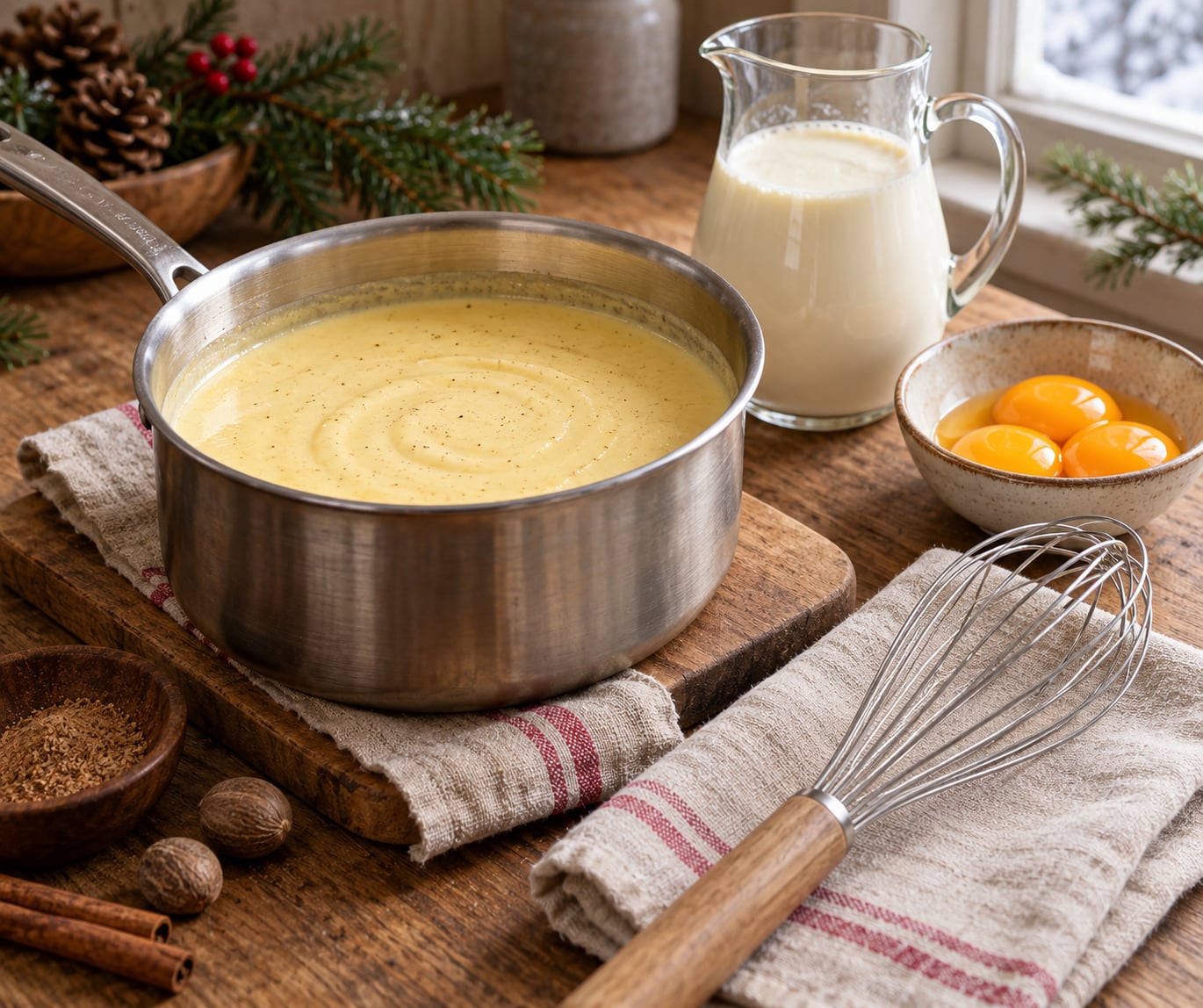
- Cook the custard. Pour everything back into the saucepan and cook over low heat, stirring constantly with a whisk or spatula, until the base coats the back of a spoon and a line drawn with your finger stays visible for a few seconds. For pasteurization and safety, bring it to 160 F and hold there for about 30 seconds. Scrape the bottom constantly, and take the pan off the heat the moment it thickens. Yolks thicken somewhere between 160 and 180 F, and past that they scramble.
- Strain and cool. Pour the custard through a fine-mesh sieve into a bowl. This removes any cooked egg solids and gives you the smooth mouthfeel that separates good eggnog from great eggnog. Let it cool to room temperature, then set the bowl in an ice bath for 5 minutes to drop the temperature faster.
- Fold in the cream. Whip the remaining 1 cup heavy cream to soft peaks, then fold it into the cooled custard with a spatula. Cut down to the bottom of the bowl and turn the mixture over itself. Stop the moment the streaks disappear. Whisking instead of folding will deflate the cream and leave you with something flatter and denser.
- Add vanilla and spirit. Stir in the vanilla. Add the spirit now if you want the alcohol to stay sharp, or let the eggnog chill without it and add the alcohol per glass at serving time, which is the better move for a party.
- Chill. Cover and refrigerate for at least 4 hours, ideally overnight. Eggnog thickens noticeably as it rests, so do not judge the texture straight out of the pan.
- Serve. Ladle into chilled glasses, top with whipped cream and a hard grating of fresh nutmeg, and serve cold. It also works warm: heat a single serving in a saucepan over low heat until steaming, and add the spirit after it comes off the heat.
Make the Warm Custard Base
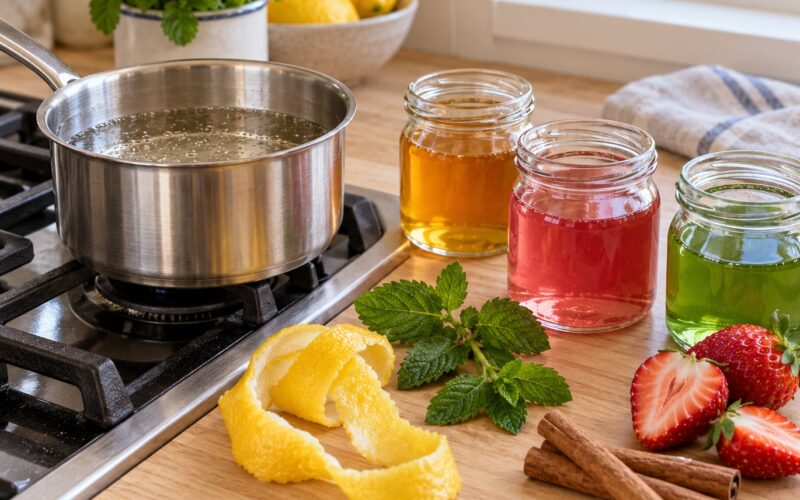
Low and slow is the whole trick. Sugar, milk, and cream need three things: motion, patience, and a temperature below boiling. Stir often enough to keep milk solids from sticking, and use a splash of cold milk in a hot pan rather than scrubbing.
You know it worked when the cream surface shows fine ripples and the first tiny bubbles form around the edge of the pan. If you see a rolling boil, pull it off the heat and let it settle before going further.
Whisk the Eggs into the Custard
Tempering is the step that separates good eggnog from curdled eggnog. Adding a cup of hot dairy to yolks in one pour cooks the eggs on contact and you get scrambled strands suspended in milk.
Whisk steadily, add the dairy in three or four additions, and keep the heat in check the whole time. A smooth ribbon and no visible flecks is the signal you want before it goes back on the stove.
Cool, Chill, and Finish the Eggnog
A rich homemade version relies on yolk protein for body and heavy cream for roundness, so it drinks closer to a cream soda than a drink-and-mix-and-ice treat. For a lighter, cloud-like eggnog, whip the 6 reserved egg whites to stiff peaks with a tablespoon of the measured sugar, then fold those in with the cream before chilling.
Strain, cool, fold, chill. The cream goes in cold, and the finished drink needs those four undisturbed hours in the fridge before it tastes right.
Common Mistakes
The eggnog is scrambled or has visible flecks. The dairy went in too fast, or the heat was too high. Strain it through a sieve and it will still be drinkable, though the texture will be slightly grainy. Next time, whisk the yolks smooth before anything warm touches them and add the dairy in stages.
It is too thin. Usually the yolks were not beaten long enough, or the custard was not cooked to the ribbon stage. Fix it in the pot: warm the eggnog over low heat and stir in a slurry of 1 teaspoon cornstarch mixed with 1 tablespoon cold milk, then cook for a minute. Repeat once if you need more.
It is gluey and rubbery. The eggs overcooked, or the yolks were scrambled raw and settled into strands. No stirring brings that back. Start over, and cook the custard only until it coats a spoon.
It is too sweet. Most homemade recipes repeat the carton problem. Start at 1/2 cup sugar for a four-cup batch, taste the custard before adding cream, and remember that cream dilutes perceived sweetness less than you think it does.
A skin formed on top. Press plastic wrap directly onto the surface before refrigerating, or transfer the custard to a covered bowl. Do not let the base sit uncovered while it cools.
The texture is grainy. Two causes: the sugar did not dissolve because the dairy was not warm enough, or the eggs broke into small pieces while beating. Dissolve the sugar with the dairy in the pan, and stop whisking the yolks once the sugar is gone and the color has lightened.
The chilling is rushed. Four hours is a floor, not a suggestion. The drink finishes thickening in the fridge, and any alcohol you add earlier tastes sharper than the same amount stirred in at the glass.
A few tips that help more than any of the above. Use pasteurized eggs if the mixture never hits 160 F. Make the non-alcoholic version by using the full recipe and skipping the spirit, then adding a teaspoon of vanilla and a dash of pomegranate or ginger juice for structure the alcohol would have provided. Hold a party batch warm in a slow cooker on low, and stir it every 30 minutes; anything hotter and the eggs will catch.
One safety note worth repeating: alcohol does not kill salmonella. Rum and brandy in a holiday eggnog do not make raw eggs safe, and the drink can look and smell perfectly normal. If raw eggs are a concern, either use pasteurized eggs or cook the base to 160 F, and keep any leftover eggnog refrigerated and out of the serving bowl for more than two hours.
Frequently Asked Questions
Do I have to cook the eggs for eggnog?
No, plenty of good eggnog is made with raw eggs, and the whites whipped to stiff peaks give the lightest, cloudiest texture. But raw eggs carry a real risk of salmonella, and adding brandy or rum does not make them safe. If you want the raw style, buy pasteurized eggs. If you want to use whatever eggs you have, cook the custard to 160 F and hold it there for 30 seconds. You trade a little of that fluffy meringue quality for a drink anyone can drink.
Can I make eggnog without alcohol?
Yes, and it should not taste like a watered-down version. Make the full recipe and simply leave out the spirit, then add 1 teaspoon vanilla and a splash of pomegranate or ginger juice at the end. Both supply the roundness and edge that alcohol would have. For a creamier non-alcoholic version, swap the whole milk for half-and-half or add an extra half cup of heavy cream. Kids and guests who are not drinking get the same drink, served in smaller glasses.
Why is my homemade eggnog thin?
Two usual reasons. The yolks were not beaten long enough with the sugar, and the sugar is what thickens the base before any dairy goes in. Second, the custard was not cooked to the ribbon stage, meaning it coats the back of a spoon and a finger line stays visible. You can rescue thin eggnog in the pan with a cornstarch slurry: mix 1 teaspoon cornstarch with 1 tablespoon cold milk, stir it into the warm eggnog, and cook for a minute. It also thickens as it chills, so give it the full 4 hours.
Can I use milk instead of half-and-half?
Whole milk works fine and gives a lighter, more drinkable eggnog. The trade-off is body: dairy fat is what makes eggnog feel rich and creamy, and whole milk has roughly a third less of it than half-and-half. If you want to stay close to the classic texture without using half-and-half, use whole milk and keep the full 2 cups of heavy cream, whipping one cup and folding it in. Skim milk will make it noticeably thinner and is not worth the effort here.
How long does homemade eggnog keep in the refrigerator?
Keep it refrigerated and use it within about 3 days for the best flavor and texture. Eggnog made with raw or under-pasteurized eggs is the most perishable, so make that one the day before you plan to serve it and discard anything that has sat out at a party for more than two hours. Alcohol slightly slows spoilage but does not make the drink shelf-stable, so it still belongs in the fridge. Make-ahead is the right approach: the custard can be cooked a day ahead, chilled, then finished with whipped cream right before serving.
Should eggnog be served cold or warm?
Cold is the classic way, straight from the fridge in a chilled glass, and cold is what lets the whipped cream and grated nutmeg sit properly on top. Warm eggnog is also traditional, especially in small servings: heat it in a saucepan over low heat just until steaming, stir constantly, and add any alcohol after it comes off the heat so it does not cook off. Do not keep a whole batch on a stove or in a slow cooker on high, or the eggs will catch and the dairy will break.
Conclusion
Start by beating 6 egg yolks with 3/4 cup sugar until the mixture turns pale and falls in a ribbon. That two-minute step does more for the texture than anything else in the recipe, and it is the one most people skip.
Then take it the rest of the way slowly, temper the dairy in slowly, cook the custard to the ribbon stage or 160 F, strain it, and give it the full 4 hours in the fridge before anyone pours a glass. Add brandy, dark rum, or bourbon at the end if you want the holiday version, and leave it out entirely if you do not. Finish every glass with fresh nutmeg.