To make mulled wine on the stove, warm red wine with whole spices, citrus peel and a sweetener over low heat, just below a simmer, for 20 to 25 minutes, then strain and serve. Never let it boil. The whole job takes about half an hour and needs one saucepan.
I make this every December, and the difference between a good pot and a flat one is almost always heat. A rolling boil strips the aromatics and cooks off the character of the wine. A lazy shimmer is what you want.
Table of Contents
- What You Need
- Step-by-Step
- 1. Choose the wine and prepare the ingredients
- 2. Warm the wine gently
- 3. Infuse the flavors without boiling
- 4. Adjust sweetness, acidity, and spice
- 5. Strain, serve, and store
- Common Mistakes
- Frequently Asked Questions
- Should mulled wine boil?
- How long does mulled wine take to make on the stove?
- What type of wine is best for mulled wine?
- Does all the alcohol burn off in mulled wine?
- Can you make mulled wine ahead of time?
- Conclusion
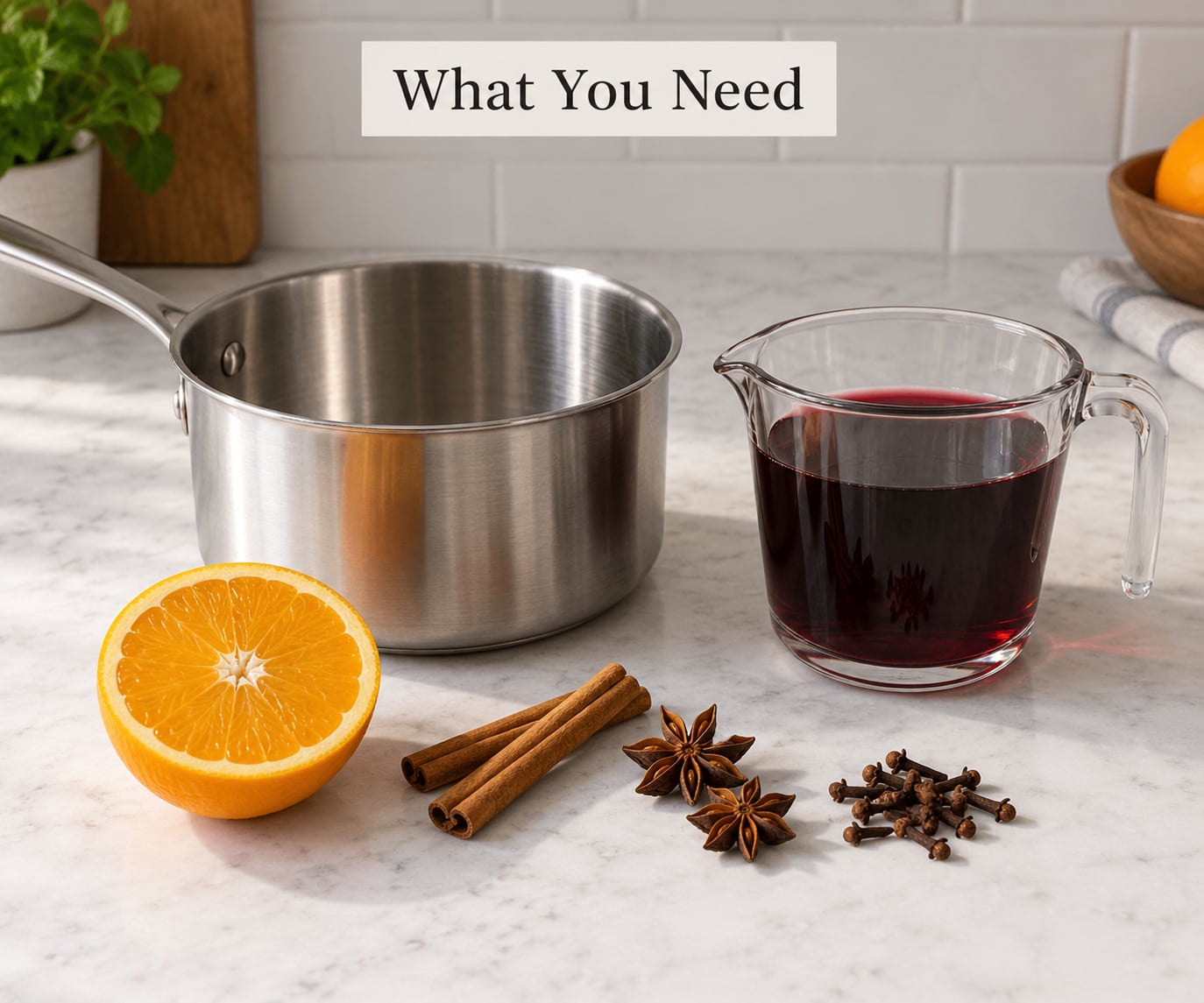
What You Need
This is a four-serving batch. Doubling it needs a bigger pot, not more heat.
| Ingredient | US | Metric |
|---|---|---|
| Dry red wine | 1 bottle (750 ml) | 750 ml |
| Water | 1 cup | 240 ml |
| Orange | 1, peeled in strips | 1 |
| Lemon | 1/2, peel only | 1/2 |
| Light brown sugar | 1/3 cup | 75 g |
| Cinnamon sticks | 2 | 2 |
| Whole cloves | 8 | 8 |
| Star anise | 2 | 2 |
| Cardamom pods, crushed | 4 | 4 |
| Fresh ginger, sliced thin | 4 slices | 4 slices |
| Brandy (optional) | 1/3 cup | 80 ml |
The one piece of equipment that matters is a fine-mesh sieve. Without it you are drinking grit.
Step-by-Step
1. Choose the wine and prepare the ingredients
Pick something dry, fruity and mid-priced. Cabernet sauvignon, merlot, pinot noir and Malbec all work well, and a dry white such as Sauvignon Blanc or unoaked Chardonnay is good too.
Skip anything heavily oaked, very tannic or pricey. You are not tasting the bottle, and an expensive wine does not improve here.
Peel the citrus with a vegetable peeler and leave the white pith behind. Pith is bitter, and a little goes a long way. Crush the cardamom pods and cloves lightly with the flat of a knife so the oils escape, and measure the sugar before you turn on the heat.
2. Warm the wine gently
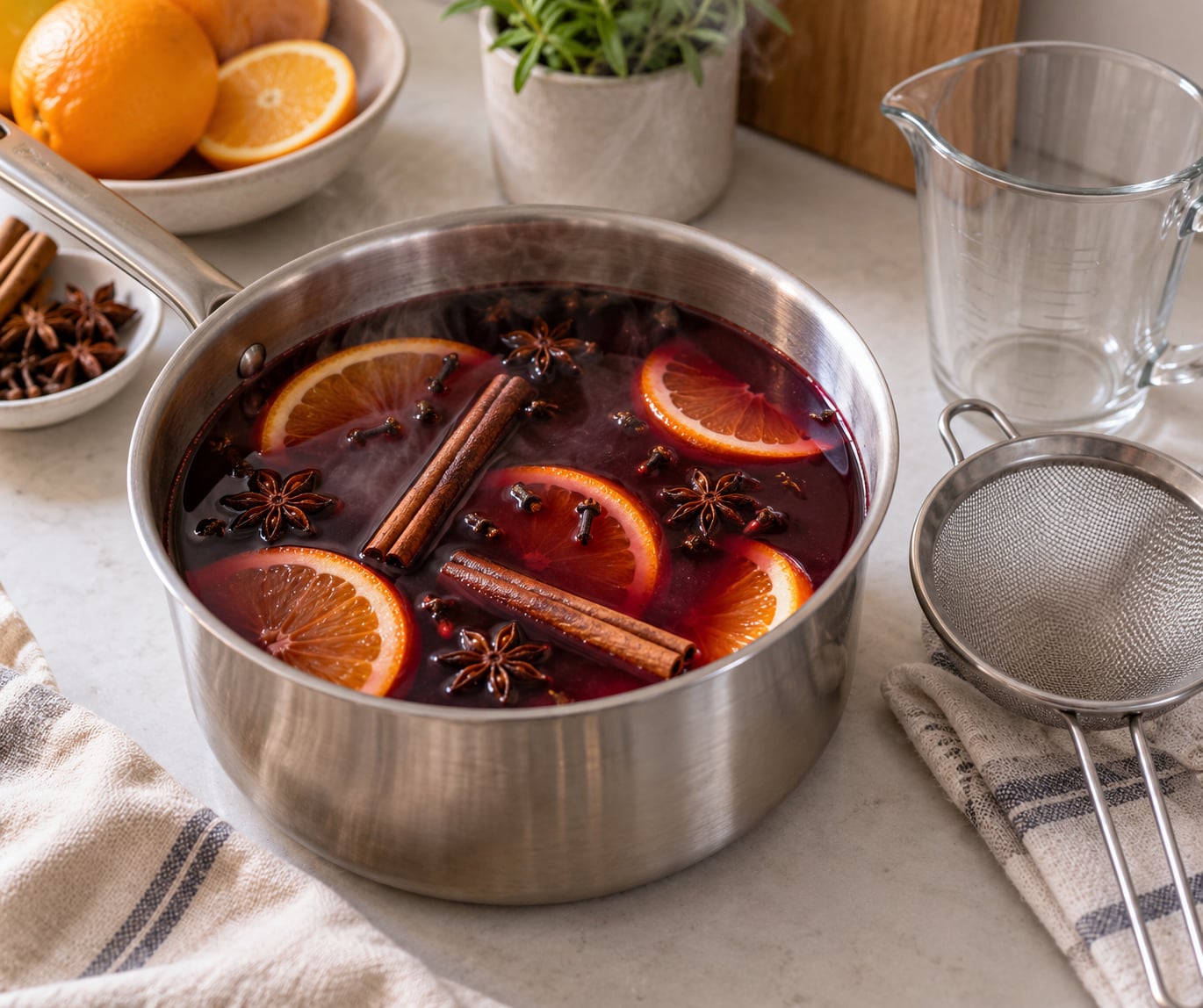
Put the wine, water, sugar, citrus peels, ginger and spices into a medium saucepan. Set the burner to low and stir once to dissolve the sugar.
Wait for a shimmer: a few tiny bubbles clinging to the bottom of the pan and a wisp of steam, not a rolling simmer. If you reach a full boil, turn the heat down further or pull the pan off for a minute.
3. Infuse the flavors without boiling
Partially cover the pan and let it hold that gentle heat for 20 to 25 minutes, stirring every five minutes or so. The surface should stay quiet, with an occasional bubble breaking the top.
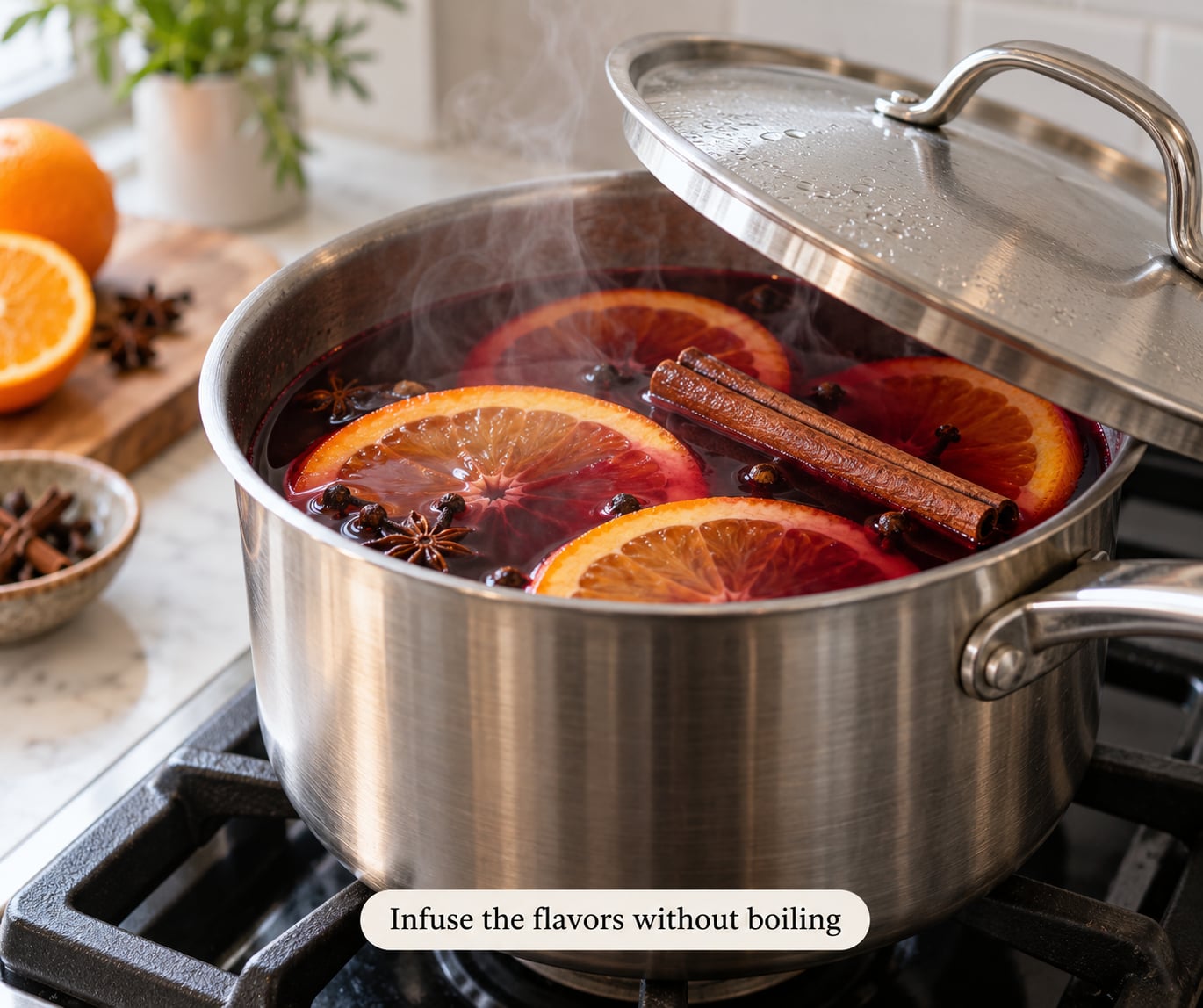
Covering loosely traps heat and keeps the aromatics in the pot. Uncovered, the pot loses alcohol to the steam over a longer cook. Keep the flame low and give it the full 20 minutes if your kitchen runs cold.
4. Adjust sweetness, acidity, and spice
Taste before you do anything else. Warm wine tastes sweeter than it will when served slightly cooler, so hold back.
- Too sharp or thin? Add a tablespoon of honey or sugar dissolved in a little hot wine, then stir and taste again.
- Flat and one-dimensional? Squeeze a small piece of lemon peel in for brightness, or drop in one more star anise for five minutes.
- Too sweet? Splash in a little extra dry wine or a squeeze of lemon. You cannot remove sugar, only dilute it.
- Weakly spiced? Add spices early next time rather than late now. Late additions taste of spice rather than of spiced wine.
Add the brandy at the very end, off the heat, and stir it in. That keeps the alcohol in the glass instead of letting it cook away.
5. Strain, serve, and store
Pour the finished wine through a fine-mesh sieve into a pot or pitcher, pressing gently on the spices. Discard the solids.
Serve in warmed mugs at about 140°F, not scalding. Hold the pot on the lowest setting your stove has; it will stay drinkable for roughly two hours. Add fresh orange slices at service for aroma and looks.
Refrigerate leftovers within two hours and use them within three days. Reheat gently on the stove or in the microwave, once, and never let leftovers come to a boil. Mulled wine also freezes well and turns into a decent slushie straight from the freezer.
Common Mistakes
- Boiling the wine. This is the big one. Boil and you get a flat, cooked batch plus alcohol you did not want to lose. Keep the heat low enough that the pan only shimmers.
- Using ground spices. Ground cinnamon and clove leave sediment that no sieve will catch. Use whole sticks, pods and berries.
- Leaving pith on the citrus. Peel the orange with a vegetable peeler and skip the white membrane, or the batch turns bitter.
- Over-spicing. Two cinnamon sticks, eight cloves and two star anise is plenty for a bottle. It is easy to overshoot in a small pot.
- Over-sweetening. Start with less sugar than feels right, taste, and add more. You cannot take sweetness out afterwards.
- Forgetting to strain. Even with whole spices, strain before serving. Drink it with sediment and it is gritty.
- Reheating it several times. Every reheat flattens the aromatics. Make it once, hold it warm, and reheat leftovers only once.
- Using an expensive bottle. Cost does not translate here. A decent everyday red works better than a tannic reserve.
Frequently Asked Questions
Should mulled wine boil?
No. Keep it just below a simmer the entire time. A rolling boil drives off alcohol and cooks away the aromatics that make mulled wine worth drinking. You are looking for a gentle shimmer with a few small bubbles at the bottom of the pan, not a steady bubbling surface.
How long does mulled wine take to make on the stove?
About 25 to 30 minutes total. It takes roughly five minutes to reach a gentle shimmer, then 20 to 25 minutes of covered simmering to infuse the spices. A larger pot takes a little longer to come up to temperature. It can then hold on the lowest heat for roughly two hours while you serve it.
What type of wine is best for mulled wine?
A dry, fruity, medium-bodied red is the safest pick. Cabernet sauvignon, merlot, pinot noir and Malbec all work, and dry white wine such as Sauvignon Blanc also makes a lighter version. Avoid heavily oaked, very tannic or expensive bottles, and steer clear of sweet wines, which make the finished drink cloying.
Does all the alcohol burn off in mulled wine?
No, most of it stays. Slow heating well below boiling retains the majority of the alcohol in the wine, which is why mulled wine is still an alcoholic drink. A hard boil, or an uncovered pot over high heat, cooks off considerably more. If you add brandy, stir it in at the very end for the same reason.
Can you make mulled wine ahead of time?
Yes. Make it up to a day ahead, cool it, refrigerate it covered, and reheat gently on the stove when guests arrive. Reheat once only, and never to a boil. It also freezes well, so you can blend frozen cubes into a slushy.
Conclusion
Start tonight with a dry red, a handful of whole spices and low heat. Let it shimmer under a partial lid for 20 to 25 minutes, taste before you add anything else, then strain and serve warm. Those two rules, never boil and taste before you sweeten, are the whole difference between a fragrant pot and a disappointing one.