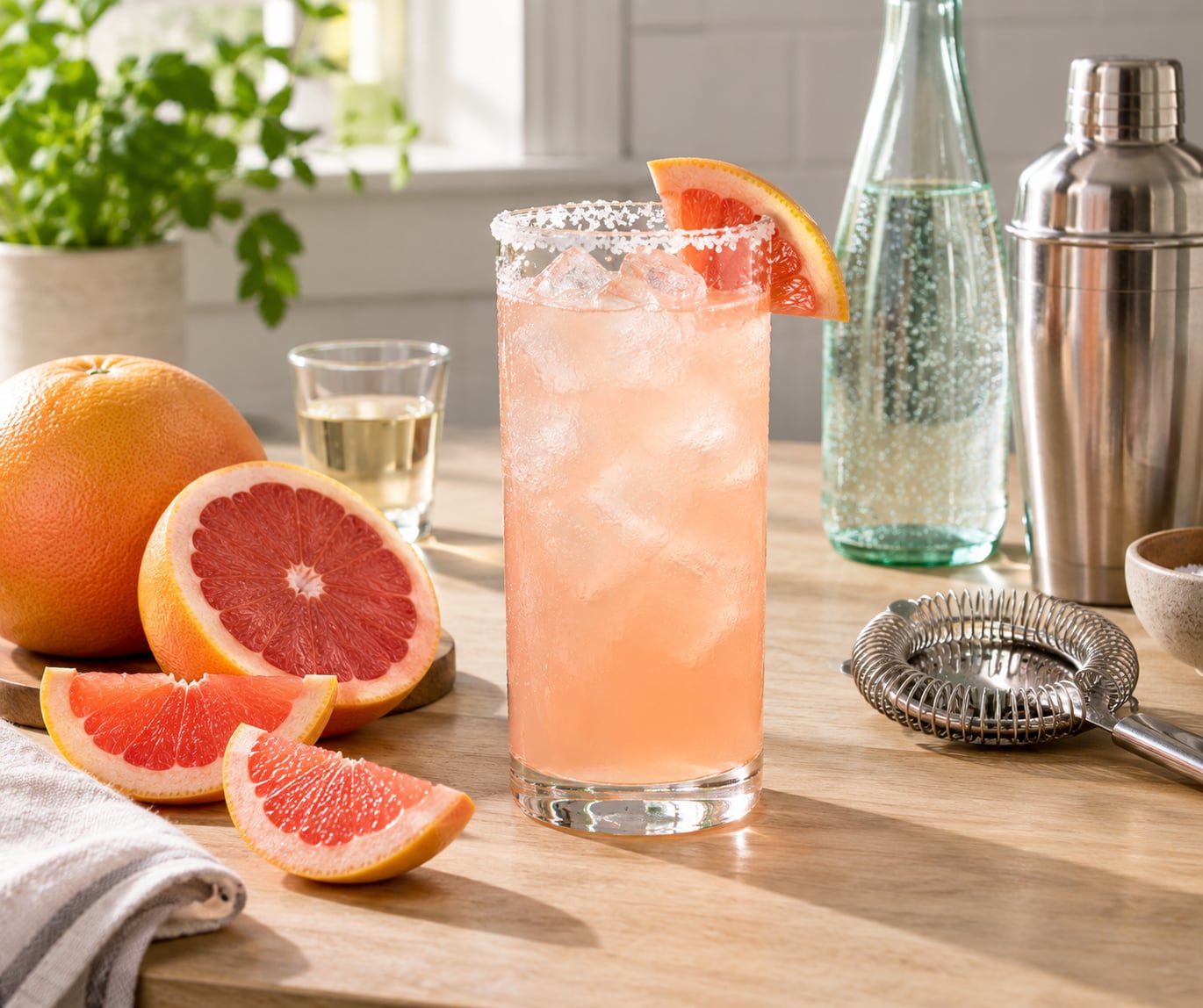
A paloma with fresh grapefruit is a tall, cold drink built on four things: 2 ounces of blanco tequila, 2 ounces of freshly squeezed grapefruit juice, 1/2 ounce of lime juice, and a splash of agave nectar or simple syrup, all lengthened with chilled sparkling water and poured over ice in a salt-rimmed glass. It takes about five minutes and almost no skill. The only thing that matters is getting the citrus sharp and the soda last.
Grapefruit soda makes this easy and makes it worse. Bottled soda arrives already sweetened, so the drink flattens out into something closer to sweet grapefruit pop. Squeezing the fruit yourself puts you in charge of the balance, which is where the good palomas live.
Before you start, one small warning: grapefruit interacts with a long list of prescription medications, including some blood thinners and blood pressure drugs. If you take any prescriptions regularly, ask your pharmacist before you make this a regular habit.
Table of Contents
- What You Need
- How to Make a Paloma With Fresh Grapefruit: Step-by-Step
- Choose and prepare the grapefruit
- Juice the grapefruit and the lime
- Season the rim
- Shake the tequila and citrus
- Strain, top and garnish
- Common Mistakes
- Frequently Asked Questions
- What tequila is best for a fresh grapefruit paloma?
- Can I make a grapefruit paloma without a cocktail shaker?
- How do I stop fresh grapefruit juice from tasting bitter?
- Should I use grapefruit soda, tonic water, or sparkling water?
- How can I make a paloma stronger or less alcoholic?
- Conclusion
What You Need
Everything below fits in a standard home bar. If you own a jigger and a shaker you already have all the tools.
Ingredients (one drink)
- 2 oz (50 ml) blanco (silver) tequila
- 2 oz (50 ml) fresh grapefruit juice, roughly half of one large grapefruit
- 1/2 oz (15 ml) fresh lime juice, about half a lime
- 1/4 to 1/2 oz agave nectar or simple syrup, adjusted to taste
- 2 to 3 oz chilled sparkling water or club soda
- Coarse sea salt or Tajin for the rim
- Fresh grapefruit slices or a grapefruit wheel for garnish
- Plenty of ice
Tools
- A cocktail shaker with a strainer
- A paring knife, plus a peeler or channel knife for the garnish
- A citrus juicer, a small hand juicer, or a fork and a bowl
- A jigger, or a straight measure you trust
- A tall highball or Collins glass
One large grapefruit gives you about 4 ounces of juice, so plan on half a fruit per drink and one whole fruit for every two. Prep time is roughly 5 minutes for a single drink, and the difficulty level is honestly beginner territory. The technique is about restraint, not knife skills.
How to Make a Paloma With Fresh Grapefruit: Step-by-Step
Choose and prepare the grapefruit
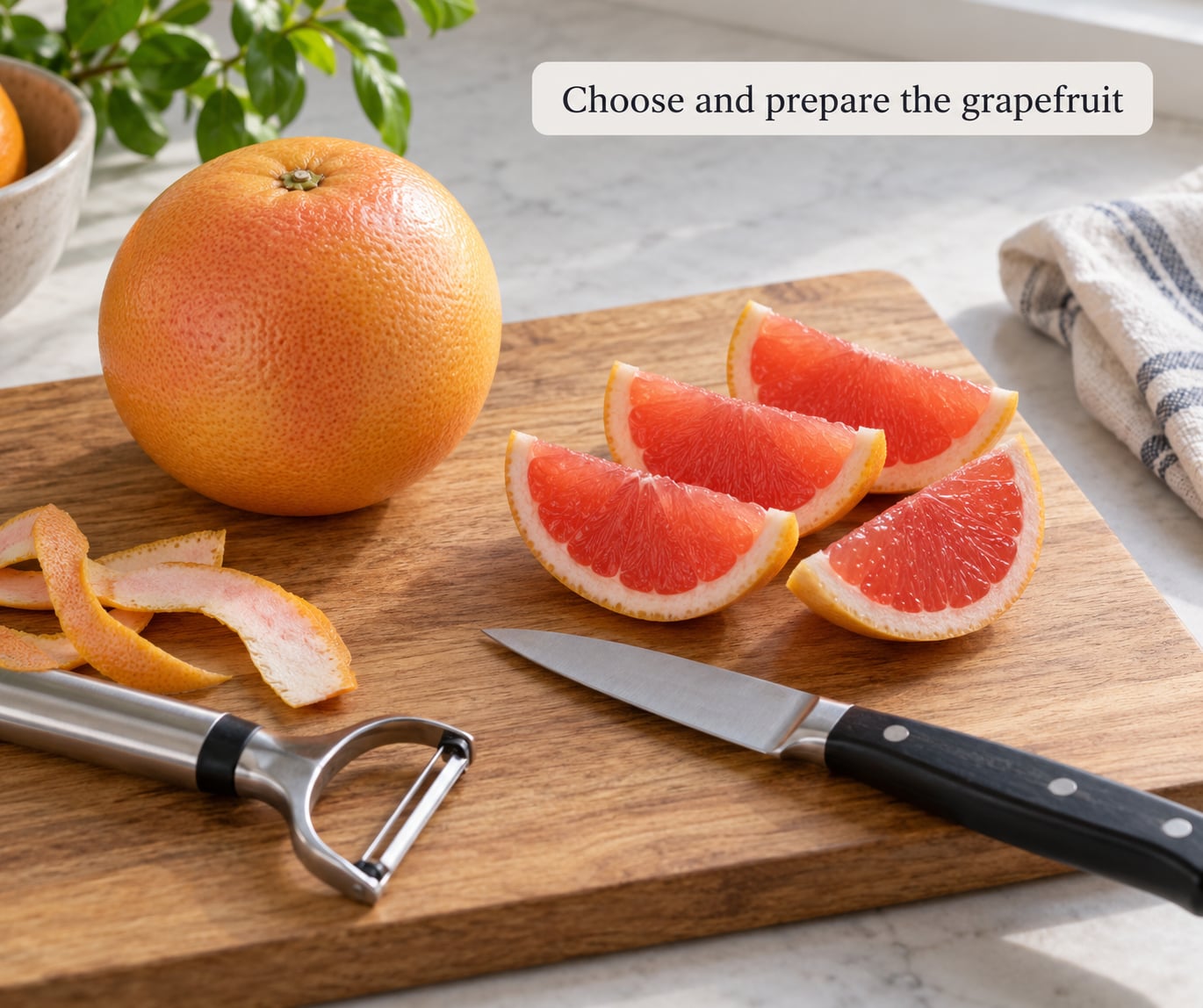
Pick a grapefruit that feels heavy for its size and gives slightly when you press the skin. Color tells you little, since grapefruit gets its pink blush from temperature rather than ripeness, so go by weight and give.
Rinse it well, then stand it upright on a board and slice off the top and bottom so it sits flat. Stand the fruit on one end and cut down the curve in strips, the same way you’d peel an orange. Take off a little more than the outer zest so the bitter white pith underneath comes away too.
Any pith you miss shows up as a sharp, soapy edge in the finished drink, so scrape the knife along the fruit a second time to clean up the exposed membrane. Cut the peeled fruit into wedges small enough to fit in your juicer and drop them into a bowl. You’re ready when every piece has zest and pith removed.
Juice the grapefruit and the lime
Hand-press the wedges with a citrus press, or mash them gently with a fork in a bowl and let the juice sit underneath. A fork works fine because grapefruit segments break apart easily once the membrane is scored.
Pour the juice through a fine strainer if you want a glass-crystal finish, and let the seeds and loose pulp stay behind in the strainer. That straining step is also the single biggest defense against bitterness.
Squeeze the lime separately and measure it. Start with 1/2 ounce and taste the mixture on a spoon before it ever meets tequila. Ruby Red grapefruit can be sweet enough on its own that lime drops to a quarter ounce, while a tart winter fruit usually wants the full half. Adjusting lime is far easier than diluting a finished drink.
Season the rim
Wet the outer lip of the glass with a grapefruit wedge or a lime wedge, rotating it as you go so you cover the full rim without flooding the inside of the glass.
Turn the glass upside down and press the wet rim into a shallow plate of coarse salt. Lift it straight up and tap off the excess. Do this within a couple of minutes of serving. Salt applied too early picks up moisture and clumps, which turns the rim gritty instead of crisp.
Shake the tequila and citrus
Add the tequila, the fresh grapefruit juice, the lime juice, your measured sweetener, and a handful of ice to the shaker. Cap it tight and shake with short, hard strokes.
You’re looking for two cues at once: frost spreading over the outside of the metal, and the sound of ice going from sharp clatter to a muffled slosh. Ten to fifteen seconds usually does it. Shaking gets the drink properly cold and gives it a little dilution, which is what makes it taste blended rather than layered.
Strain, top and garnish
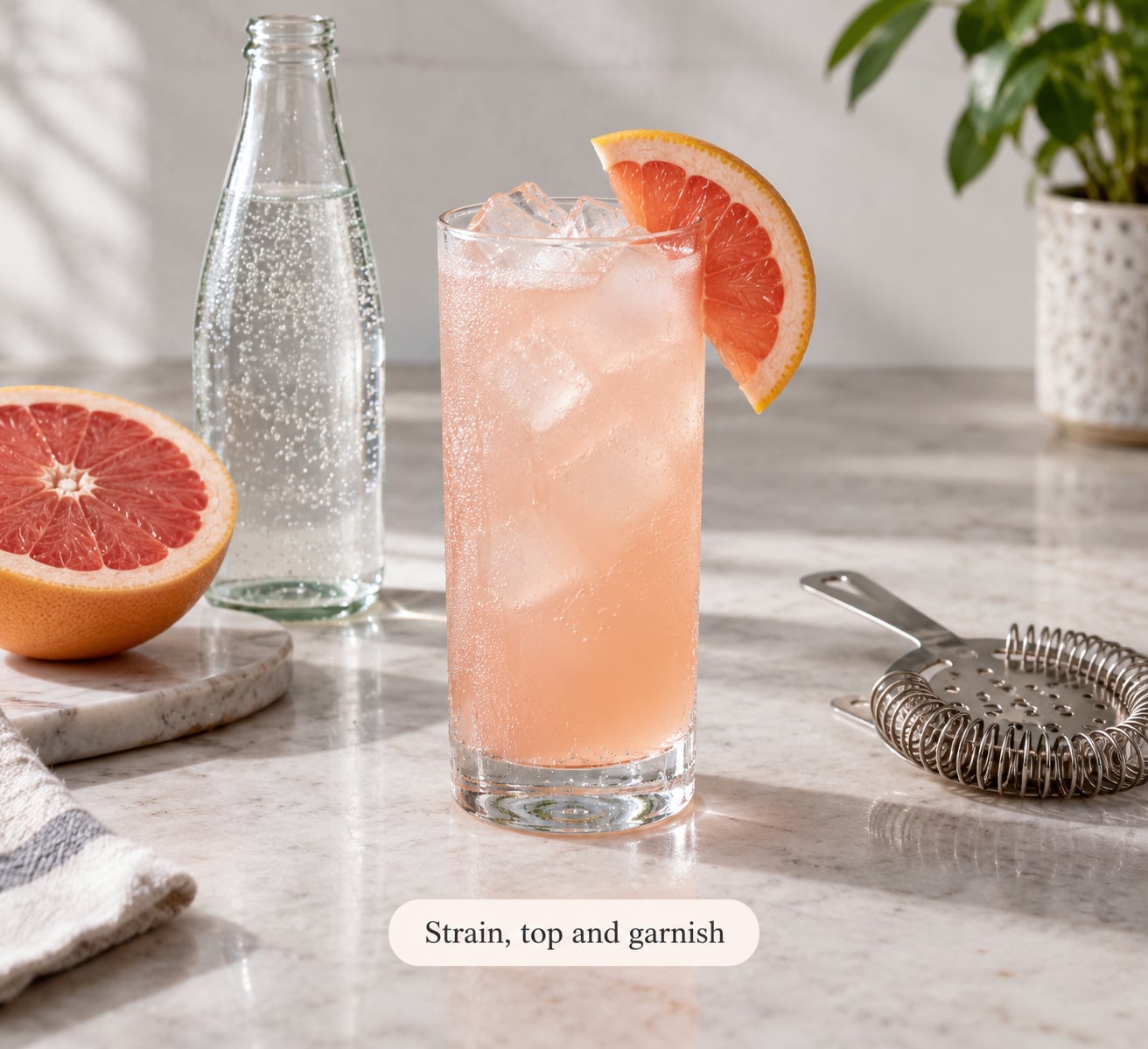
Strain the contents into the salted glass over fresh ice. Pouring through a second fine strainer costs you five seconds and removes the last flecks of pulp, which is what keeps a fresh grapefruit drink from turning bitter as the ice melts.
Top with 2 to 3 ounces of sparkling water and give it one gentle stir. Hard stirring knocks the carbonation out, so the drink goes flat while it still looks full.
Slide a grapefruit wheel onto the rim or drop a wedge straight into the glass, squeezing it once so the peel oils hit the surface. Your drink is ready when the ice is still solid, the bubbles are visible, and the color is a pale pink rather than a flat cloudy orange.
Common Mistakes
Using fruit that is hard or already soft. An underripe grapefruit gives you less juice and an aggressive edge. An overripe one tastes flat and cooked. Heavy-for-size and a little give is your whole selection method.
Pushing past 2 ounces of juice. Grapefruit has less sugar than lime or lemon, so extra juice pushes the drink sideways into sharp territory instead of adding body. If your fruit is especially juicy, measure 1 1/2 ounces and add lime rather than reaching for more grapefruit.
Filling the glass to the top with soda. Sparkling water is a lengthener, not the base. Two to three ounces is plenty, and it should arrive after the shake so the lift survives.
Overdoing the sweetener. Half an ounce of syrup plus sweet grapefruit and a salted rim is plenty of sugar. Start at 1/4 ounce, taste, and only go higher if the citrus genuinely tastes sharp rather than balanced.
Leaving the pulp and pith in the juice. This is the number one reason home palomas taste bitter. Fine-strain the juice, and scrape the blade across the peeled fruit a second time to catch the membrane.
Salting the rim an hour early. Moisture ruins the salt. Prepare it just before you pour.
Letting the drink sit until it’s flat. A paloma is meant to be drunk in ten or fifteen minutes. If it gets watery as the ice melts, that’s mostly because the ice was small; use large cubes or a big block so the melt rate stays slow.
Frequently Asked Questions
What tequila is best for a fresh grapefruit paloma?
Blanco tequila, also called silver or plata, is the right call. Its clean, unaged character keeps grapefruit as the loudest flavour in the glass, and a reposado adds oak and vanilla that reads as a margarita instead. You do not need an expensive bottle, just one that tastes of agave and not solvent. If you drink mezcal, a smoky version works too, at the same 2 ounces.
Can I make a grapefruit paloma without a cocktail shaker?
Yes, and most home bartenders do. Build it in the glass instead: add the tequila, grapefruit juice, lime, sweetener and ice to a highball, stir for about 15 seconds with a bar spoon until the outside of the glass frosts, then top with sparkling water. Shaking chills and dilutes faster, so a built drink needs a slightly longer stir and a little more ice.
How do I stop fresh grapefruit juice from tasting bitter?
Most bitterness comes from white pith and broken membranes, not from the fruit itself. Peel away more zest than you think you need, score the segments before pressing, and press gently rather than crushing. Fine-strain the juice to drop the seeds and pulp, and serve over large ice so the drink is finished before the citrus can turn harsh. A few drops of saline solution also rounds the edge out.
Should I use grapefruit soda, tonic water, or sparkling water?
Sparkling water or club soda is the best choice, topped on at serving time. It adds lift without adding sugar, so your fresh juice stays in charge of the taste. Grapefruit soda brings its own sweetness and usually pushes the drink too sweet once you add lime and syrup. Tonic adds quinine bitterness that competes with grapefruit, so leave it for a gin drink.
How can I make a paloma stronger or less alcoholic?
For more punch, raise the tequila to 2 1/2 ounces and cut the sparkling water to 1 ounce. For a lighter drink, drop tequila to 1 1/2 ounces, add an extra half ounce of lime, and fill with more sparkling water. To go alcohol-free, skip the tequila entirely and build the same citrus and soda base over ice, adding a quarter ounce of agave to round out the tartness.
Conclusion
Build the base first and taste it: 2 ounces of blanco tequila, 2 ounces of fresh grapefruit juice, 1/2 ounce of lime and a quarter ounce of sweetener, shaken hard until the shaker frosts. Add the sparkling water last, salt the rim just before you pour, and take a sip before handing it over. Adjust sweetness, tartness or strength on the second drink rather than on the first one.