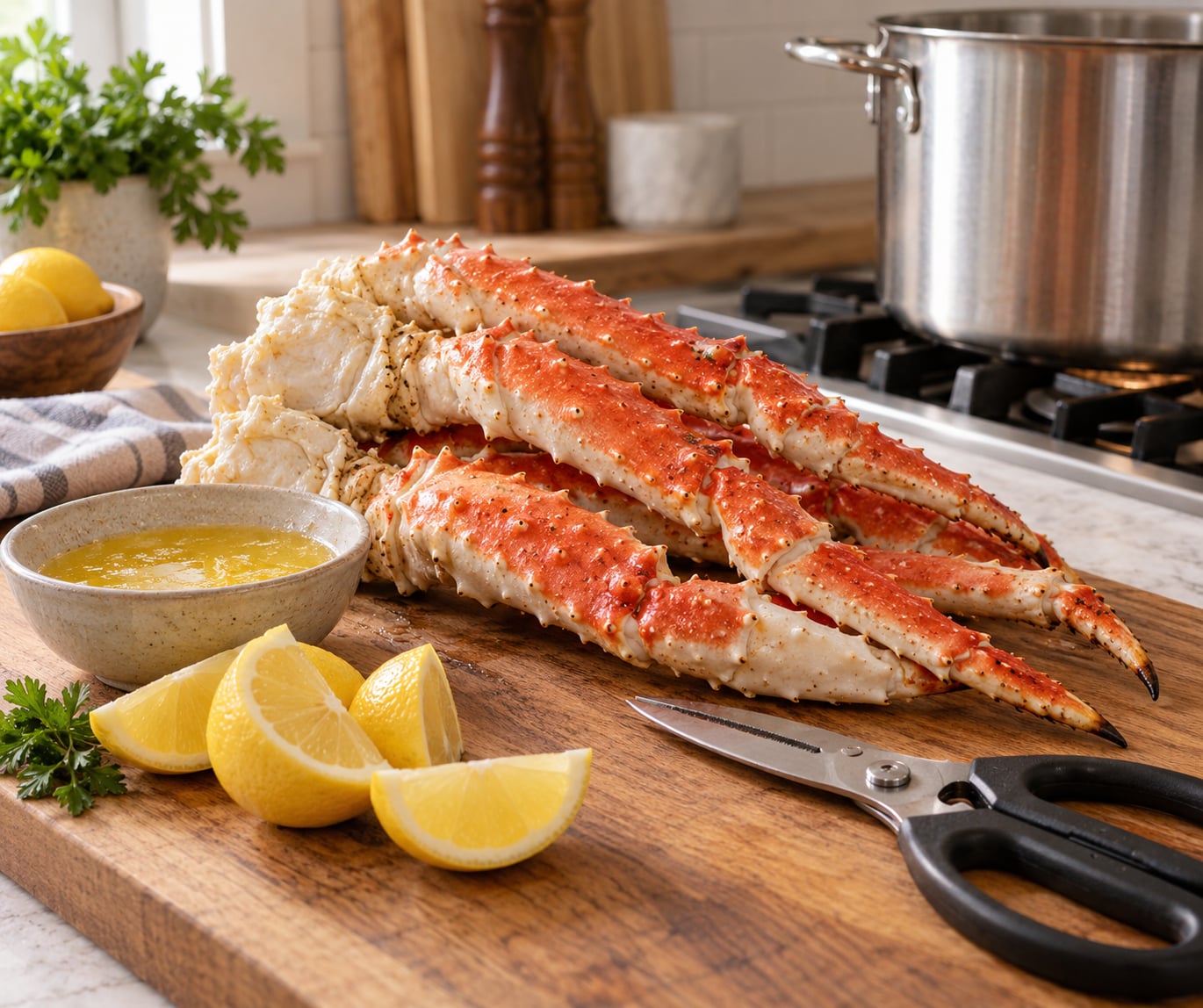
To cook crab legs on the stove, thaw them and heat them for 3 to 5 minutes if they are pre-cooked, which is what nearly every bag of frozen crab legs in the grocery aisle is. Bring salted water to a steady simmer, add the legs, or steam them in a basket set above the water, and pull them the moment the shells are hot and the meat steams. It is a five-minute job once the water is on, and updated for 2026 it is still the fastest, most forgiving way to get sweet crab on the table.
The reason so many people ruin crab is that they treat it like raw shellfish. It is not. Pre-cooked crab has already been cooked and flash frozen at sea, so anything past a gentle reheat dries it out.
Prep takes about 5 minutes and the cooking itself is shorter than the time your water takes to come to a simmer. Everything here works on a gas or electric range, with or without a steamer basket.
Table of Contents
What You Need
- Crab legs. Frozen king, snow, or Dungeness clusters. Check the color of the meat at a cut end: bright red or orange means already cooked, gray, brown, or translucent means raw.
- A large pot with a tight-fitting lid. Big enough that the legs sit in one or two layers rather than being stacked and steamed unevenly.
- Tongs. A pair of kitchen tongs is the only reliable way to lift wet, heavy clusters out of hot water.
- A steamer basket, or a heat-safe colander. Optional. A colander with feet works perfectly, and so does an improvised basket made from a few clean canning jar lids.
- Seasoning for the water. Salt is the baseline. Old Bay seasoning, cracked peppercorns, garlic cloves, lemon rinds, or a splash of white wine all add something without muddying the flavor.
- Melted butter and lemon wedges. Non-negotiable accompaniments. Garlic butter is the upgrade, and it takes two minutes on the stove.
- Kitchen shears or a seafood cracker. For opening the shell once the crab is on the plate.
- Paper towels. Pre-cooked crab holds a surprising amount of meltwater after thawing, and patting it dry keeps the seasoning on the meat instead of washing it off.
On the four types you will run into: king crab legs are long, thick, and meaty, and they need the longest reheating of the three. Snow crab clusters come in multi-leg sections, cook faster, and are the mildest in flavor. Dungeness is a Northwest Pacific crab with a firmer, slightly sweeter meat. Pre-split or shell-off legs are already portioned, so they heat through faster than whole shell-on legs and need about a minute less.
Step-by-Step: How to Cook Crab Legs on the Stove
1. Choose and Prepare the Crab Legs
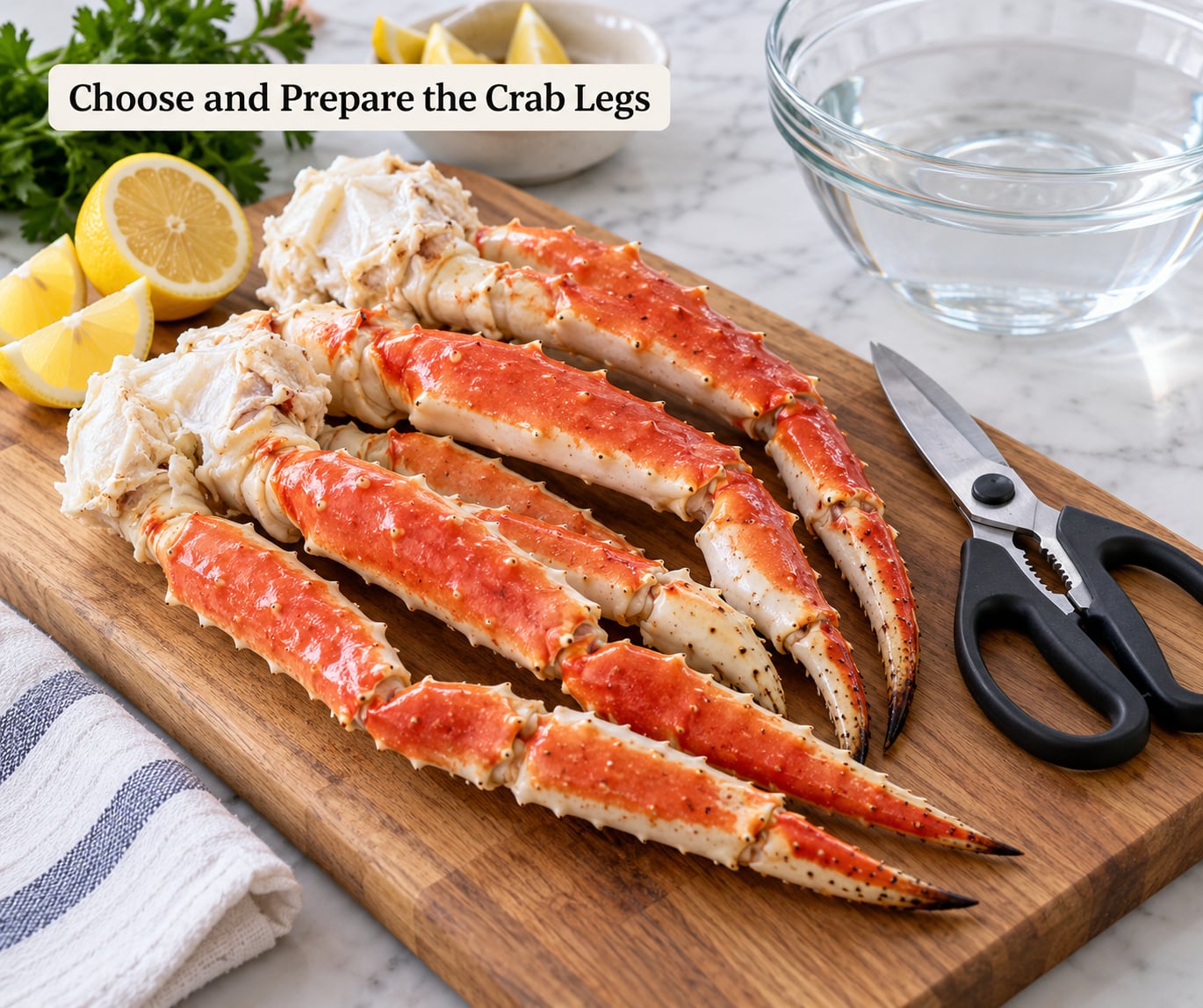
Thaw frozen crab legs in the refrigerator overnight, laid on a towel or tray so the meltwater does not sit against the packaging. A quick-thaw in cold running water takes 20 to 30 minutes for a pound or so of clusters, and running warm water over them is the one way to ruin the texture before the stove ever comes on.
Take the packaging off. Frozen clusters are usually sealed in a plastic bag or vacuum pouch, and leaving any of it on traps steam against the shell and gives the meat a freezer-burned, icy coating.
Rinse the legs briefly under cold running water and give the shells a quick scrub with a soft brush if they carry any sediment from the water they were caught in. Keep it to about a minute. Soaking crab legs drains the natural liquor that makes them taste like crab.
Pat them thoroughly dry, especially if they were frozen. Surface ice dilutes whatever you season with and keeps the shells wet, which means they steam rather than heat.
2. Decide Whether the Crab Is Raw or Pre-Cooked
This one check changes your cook time by a factor of three, so make it before anything else. Look at a cut end of the leg. Raw crab is grayish, bluish, or faintly translucent, and it smells of the ocean. Pre-cooked crab is opaque white with a red or orange tint, and it smells sweet and briny.
Everything else in this article assumes pre-cooked crab unless it says otherwise, because that is what nearly all store-bought crab legs are. If you have genuinely raw legs, you are essentially poaching them, and they take two to three times longer.
| Crab type | Boil, thawed | Boil, from frozen | Steam, thawed | Steam, from frozen |
|---|---|---|---|---|
| Pre-cooked king crab | 3 to 5 min | 8 to 12 min | 5 to 7 min | 10 to 12 min |
| Pre-cooked snow crab | 3 to 5 min | 8 to 10 min | 6 to 8 min | 10 to 12 min |
| Pre-cooked Dungeness | 4 to 5 min | 9 to 12 min | 7 to 9 min | 11 to 13 min |
| Raw, any type | 8 to 12 min | Do not boil from frozen | 10 to 12 min | Thaw first |
These are starting points, not a stopwatch. Pull the crab early and check it. Crab legs keep cooking from residual heat as they sit on the plate, so the correct move is always to take them out a minute before you think they are done.
3. Boil the Crab Legs
Boiling is the method people search for most and the one most often done too hot. Fill your pot so the water comes about 1 to 2 inches above where the crab will sit, add a tablespoon of salt per quart of water, and bring it to a boil. Then turn the heat down until the water is at a steady simmer, meaning bubbles break the surface steadily but the water does not roil.
Lower the thawed legs in one layer with your tongs, cover, and start the timer: 3 to 5 minutes for pre-cooked clusters, 8 to 12 minutes for raw ones. Do not stir them, and do not walk away.
A rolling boil is the single biggest reason crab turns rubbery on the stove. The agitation and the higher temperature squeeze the water out of the meat faster than gentle heat does, and the flavor you paid for leaches into the pot water. On seafood forums the complaint is near universal, and the same advice comes back every time: ease the heat down and give it fewer minutes.
For a foil-packet version, lay the seasoned legs in a sheet of heavy foil, splash in a couple of tablespoons of water, fold the foil into a sealed packet, and simmer it on the bottom of the pot for 6 to 8 minutes. The trapped steam does the same job as a steamer basket, and cleanup is a single sheet of foil in the bin.
4. Steam the Crab Legs for a Gentler Texture
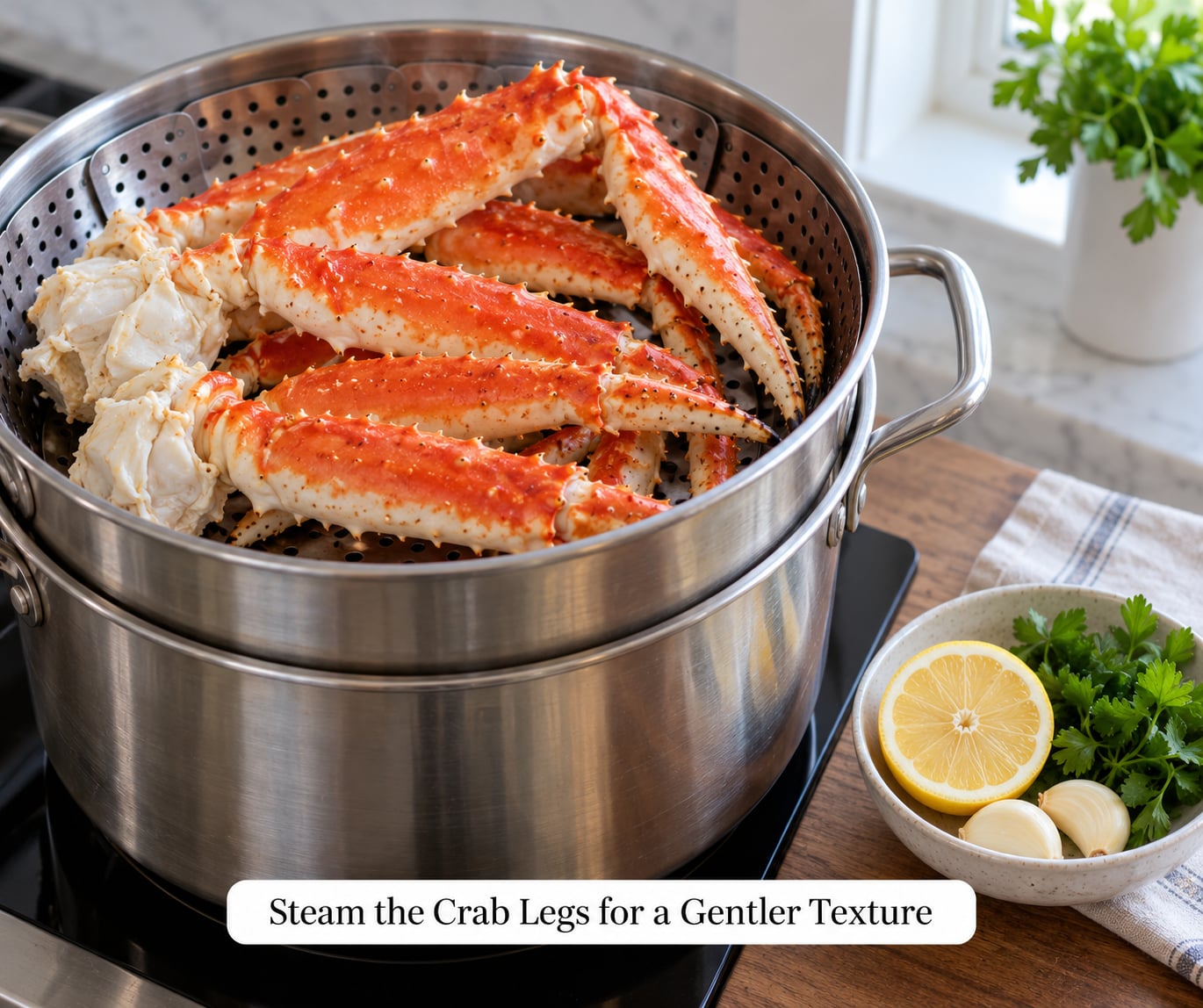
Steaming is the best method for flavor, and the difference shows up most clearly on king crab. Put 1 to 2 inches of water in the pot and season it the same way you would for boiling. Bring it to a full boil, set the legs in a steamer basket so they sit above the water line, cover, and steam for 5 to 7 minutes if thawed.
The lid matters more than most people expect. Steamed crab legs lose moisture when the vapor escapes, so keep the pot covered from the moment the legs go in to the moment they come out. If your lid does not fit the pot, invert a large bowl over the basket and treat that as the lid.
No steamer basket? A heat-safe colander with feet sits perfectly on a pot rim. Failing that, invert a sturdy bowl in the water with a little more water than the bowl displaces, and set the crab on the bowl’s base. Or use a metal pie tin with holes punched in the bottom. Any of these work, and none of them need to be bought.
Add 2 to 4 minutes if you cooked from frozen, and stir nothing. Frozen legs stacked more than one layer will steam unevenly, so cook in batches rather than doubling the time on a heaped pot.
5. Sauté the Crab Legs in Butter and Garlic
A skillet finish is the fastest route to crab that tastes like it came from a restaurant. Put a couple of tablespoons of butter in a large skillet over medium-high heat and let it foam, then add minced garlic and cook about 30 seconds until fragrant but not browned.
Add the thawed legs and toss them for 2 to 3 minutes, basting the shells with butter as they go. Splash in a quarter cup of water, cover, and give it another 60 to 90 seconds so the meat steams in its own steam rather than frying dry.
For raw legs, the same pan works but needs 6 to 8 minutes covered with an extra splash of water, and the crab goes in before the garlic goes in. Season with flaky salt at the very end rather than at the beginning, because salt drawn out early is moisture you want to keep in the meat.
6. Check Doneness and Serve
Shells that are hot enough to be uncomfortable to hold, meat that is steaming visibly when you crack a leg, and an opaque, firm-but-springy texture are your three cues. If you use a thermometer, aim to reheat to 135°F to 145°F and treat 150°F as a hard ceiling.
That ceiling is not arbitrary. Crab muscle proteins tighten and squeeze out moisture as they cook, and once they pass roughly 150°F there is no bringing the water back. The gap between a 4-minute reheat and a 15-minute boil is the whole difference between sweet, tender meat and something you chew for a while.
Rest the crab on a platter for 2 minutes before serving so the heat settles evenly through each cluster. Pour over melted butter, add lemon wedges, and eat immediately. Corn on the cob, roasted potatoes, a green salad, or a hush puppy or two are the classic partners, and a cold glass of dry white wine beats anything else.
To eat a cluster: twist the leg sections apart at the joints, use kitchen shears to snip the shell lengthwise down the outside of the leg, then peel the shell back and lift the meat out whole. A seafood cracker does the same job if you would rather not trim nails later.
Common Mistakes
Overcooking pre-cooked legs
The classic beginner error. People follow a 15-minute boil recipe on crab that needed four minutes and end up with meat that is tough, stringy, and dry. Pull the legs a minute early, test one, and remember that carryover heat finishes the job on the plate.
A rolling boil instead of a simmer
A full boil cooks the outside of the meat hard before the center warms, and it pushes the sweet juices out into the water. Bring the pot to a boil to start, then lower it until the surface bubbles steadily without churning.
Leaving the crab sitting in the water
Dumping legs into boiling water and letting them sit while you go do something else is the recipe for watery, bland crab. Heat them, then lift them straight out onto a platter. Steaming solves this problem entirely, since the crab never touches the water at all.
Cooking with no moisture in the pan
A dry skillet or an open pot dries shells out, and shells that dry out go hard and hard to crack. Any stovetop method you choose should have water, steam, a lid, or foil doing at least one of those jobs.
Seasoning too heavily
Old Bay in the cooking water is fine, but salting the crab itself before it goes in pulls water out of the meat and makes everything else you do harder. Season the water, then finish the crab with butter, lemon, and a light sprinkle of flaky salt afterward.
Confusing raw with pre-cooked legs
This one follows from all the others. Check the color of the meat before you start. A five-minute reheat on raw crab leaves you with something unsafe to eat, and a fifteen-minute boil on pre-cooked crab leaves you with something you cannot chew.
Crowding the pot
Piled legs steam and boil unevenly, which means the ones on the bottom overcook while the ones on top lag behind. Two shallow batches in five minutes beats one deep batch that needs guessing.
Frequently Asked Questions
How long do you have to boil crab legs?
Thawed pre-cooked crab legs need 3 to 5 minutes in a steady simmer, or 5 to 7 minutes in a steamer basket above the water. From frozen, plan on 8 to 12 minutes of boiling or 10 to 12 minutes of steaming. Genuinely raw legs take 8 to 12 minutes to boil. Check one minute early every time, since carryover heat keeps cooking the meat after you pull it.
Is it better to steam or boil crab legs?
Steaming is better, because the crab never touches water and keeps the flavor that would otherwise leach into the pot. Boiling is faster and needs less equipment. If you own a steamer basket or have a heat-safe colander, steam. If you do not, boil gently and keep the heat low enough that the water simmers rather than rolls.
Do you need to thaw frozen crab legs before cooking?
Thawing first gives you the most control and the most even result. An overnight thaw in the refrigerator on a towel is the best method, and cold running water takes 20 to 30 minutes for a pound of clusters. You can cook from frozen, but add 5 to 7 minutes and expect uneven heating in a crowded pot.
What happens if I overcook crab legs?
The meat proteins tighten, squeeze out moisture, and turn rubbery, stringy, and dry. Crab muscle gets past the point of no return somewhere around 150F, so reheat to 135 to 145F and treat 150F as a ceiling. You cannot rescue overcooked crab with butter, but a butter sauce will at least make it worth eating.
Should I put anything in the water when steaming crab legs?
Salt at about a tablespoon per quart is the baseline, and everything else is optional flavor. Lemon rinds, garlic cloves, Old Bay seasoning, a few cracked peppercorns, or a splash of white wine all work well. Skip anything sugary or heavily smoked, which tastes odd on crab. Season the water rather than the crab so the meat does not dry out.
How do I know when crab legs are done?
Three signals: the shells are hot enough to be uncomfortable to hold, the meat is visibly steaming when you crack a leg, and the texture is opaque and springy rather than translucent. A thermometer confirms it at 135 to 145F. Pull one minute before you think you are done and rest the crab two minutes on the platter before serving.
If you only remember one thing from all of this: check the color of the meat, bring the water to a simmer rather than a boil, and give it 3 to 5 minutes for thawed pre-cooked legs. Melt the butter while the crab heats so everything hits the table at once.