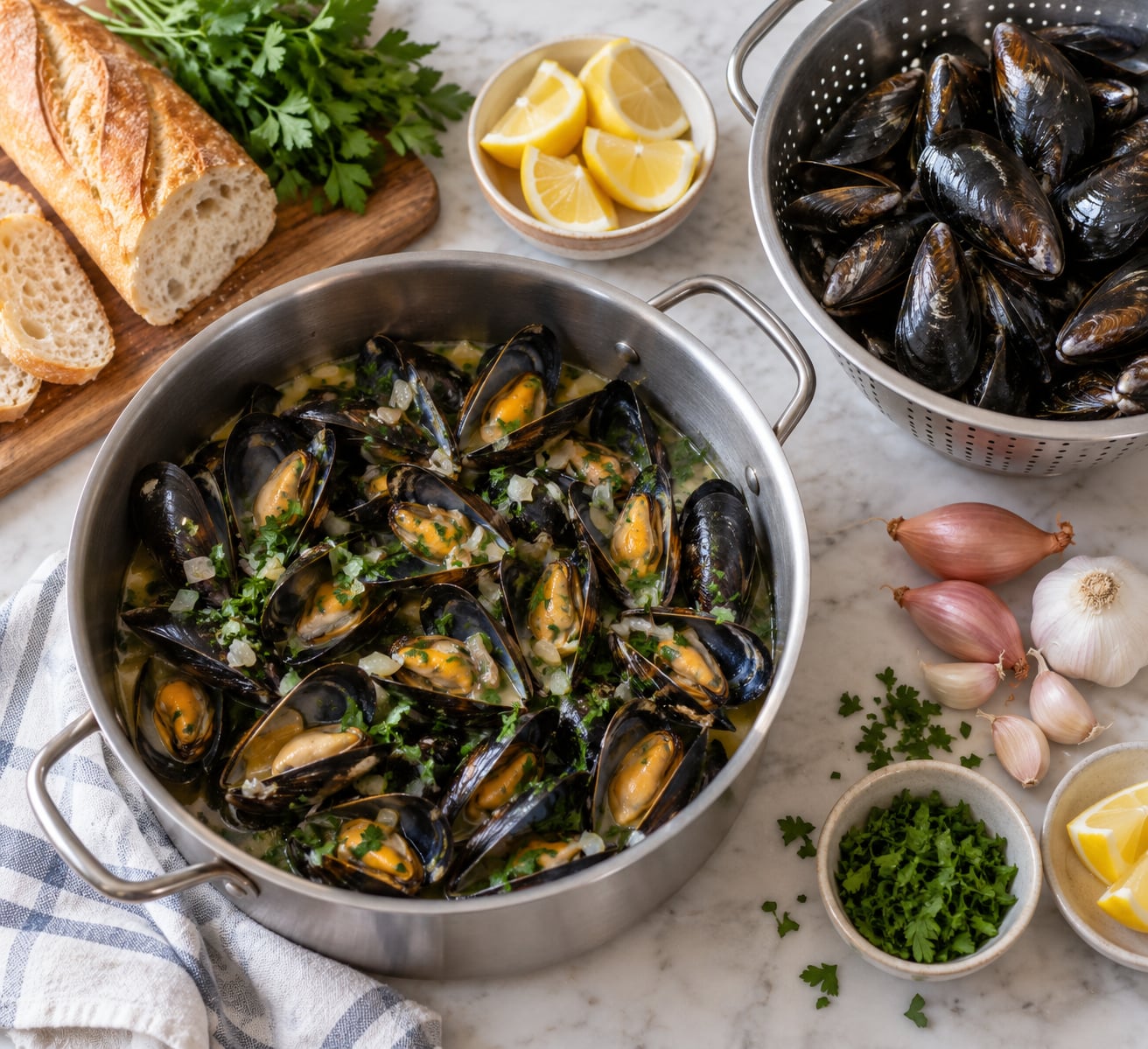
To steam mussels at home, put live mussels in a wide covered pot with garlic, shallot and a splash of dry white wine, then cook over medium-high heat for about 5 to 7 minutes, until the shells pop open. Start checking at the 4-minute mark and take the pot off the heat the moment they open, because overcooking is the only mistake that really ruins them. The whole job, prep to plate, takes about 20 minutes.
This guide walks through how to steam mussels at home from shell-on prep to the table, including how much liquid the pot actually needs, why you should not salt it, and what to do when shells refuse to open.
Table of Contents
What You Need
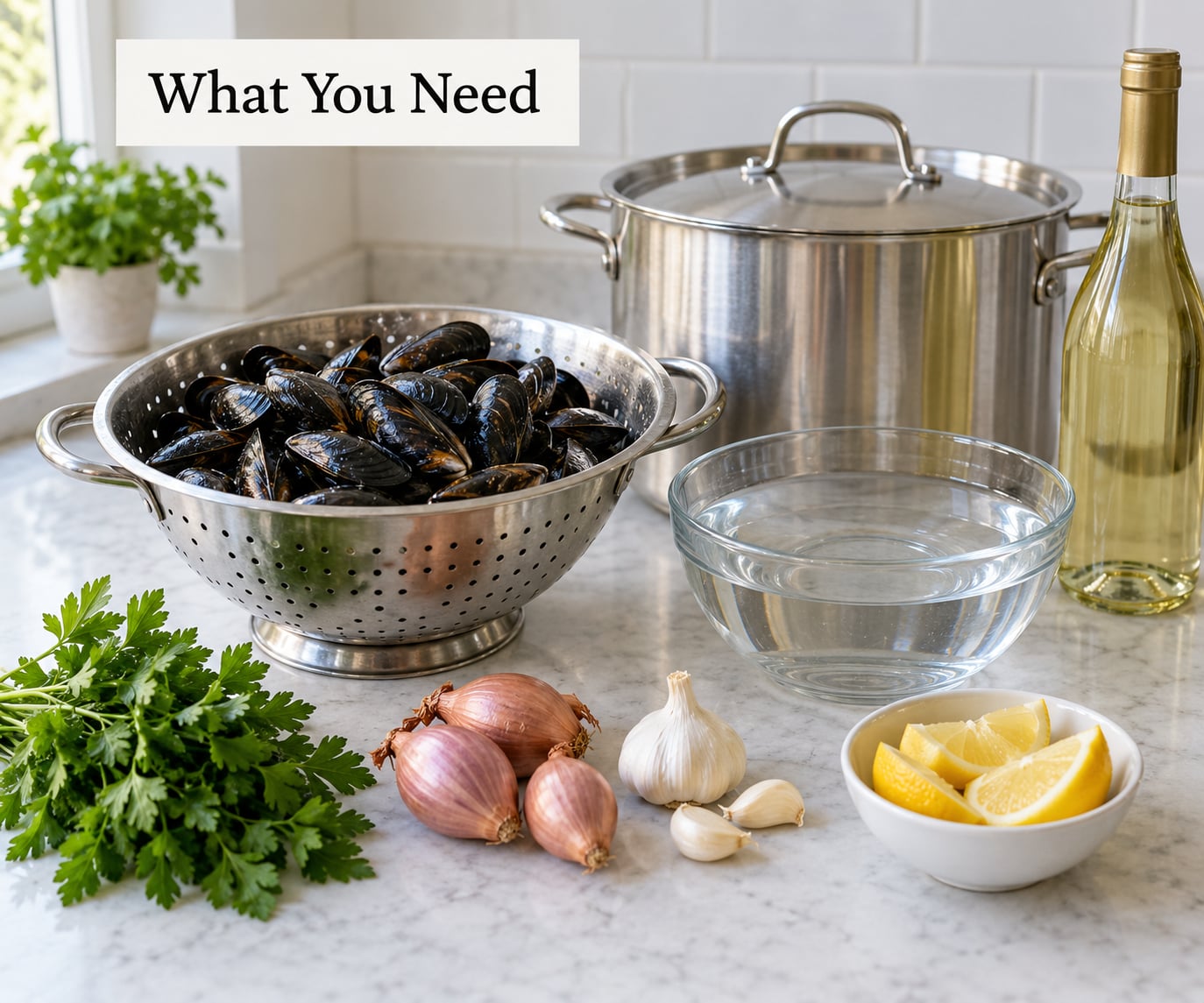
Budget about 1 pound of live mussels per person as a main course, or half a pound as a first course. Two pounds is the right buy for two hungry people, and it is the largest batch most home pots steam evenly in one go.
For the pot, reach for the widest heavy-bottomed pot you own with a tight-fitting lid, ideally 12 inches across for a full 2 pounds. Mussels shift and pop open as they cook, and they need room to move. A tall narrow stockpot works too, just arrange them in two layers rather than piling them deep.
- 1 to 2 pounds live mussels, kept chilled until you cook them
- 2 tablespoons olive oil or butter
- 1 shallot, thinly sliced, and 3 to 4 garlic cloves, smashed
- Half a cup dry white wine, plus a splash of water or stock if you like
- Lemon wedges, flat-leaf parsley, and red pepper flakes for the table
- Crusty bread for the broth
Skip the salt. Mussels release their own seawater as they cook, and salting at the start is the fastest way to a broth you cannot drink. Same with a pot full of water: about a half inch of liquid in the bottom is enough, since the covered pot traps the steam that does the work.
Substitutions are easy. No wine means clam juice, seafood stock, or just water with an extra squeeze of lemon. Cider or a light beer works in place of the wine if that is what you have open. Fennel seed, a bay leaf, or a pinch of Italian seasoning all fit in with the aromatics.
When you buy, tap any closed shell against a counter. It should sound tight and snap shut on its own; one that stays gaping open was dead before you got it home. Store them in the fridge in a bowl set inside a colander, covered with a damp towel, and cook within a day or two. Purge in fresh cold water for 30 minutes or so if they look sandy, though most rope-cultured mussels come ready to cook.
Step-by-Step: How to Steam Mussels at Home
Step 1: Clean and Inspect the Mussels
Rinse the mussels under cold running water and scrub the shells with a stiff brush or the back of a small knife. Grit hides in the ridges, and that grit ends up in your broth.
Pull the beard, the little bundle of byssus threads that anchors the mussel to a rock, toward the hinge end. Never yank it away from the hinge, or you tear the meat. Toss any cracked shell, and set aside anything that will not close when tapped. Keep the cleaned mussels chilled in the fridge while you build the pot.
Step 2: Build the Aromatic Steaming Liquid
Heat the butter or oil in the pot over medium heat. Add the shallot and cook for 2 to 3 minutes until soft and translucent, then add the garlic and cook one minute more. You want the garlic fragrant, not brown; burnt garlic turns the whole broth bitter.
Pour in the wine and scrape the bottom of the pot, letting it bubble for 30 to 60 seconds. That little bit of reduction is what pulls the flavor off the pan and into the broth. Keep the liquid to about a half inch in the bottom of the pot. Any deeper and you are poaching the mussels instead of steaming them.
Step 3: Arrange the Mussels in the Pot
Dump the mussels in and shake the pot so they settle into one even layer. If they sit hinge-side down, even better, since the hinged end holds the meat and keeps it from sliding out of the shell as it cooks.
Do not crowd them. A deep pile steams unevenly, the bottom shells overcook while the top ones stay shut, and the ones at the edge can scorch against the hot pot. If your pot is too small, cook a second batch rather than doubling up.
Step 4: Steam the Mussels
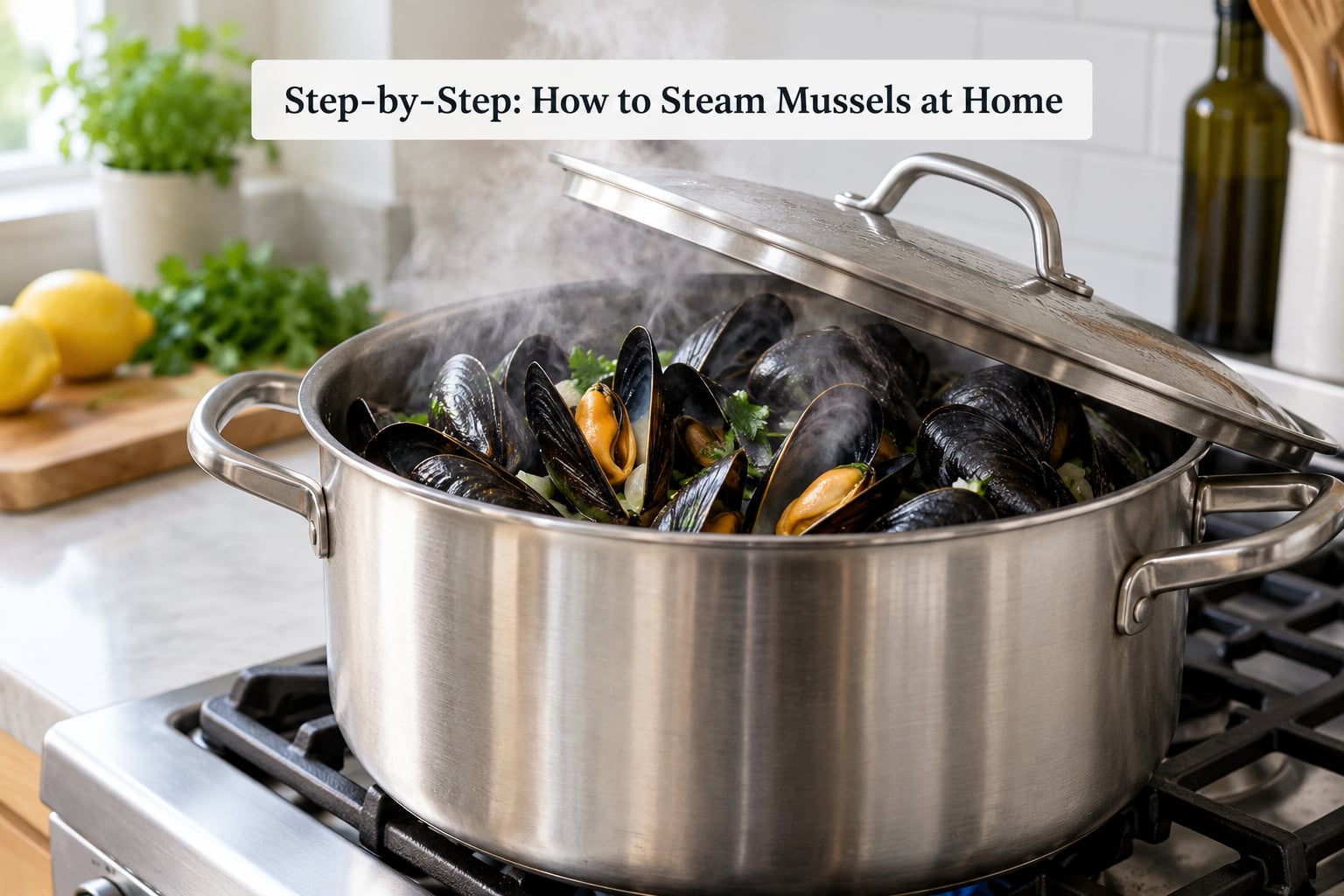
Bring the liquid to a lively simmer, cover the pot, and turn the heat to medium-high. Start the clock when the lid goes on.
- 1 pound: 4 to 5 minutes, starting to check at 3 minutes
- 2 pounds: 6 to 7 minutes, starting to check at 4 minutes
- Larger mussels or a colder pot: add another minute or two
Give the pot one good shake halfway through without lifting the lid. Steam escapes every time you peek, and the temperature drops when it does.
They are done when the shells have popped wide open and the meat looks opaque and springs back when you press it. Take the pot off the heat at that moment. Residual heat and carryover cooking finish the job, which is why another minute or two in there is what turns tender meat into something shrunken and tough.
Step 5: Serve Immediately with the Broth
Move the mussels to a serving bowl with a slotted spoon, and discard every single one that stayed closed. That rule is not a suggestion: a live mussel that stays shut after steaming is the one that was dead or did not cook through.
Ladle the strained broth into small bowls for dipping, or pour it over the mussels in the serving dish. Finish with a knob of cold butter, chopped parsley, and a squeeze of lemon, and set out lemon wedges and red pepper flakes. Bread is not optional in my kitchen; the broth is half the reason to order mussels in the first place.
Common Mistakes
Almost every bad batch of steamed mussels traces back to one of these.
The pot was overcrowded. A heaped pot steams unevenly and scorches the shells sitting against the metal. Fix: one layer, wide pot, and a second batch instead of a deeper pile.
The lid came off early. Every peek lets steam out and drops the pot temperature, so the timing stretches and the shells open late. Fix: lift once, at the end, to check.
They cooked by the clock instead of by the shells. Ten minutes is fine for a roast, terrible for mussels. The meat keeps shrinking past the point of opening, which is the rubbery texture people complain about. Fix: pull the pot at the first sign of shells popping.
Salt went in at the start. The mussels brine themselves as they cook. Fix: season at the end, and taste the broth before deciding.
The pot was half full of water. That is boiling, not steaming, and it dilutes the flavor into a thin, watery broth. Fix: a half inch of liquid, then cover.
The dead-before-cooking check got skipped. A raw mussel that is already open, or one that will not snap shut when tapped, was dead when it hit the bag. Fix: do the tap test at the store, again over the sink at home, and bin anything questionable before it goes near the pot.
Closed shells got eaten after cooking. This is the rule that gets confused with the tap test, so it is worth stating plainly: dead mussels are open when raw and closed when cooked. Discard them.
Leftovers were boiled back to life. Cooked mussels reheat in about 3 minutes over low heat in a splash of their own broth, just until steaming. Boiling them makes them squeeze. Refrigerate them within 2 hours and eat them within 24 hours, per standard shellfish guidance.
Frequently Asked Questions
How long does it take for mussels to steam?
One pound takes about 4 to 5 minutes in a covered pot over medium-high heat, and two pounds take 6 to 7 minutes. Start checking a minute early, because the real doneness cue is the shells popping open, not the clock. Once most shells are open, take the pot off the heat and let carryover heat finish the rest.
Is it better to boil or steam mussels?
Steaming is better in almost every case. Boiling leaches flavor and salt into water you throw away, and the meat spends longer at a hard boil, so it turns tough. Steaming keeps the liquid concentrated with the mussel liquor, cooks in less time, and leaves a broth good enough to drink. Only boil if you are shucking to make a chowder.
How much liquid do I need to steam mussels?
About a half inch of liquid in the bottom of the pot, which is roughly half a cup of dry white wine plus a splash of stock. The covered pot traps steam, and the liquid that matters most is the one the mussels release themselves. More liquid than that turns the dish into boiled mussels with watery broth.
Should you eat a mussel that doesn’t open when cooked?
No. Discard any mussel that stays closed after steaming. A live mussel opens when its internal liquid boils and steam pressure forces the shell halves apart, so a shell that never opened was probably dead from the start. It is the one rule of mussel cooking that is not flexible.
What are the common mistakes when cooking mussels?
The big five: crowding the pot, lifting the lid while steaming, cooking past the point where the shells open, salting the pot at the start, and adding a lot of water. Mussels release their own seawater and cook from steam alone, so extra salt and extra water undo the seasoning you were trying to build.
How many mussels should I buy for 2 people?
About 2 pounds for a main course, or 1 pound each if you want a generous first course plus sides. Count on roughly 8 to 10 edible mussels per serving as a main, since some shells will not open. Buy live, tightly closed mussels from a fishmonger and cook them within a day or two.
Conclusion
Start at the sink, not the stove. Scrub the shells, pull the beards toward the hinge, and bin anything cracked or already gaping open before it ever reaches the pot. From there it is a wide covered pot, about a half inch of wine and aromatics, no salt, and 4 to 7 minutes over medium-high heat depending on the batch.
Watch the shells, not the clock. The minute they pop, pull the pot, discard everything still closed, and serve the broth alongside. That is how to steam mussels at home so the result comes out tender every time, 2026 edition and all.