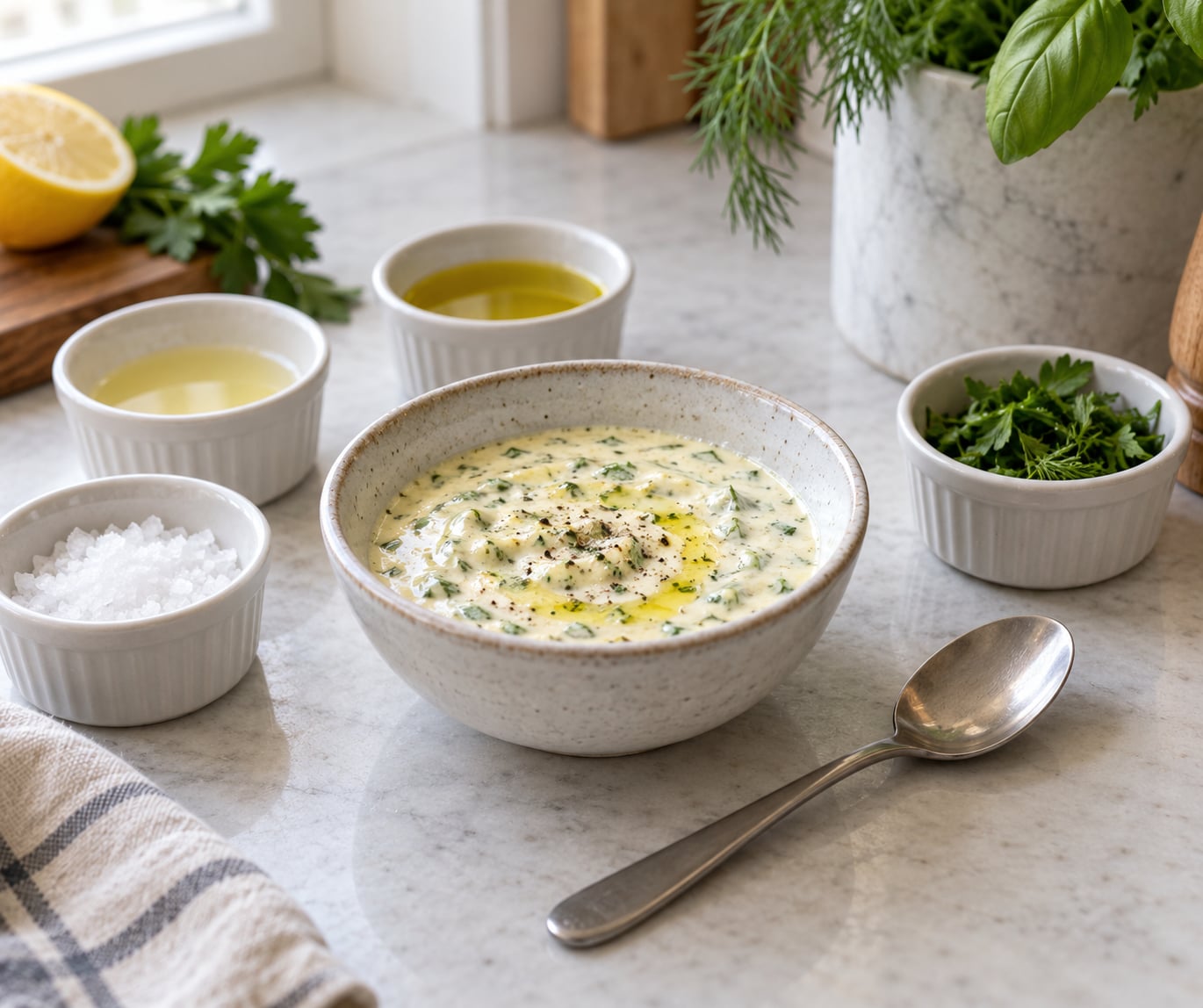
A dish that tastes fine in the pan often tastes flat at the table, and the fix takes about two minutes. To taste and adjust a dish before serving, take a small spoonful off the heat, work through salt, acid, fat, sweetness, heat and umami in that order, add the smallest dose of whichever one is missing, then taste again until the strongest flavor has a counterweight.
That last pass is not a garnish step. It is the whole difference between food that is merely cooked and food that tastes finished. The good news is that it needs no recipe, no equipment and almost no time.
I have watched the same pot of tomato sauce go from dull to genuinely good in the last ninety seconds, and the fix was always the same: salt, then a squeeze of lemon, off the heat. Here is how to run that pass yourself.
Table of Contents
- What You Need
- Step-by-Step
- Common Mistakes
- Frequently Asked Questions
- When should I taste a dish before serving?
- How do I know whether a dish needs salt, acid, or sweetness?
- Should I taste food while it is still hot or let it cool first?
- How do I fix a dish that tastes too salty?
- What if the flavor is balanced but the texture is not?
- Can I adjust a dish after it has been plated?
- Conclusion
What You Need
You need very little, and you need it before you start rather than while guests are at the door.
- A dedicated tasting spoon. Keep one small spoon that lives in a clean jar by the stove and is only ever used for tasting. A second spoon is worth having, because the first one will be in a dish you are about to adjust.
- A small cool plate or ramekin. Hot food tastes blander than room-temperature food. Pouring a spoonful onto a cool plate gets you a truer read in a few seconds.
- Something to write on. A note of what you tasted and what you added is how you stop making the same correction twice.
- Optional: a 1 teaspoon measure and an instant-read thermometer. The measure keeps your doses honest. The thermometer matters for roasts, not for sauces.
Then set out the adjustment kit, which is the part most people skip. Within arm’s reach you want flaky or kosher salt, a lemon or a lime, two or three vinegars with genuinely different characters, honey, olive oil or butter, soy sauce or miso, chili flakes, and a small bunch of fresh herbs.
The reason for a kit rather than a shelf is timing. If the lemon is in the fridge and you are at the stove at the last second, you will skip it and serve the dish flat. Coarse salt and a cut lemon sitting next to the hob get used; everything else does not.
Step-by-Step
How to Taste the Dish Without Changing It
Taste with intention, which sounds obvious and is where most last-minute adjustments fail. Put the pan down, take a clean spoon, and put a small amount on a cool plate. A small amount matters because the point is to taste the dish, not to fill the spoon.
Then read it in a fixed sequence rather than reacting to the first thing you notice. Smell it before you put it in your mouth, because most of what people call flavor is aroma, and you can smell aroma without altering the food. After a bite, notice the intensity, the temperature, the texture, and what is left behind once you swallow.
That last one is the aftertaste, and it is the most honest signal you get. A sauce that tastes fine on the tongue and turns sharp and oily in the finish has an acid problem, not a salt problem.
Two temperature checks matter. Taste once hot, because that is how it will be eaten, then let it settle fifteen seconds and taste again, because heat masks sweetness and dulls your perception of fat. If the two bites say different things, trust the second one for balance and the first for heat.
Finally, taste the plated portion, not just the pan. A dish can need one thing salted and something else brightened, and plating dilutes sauces with their own dressing or cooking juices. A spoonful taken straight from the pot will lie to you about the finished plate.
On safety: never put a spoon you are cooking with back into the dish, and never double-dip. Use the tasting spoon, rinse it, and use it again. Do not taste raw poultry, ground meat or seafood while it is still raw; cook to the safe minimum first, then taste. Poultry reaches 165°F (74°C), ground meat 160°F (71°C), and whole cuts and fish 145°F (63°C). For very hot food, let a spoonful cool on the plate for a few seconds before it goes in your mouth.
How to Identify What the Dish Needs
Cooks rarely struggle to sense that something is missing. They struggle to name what is missing, so they guess. Fix the order of operations and the guess disappears: taste for salt first, then acid, then fat, then sweetness, then heat, then umami. Each element tells you something different, and checking them in a fixed sequence stops you from solving the same problem three times.
| Element | What it does | Reach for | Risk if you push it |
|---|---|---|---|
| Salt | Amplifies everything and makes flavors clearer | Kosher or flaky salt, then a finishing pinch | Harsh, dry, and impossible to rescue once it is past a few percent over |
| Acid | Lifts richness and restores contrast | Lemon or lime, red wine vinegar, cider vinegar, a little yogurt | Sour, thin, and it flattens everything else when it overcorrects |
| Fat | Carries aroma and gives body | Olive oil, butter, cream, a spoon of the sauce’s own fat | Greasy and heavy, and it dulls the aroma you were trying to highlight |
| Sweetness | Rounds sharp edges | Honey, maple syrup, a pinch of sugar | Cloying, and it makes a savory dish read as dessert-adjacent |
| Heat | Adds urgency and length | Chili flakes, fresh chili, black pepper | Numbs the palate, which hides every other problem |
| Umami | Deepens savoriness and adds weight | Miso, soy sauce, tomato paste, fish sauce, parmesan, anchovy | Savory turns muddy and salty at the same time |
The symptom table is the faster lookup once you have a name for what you are tasting.
| What it tastes like | What it usually needs | Start with | First dose |
|---|---|---|---|
| Flat, dull, unfinished | Salt first, then acid | Kosher salt, then lemon juice | Pinch, then a half teaspoon of lemon |
| Heavy and thick | Acid and a splash of liquid | Vinegar or citrus, stock or water | Half teaspoon of vinegar |
| Sharp, sour, astringent | Fat and sweetness | Butter or olive oil, honey | Half teaspoon of oil, a quarter teaspoon of honey |
| Too sweet | Acid and salt | Vinegar, then salt | Half teaspoon of vinegar |
| Too salty | More volume and more fat | Unsalted stock, cream, butter, rice or pasta | A quarter cup of liquid, stirred in |
| Thin and watery | Reduction or starch | Simmer it, or a slurry of cornstarch | One teaspoon of slurry |
| Muddy, one-note | Acid to reset, then a fresh aromatic | Lemon, then a herb added off the heat | Half teaspoon of lemon |
| Greasy | Acid, and time | Vinegar or citrus, off the heat | One teaspoon of lemon |
One home-cook answer I keep coming back to, from a thread on r/Cooking: more butter generally makes food taste better, and so do more acid and more salt. The whole trick is knowing which of the three the dish is asking for. That is why the order starts with salt, not with whatever is nearest the hob.
How to Adjust Seasoning and Balance
Adjust in doses small enough to be reversible, and change one variable at a time. The useful ladder is a pinch (under 1/16 teaspoon), a drop (a single dropperful or about 1/20 teaspoon), a teaspoon, and a tablespoon. Start at the bottom of the ladder and add, tasting after each addition.
Why small doses beat one confident guess: an overcorrected dish cannot be pulled back. Acid, salt and heat are all one-directional, and if you add a tablespoon of lemon to a sauce that only needed a few drops, the only way out is to add a great deal more of everything else.
Salt goes in and dissolves properly, then you taste again before deciding. Acid goes in off the heat at the very end, because boiling and long simmering drive off the volatile compounds that make citrus and vinegar taste bright. That is the single biggest reason restaurant sauces are sharper than home ones.
Fat goes in cold and finishes the sauce. Sweetness, when it belongs, goes in early enough to dissolve and late enough to survive. Heat and chili go in at the end for aroma, and umami boosters like miso or soy go in near the end so they do not turn bitter with long cooking.
If you overshoot, you dilute rather than counteract. A too salty sauce gets unsalted stock or cream and more butter; a too sharp one gets fat and a touch of sugar; a too sweet one gets vinegar and salt. Nothing cancels out salt except less salt and more volume, which is why the safest response to a heavy-handed pinch is to stir in a quarter cup of something unsalted.
How to Check Texture, Temperature, and Finish
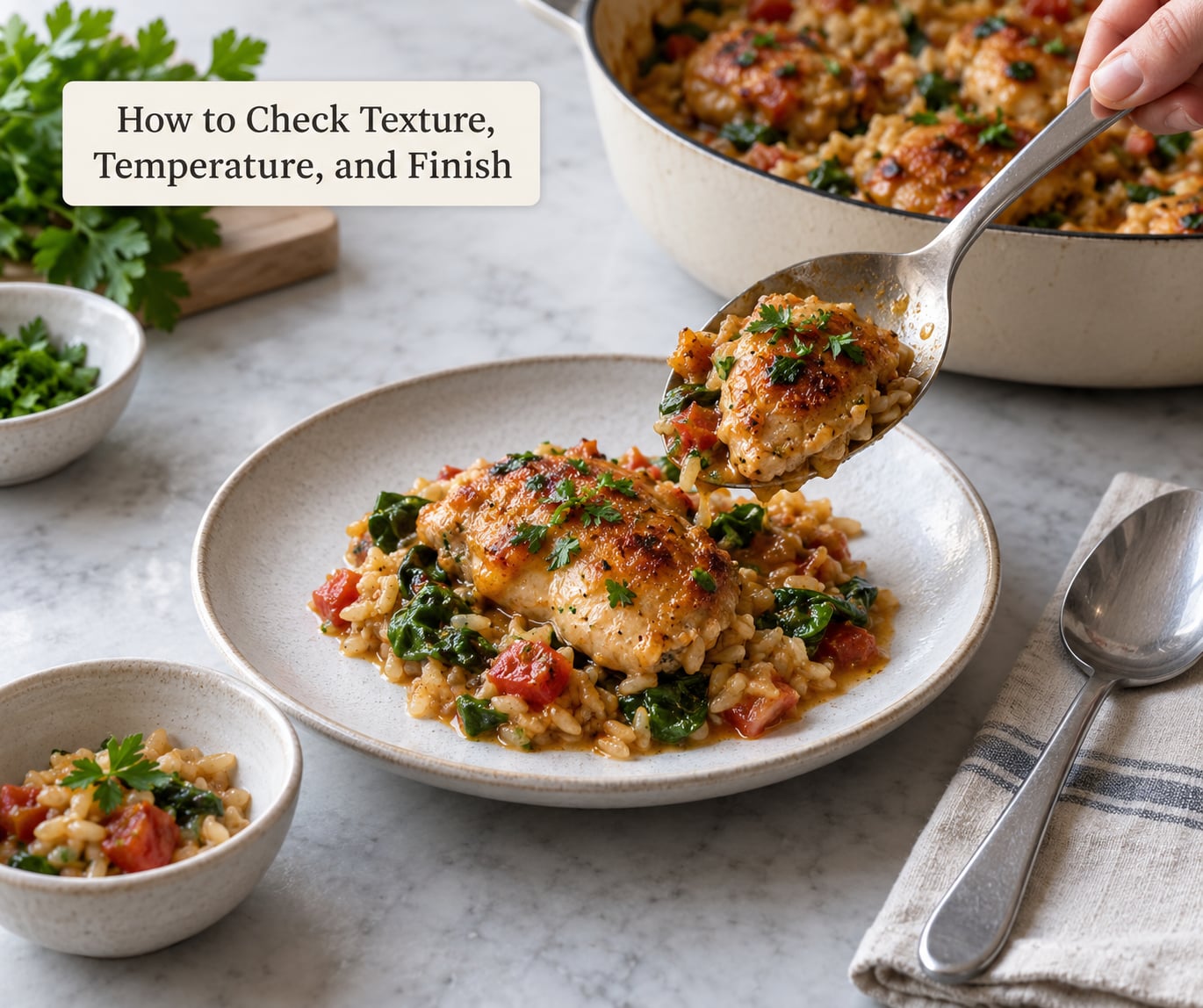
Balance is only half of what a diner notices. Before you serve, look at the dish rather than tasting it again: does the sauce coat the back of the spoon or slide off, is there visible liquid pooling at the edge of the plate, does anything look dry or cracked.
Sauce consistency is the most common real failure. If it runs off the plate it needs reduction, and if it sits in a stiff mound it needs liquid or fat. One teaspoon of cornstarch slurry, whisked in cold and brought back to a simmer, fixes a thin sauce faster than reducing it.
Then account for serving drift, which is why a dish can taste perfect in the pan and worse five minutes later. Heat dissipates and dulls aroma, fat settles onto the surface as the dish cools, and the volatile acids you added continue to evaporate. A dish served straight off a boil also tastes flatter than the same dish served a minute later.
So taste the dish again at serving temperature, not just cooking temperature, and add the finishing touches last: a spoon of cold butter or raw olive oil stirred through off the heat, a scatter of fresh herbs or a squeeze of citrus, and flaky salt on top. Those final additions restore exactly the aroma and contrast that the last minutes of holding cost you.
If you are cooking for other people, do this pass before the food leaves your hands. Plate one portion, taste that portion, adjust the batch, then plate the rest. Keeping one spare plate means you can re-taste after resting without eating half the dish, and it means nobody watches you hover over a saucepan with a spoon.
Common Mistakes
Changing several things at once. Two additions in one pass tell you nothing about what worked. Add, taste, note, repeat.
Deciding the whole dish from one spoonful. A single taste taken from the thickest part of a sauce tells you about that spoonful. Take two or three from different places, including a piece of the solid ingredient.
Tasting straight off a boil. Very hot food suppresses sweetness and fat perception, so you add salt to a dish that was already fine. Pour it onto a cool plate and wait fifteen seconds.
Seasoning for your own palate rather than the dish. Your palate is already loaded with the meal, the sides and the drinks. If a dish seems under-salted to you at dinner, it may be fine; judge balance while you are still actively tasting, not after four courses.
Reaching only for the salt shaker. Flatness is usually acid or fat, not salt. A dish can be perfectly salted and still need a squeeze of lemon, and salt will not fix it.
Skipping the plated taste. Sauces get diluted on the plate by their own dressing and by the vegetable juices underneath them. Always taste the assembled bite.
Waiting until guests are at the door. The pass takes two minutes. Once people are seated, you are not adjusting a dish, you are defending one.
Trying to fix flavor with more cooking time. As one answer on r/AskCulinary put it, let it cook a little longer, taste again, and then decide. Some dishes need patience, and simmering a sauce that is already thin just concentrates the wrong problem.
Frequently Asked Questions
When should I taste a dish before serving?
Taste it three times: once during cooking to check seasoning and doneness, once as the dish comes off the heat, and once at serving temperature. The last pass is the one that matters most, because heat and holding time flatten aroma. If you have time for only one extra taste, make it the plated portion a couple of minutes before you serve.
How do I know whether a dish needs salt, acid, or sweetness?
Check them in a fixed order. Add a small pinch of salt and taste; if the flavors become clearer rather than just saltier, that was the problem. If the dish still tastes flat but is properly salted, add a few drops of lemon juice or vinegar. Sweetness is the last resort for savory dishes and is most useful for softening a sharp edge, not for making a bland sauce taste good.
Should I taste food while it is still hot or let it cool first?
Do both. Taste it hot to check seasoning at the temperature it will be served at, then let a spoonful cool on a plate for fifteen seconds and taste again. Very hot food suppresses your perception of sweetness and fat, which is why dishes seasoned straight off a boil often end up over-salted. The cooled taste is the better guide for balance.
How do I fix a dish that tastes too salty?
Dilute it and add fat, because no ingredient truly cancels salt. Stir in unsalted stock, cream, water, or rice or pasta cooked without salt, a quarter cup at a time, tasting as you go. More butter or olive oil softens the harshness. Adding more salt, sugar or acid makes it worse, and scraping out the liquid only works for braises and roasts where the sauce is separate.
What if the flavor is balanced but the texture is not?
Balance the sauce instead of the seasoning. A thin sauce needs reduction or a teaspoon of cornstarch slurry whisked in cold and simmered; a stiff sauce needs liquid or fat stirred in off the heat. Dry, cracked or rubbery food usually needs a fat or a shorter rest, and lumpy or gluey results often mean the starch was added too fast or at too high a heat.
Can I adjust a dish after it has been plated?
Yes, and it is usually worth doing. Keep a small pan or bowl of the sauce or cooking juices, then add salt, acid, or finishing oil directly on the plate and let it sit for a minute before serving. Plated dishes also drift, so a final taste of the assembled bite is a genuine quality check rather than fussiness. Adjust the whole batch at once if you are serving the same food to everyone.
Conclusion
Start with the next dish you cook: take it off the heat, pour a spoonful onto a cool plate, and taste it in the order of salt, acid, fat, sweetness, heat, umami. Name the one thing that is missing, add the smallest dose of it, and taste again.
Two minutes of that is the difference between food that tastes cooked and food that tastes like somebody cared about it.