Yes, you can substitute butter for oil in baking: use about 1 cup of melted butter for every 1 cup of oil, or drop to 3/4 cup when the batter is already rich. The whole job takes about five minutes, and it works in cakes, quick breads, muffins, brownies, box cake mix and most drop cookies.
There is one place it fails. If the recipe creams cold butter with sugar, or cuts solid butter into the flour, leave that butter exactly where it is. That structure is the recipe’s lift, and melted butter cannot rebuild it.
How to make the swap
- Melt the butter and let it cool to room temperature so it cannot cook the eggs in the batter.
- Measure it by weight when you can. One cup of melted butter is 226g, or 2 sticks.
- Pour it in exactly where the oil was called for and change nothing else in the recipe.
What to keep in mind
- Butter is roughly 80% fat and 20% water, so a straight cup-for-cup swap quietly adds water to the batter.
- The bake comes out denser, drier, less tall and it browns at the edges sooner than an oil version.
- Butter mutes bold flavors, which is the real reason many chocolate cupcakes use oil in the first place.
If you tell me what you are baking, I can point you at the right number in the table below rather than the wrong one.
Table of Contents
- What You Need
- Step-by-Step: How to Substitute Butter for Oil in Baking
- 1. Check Whether the Recipe Can Handle Butter
- 2. How to Substitute Butter for Oil by Weight, Not by Cups
- 3. Melt the Butter and Cool It Before Mixing
- 4. Follow the Recipe’s Mixing Order
- 5. Adjust Baking Temperature and Doneness
- Common Mistakes
- Tips for the Best Results
- Frequently Asked Questions
- Can I use butter instead of oil in a cake recipe?
- How much butter replaces one cup of oil in baking?
- Does using butter instead of oil make baked goods healthier?
- Will a butter substitution change the texture of cookies or muffins?
- Do I need to lower the oven temperature when using butter?
- Can I substitute butter for vegetable oil in brownies?
- Conclusion
What You Need
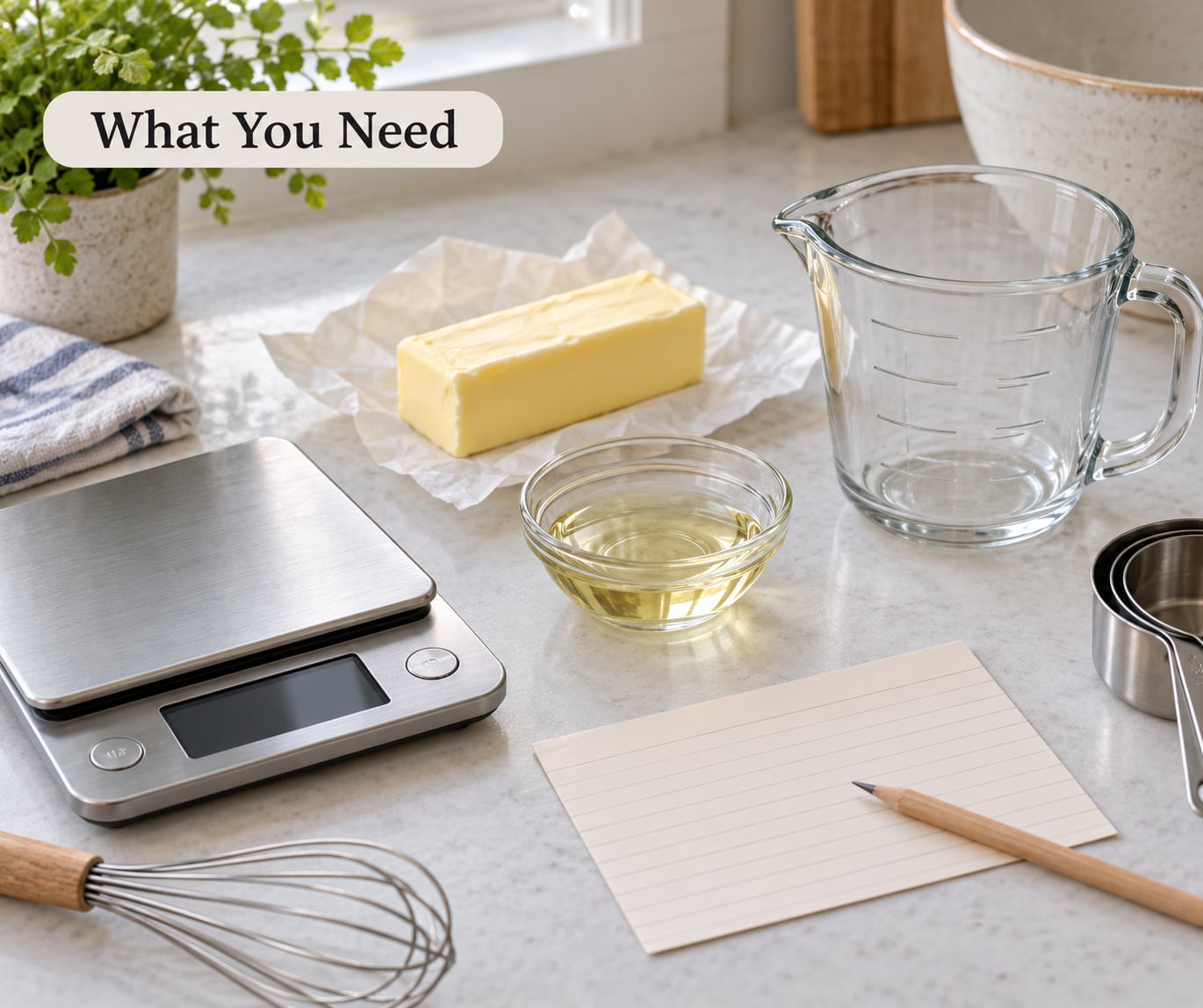
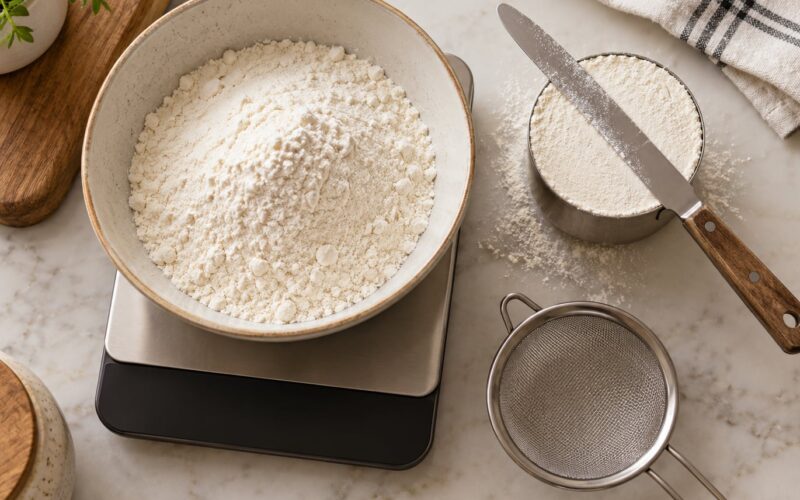
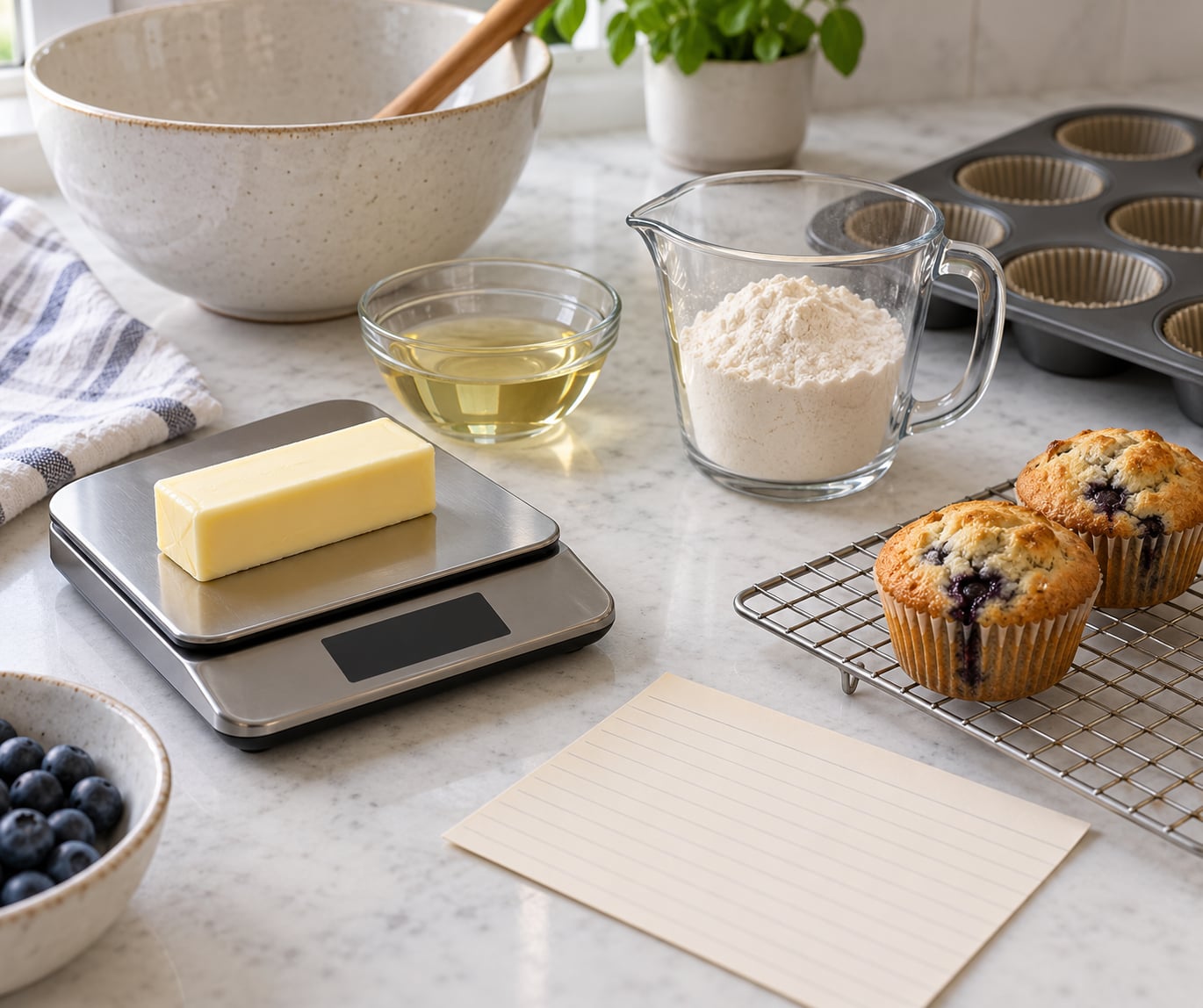
A scale is the one tool that changes the outcome here, because the entire question is how much fat goes into the batter and volume measures drift once the butter is melted and poured.
- A digital kitchen scale that reads grams, or a set of measuring cups if you do not have one. Grams are the reliable option; cups are the acceptable one.
- The original recipe, open at the fat line. You need to see whether the oil is the only fat, and whether the recipe creams or cuts in solid butter.
- Unsalted butter. Salted butter at a full stick adds roughly a third of a teaspoon of salt to the batter, which is usually too much on top of the salt already in the recipe.
- An oven thermometer, if you have one. You are not changing the temperature for this swap, but you will be checking doneness early, and ovens drift.
- An understanding that this is a weight conversion. Everything below is easier by grams, and the table gives you both.
One more thing worth knowing: weight is the only measure that survives the swap cleanly. A cup of oil and a cup of melted butter are both about 226g, so cups are not wrong, but they are loose enough that they will not tell you the difference between the 1:1 rule and the 3/4 cup rule you may actually need.
Step-by-Step: How to Substitute Butter for Oil in Baking
1. Check Whether the Recipe Can Handle Butter
Butter can replace oil in any recipe that gets its rise from a chemical leaven or from whipped egg whites rather than from beaten fat. In practice that means layer cakes, sheet cakes, quick breads like banana, pumpkin, zucchini and lemon, muffins, cupcakes, brownies, most drop cookies and box cake mix.
Do not swap in biscuits, scones, pie pastry, puff pastry or anything laminated, and do not swap in a recipe that begins by creaming softened butter with sugar. Creaming works by beating air into solid fat and sugar; melt that fat and you have removed the mechanism the recipe was built on, which is where flat, dense cakes come from.
The muffin method and the biscuit method can both live inside something called a quick bread, and they need opposite fats. Batter-method quick breads mix wet into dry and rise on baking powder or soda, so melted butter is fine. Dough-method quick breads cut cold butter into the flour and are really biscuits wearing a loaf pan, so they are not.
One more filter that catches people. If the batter has no liquid other than eggs, the swap can tighten the gluten and make the crumb tighter, which is something bakers in Facebook cooking groups describe often. Add a couple of tablespoons of milk to the batter when you make that swap.
2. How to Substitute Butter for Oil by Weight, Not by Cups
Convert by weight, and use 1 cup of melted butter for every 1 cup of oil as your default. For batters that are already rich, with a high fat percentage of their own, step down to 3/4 cup of melted butter per cup of oil so the finished crumb does not turn heavy.
| Oil in the recipe | Melted butter, standard | Melted butter, rich batters | Weight of the standard amount |
|---|---|---|---|
| 1/4 cup (4 tbsp) | 1/4 cup | 3 tbsp | 57g |
| 1/3 cup | 1/3 cup | 1/4 cup | 75g |
| 1/2 cup | 1/2 cup | 1/3 cup | 113g |
| 2/3 cup | 2/3 cup | 1/2 cup | 151g |
| 3/4 cup | 3/4 cup | 1/2 cup | 170g |
| 1 cup | 1 cup | 3/4 cup | 226g |
| 2 tbsp | 2 tbsp | 1 1/2 tbsp | 28g |
A stick of butter is 1/2 cup, 113g, or 8 tablespoons, which is the shortcut most people memorize. If you are doubling a recipe, double the butter. If you are halving it, halve by weight rather than guessing, because 1/3 of a cup of oil becomes an awkward 75g unless you are weighing anyway.
The reason cup-for-cup is only approximate is water. Butter is about 80% fat and 20% water, while vegetable oil is 100% fat, so 8 tablespoons of melted butter carry roughly 1.5 teaspoons of water into the batter along with the fat. That is why 1:1 works for a lean cake and why it weighs down a batter that already has butter or shortening in it.
Going the other direction is a different number, and mixing the two up is the most common source of bad swaps. Replacing butter with oil, use 3/4 cup of oil for every 1 cup of butter. That is not the same rule reversed, and the two directions were never symmetrical.
3. Melt the Butter and Cool It Before Mixing
Melt the butter for any batter that gets fully mixed, and leave it solid and softened only when the recipe already calls for creaming. Melt it in a saucepan over low heat, or in the microwave in 20-second bursts with a swirl between each one, until it is liquid and smells like butter rather than toasted nuts.
Let it come all the way to room temperature before it meets eggs. Hot butter can set the proteins in the egg white and leave you with scrambled-looking bits in the batter, and the cooling takes 20 to 30 minutes depending on how much you melted.
Do not brown it, and do not use melted butter anywhere the recipe is counting on air. Those are the same rule from step 1, seen from the other side: no melted fat, no captured air.
4. Follow the Recipe’s Mixing Order
Put the butter exactly where the oil went. In muffin-method cakes and quick breads, that usually means whisking the melted butter in with the dry ingredients, or pouring it in with the milk before the eggs, and mixing only until the streaks disappear. Overmixing is what deflates the batter you just paid for.
In batters with a lot of eggs, whisk the eggs and sugar first, let the butter cool fully, then add it. The order matters less than the temperature.
For small swaps, the same logic applies at a smaller scale. A question that comes up constantly on r/Baking is whether 2 tablespoons of melted butter can replace 2 tablespoons of oil in a chocolate topping or ganache drizzle. It works, and at that volume the ratio nuance barely matters, so use the low end of the table and go with 1 1/2 tablespoons of butter.
For a box cake mix or a cake-pour packet, use 1/2 cup of melted butter in place of the 1/3 cup of oil on the box, and let it cool a few minutes before you stir it in. Those mixes are formulated for oil because oil is cheaper and more forgiving, not because butter is wrong, so expect a slightly denser cake and a better flavor.
5. Adjust Baking Temperature and Doneness
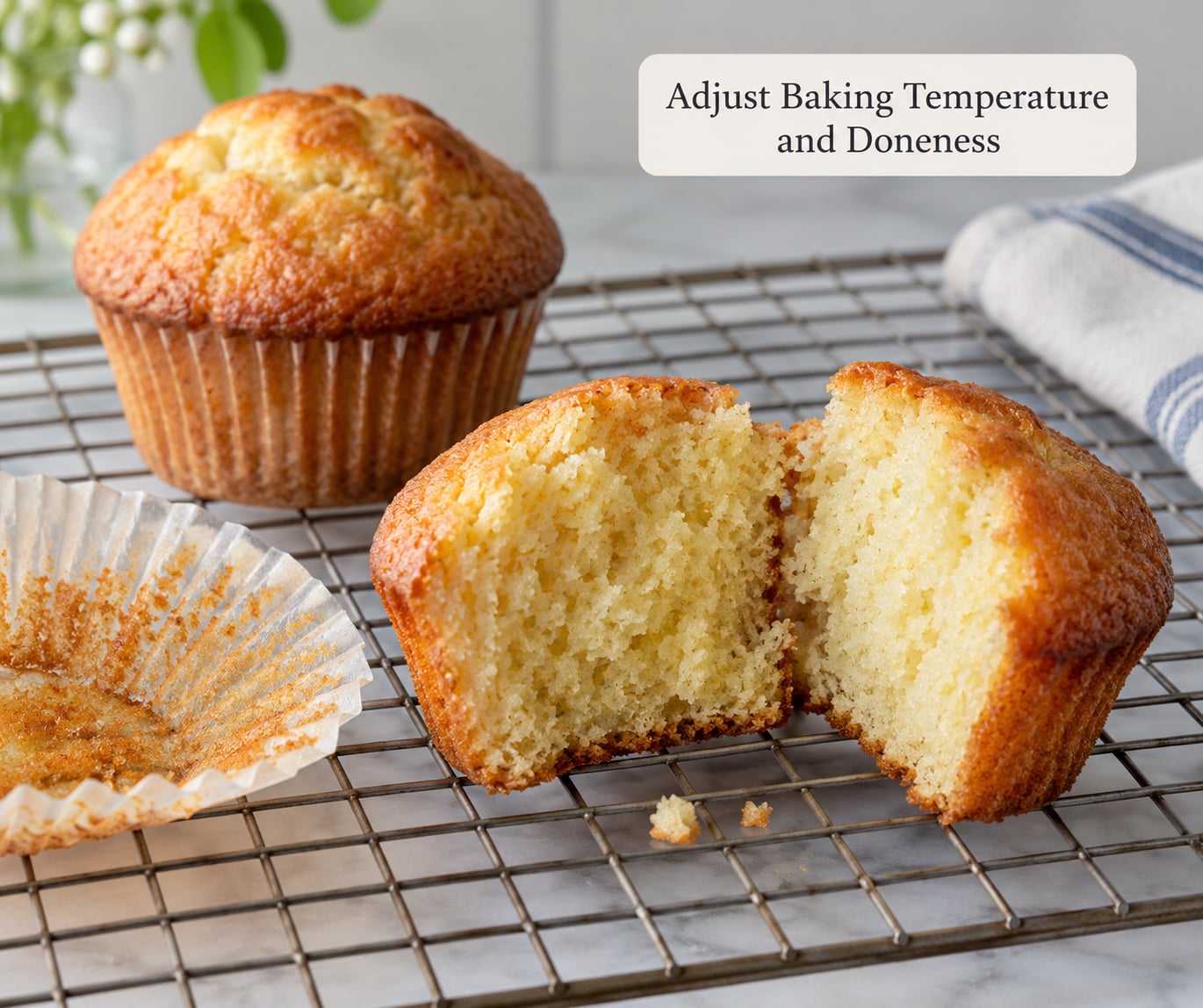
No temperature change is required for this swap. Keep the recipe’s temperature as written and the same baking time, and start checking earlier rather than adjusting the dial.
Butter browns sooner than oil because of the milk solids it carries, so the top and the edges will color before the center is finished. On a quick bread, check five minutes ahead of the recipe’s time. A skewer or toothpick inserted into the deepest part of the loaf should come out clean or with a few moist crumbs, and the center should spring back lightly when you press it.
If you bake a very rich butter cake in a dark pan, dropping the oven by 5 degrees can help keep the edges from going too dark while the middle sets, but that is a pan-color decision rather than part of the swap.
Common Mistakes
- Swapping cup for cup without deciding which rule applies. 1:1 is right for a lean cake, 3/4 cup per cup of oil is right for a rich batter. Weigh the oil, pick the column, and stop thinking about it.
- Swapping in a creaming or cut-in recipe. If the recipe beats softened butter with sugar or cuts cold butter into flour, the fat is structural. Make no change.
- Adding butter while it is still warm. Cool it fully before it goes near eggs, or you get curdled bits and a batter that never sets properly.
- Ignoring the water butter brings. If the finished batter seems loose, take about 2 tablespoons off the milk or water for every cup of butter you added. Add it in small steps.
- Changing the leavening or adding liquid to compensate. Baking powder and baking soda are calibrated to the original fat and moisture. Adjusting them while also swapping the fat is how bakes turn flat or bitter.
- Reading color as doneness. Butter crusts early. Use a skewer in the thickest part rather than the color on top, or you will pull a cake that is still raw in the middle.
Tips for the Best Results
Weigh everything, not just the butter. Grams remove the guessing from the flour and sugar too, which is where most bad quick breads actually come from.
Use unsalted butter, and use a recipe with at least a moderate fat percentage. The higher the fat in the original, the more you want to step down toward the 3/4 cup column.
Note what the original bake is supposed to look and feel like before you change anything. If you have baked the recipe before, a photo or a memory of the crumb is the only honest benchmark you will have, since butter changes the result in ways that are hard to judge in the moment.
Label your experiments. Write the date and the ratio on the recipe, because you will bake it again in six weeks with no memory of whether you used 1:1 or 3/4 and no way to learn from the result.
Try both fats on purpose. Half the oil called for plus half its weight in melted butter gives you the moisture oil brings and the flavor butter brings, and it is the version most people end up making permanently once they have tried it.
Choose oil deliberately when chocolate or citrus is the point. Butter genuinely mutes both, and that is not a flaw in the swap, it is a reason many chocolate cupcake recipes stay with oil.
Frequently Asked Questions
Can I use butter instead of oil in a cake recipe?
Yes, in most cakes. Use 1 cup of melted butter for every 1 cup of oil, or 3/4 cup in a rich batter, and keep the temperature the same. Do not swap in a cake made with the creaming method, where the recipe beats softened butter with sugar, because that air is the lift.
How much butter replaces one cup of oil in baking?
One cup of melted butter, which is 2 sticks or 226g, replaces 1 cup of oil in a standard cake, quick bread, muffin or brownie recipe. For batters that are already rich, use 3/4 cup, about 170g, so the crumb does not turn heavy.
Does using butter instead of oil make baked goods healthier?
Not in any meaningful sense. Butter is mostly saturated fat, about 63 percent, while vegetable oil is mostly unsaturated. What changes is flavor and texture: butter adds richness and a denser crumb, oil keeps bakes moist and soft for longer. If fat type matters to you, that is a choice to make on purpose, not a side effect of a swap.
Will a butter substitution change the texture of cookies or muffins?
Yes, slightly. Expect a denser, more tender, less moist crumb and a top that colors faster. Muffins and quick breads keep a good result, and drop cookies come out a little crisper at the edge. If the batter has no other liquid, add a couple of tablespoons of milk so the flour does not tighten.
Do I need to lower the oven temperature when using butter?
No. Keep the temperature and the baking time exactly as the recipe states, and check doneness five minutes early for quick breads instead. Butter browns faster than oil because of its milk solids, so the top will color before the center is done, which is why a skewer test in the deepest part beats reading the crust.
Can I substitute butter for vegetable oil in brownies?
Yes, and brownies are one of the easiest swaps. Use 1 cup of melted butter for 1 cup of oil, or 3/4 cup if the recipe already includes melted chocolate or a lot of butter. The crumb comes out cakier and denser with less of that classic fudgy pull, so if fudge is the goal, keep the oil.
Conclusion
Put the oil on the scale first, convert it using the table above, and leave everything else in the recipe alone. Melt the butter, cool it fully, pour it in where the oil was, and check the bake five minutes early. That is the whole process, and it works the first time more often than most people expect.