A mocktail tastes complex when it hits at least three of the six flavor families — sweet, sour, bitter, salty, spicy, savory — instead of piling sweetness on top of juice. Start with a 2:1:0.25 ratio of sour to sweet to bitter, then build aroma and texture around it. Five minutes, no special equipment.
Most flat mocktails fail for the same reason. Spirits carry four things that juice and soda do not: aroma, body, warmth and a slightly astringent bite. Take the alcohol out and nothing replaces those layers, so the drink reads as sweetened juice with bubbles.
Rebuilding them is mostly arithmetic. Sweetness gives roundness and viscosity, acidity gives lift, bitterness creates the contrast that makes both of those taste more intense, aromatics feed the nose, and something like tea tannin or a little salt puts a finish on the whole thing.
Table of Contents
- What You Need to Make a Mocktail That Tastes Complex
- Step-by-Step
- 1. Choose a Flavor Foundation
- 2. Add Sweetness, Acidity, and Bitter Contrast
- 3. Build Aromatic and Textural Layers
- 4. Shake, Strain, and Dilute
- 5. Taste and Fine-Tune the Balance
- Common Mistakes
- Frequently Asked Questions
- What makes a mocktail taste more complex?
- What ingredients add depth to a non-alcoholic drink?
- How do I stop my mocktail from tasting too sweet?
- Should I use tonic water, soda water, or sparkling tea?
- Can I make a complex mocktail ahead of time?
- How much ice should I use in a mocktail?
- Conclusion
What You Need to Make a Mocktail That Tastes Complex
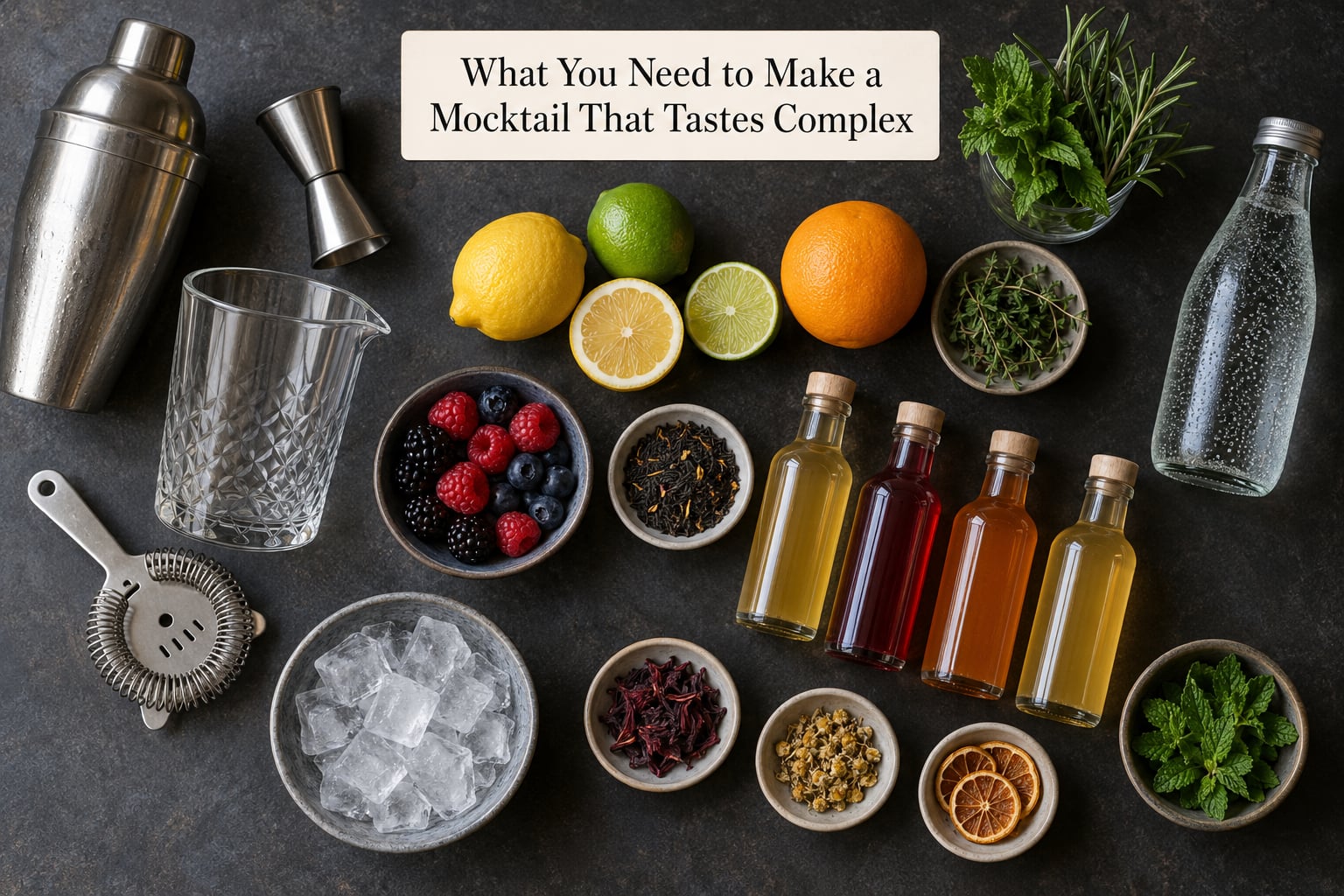
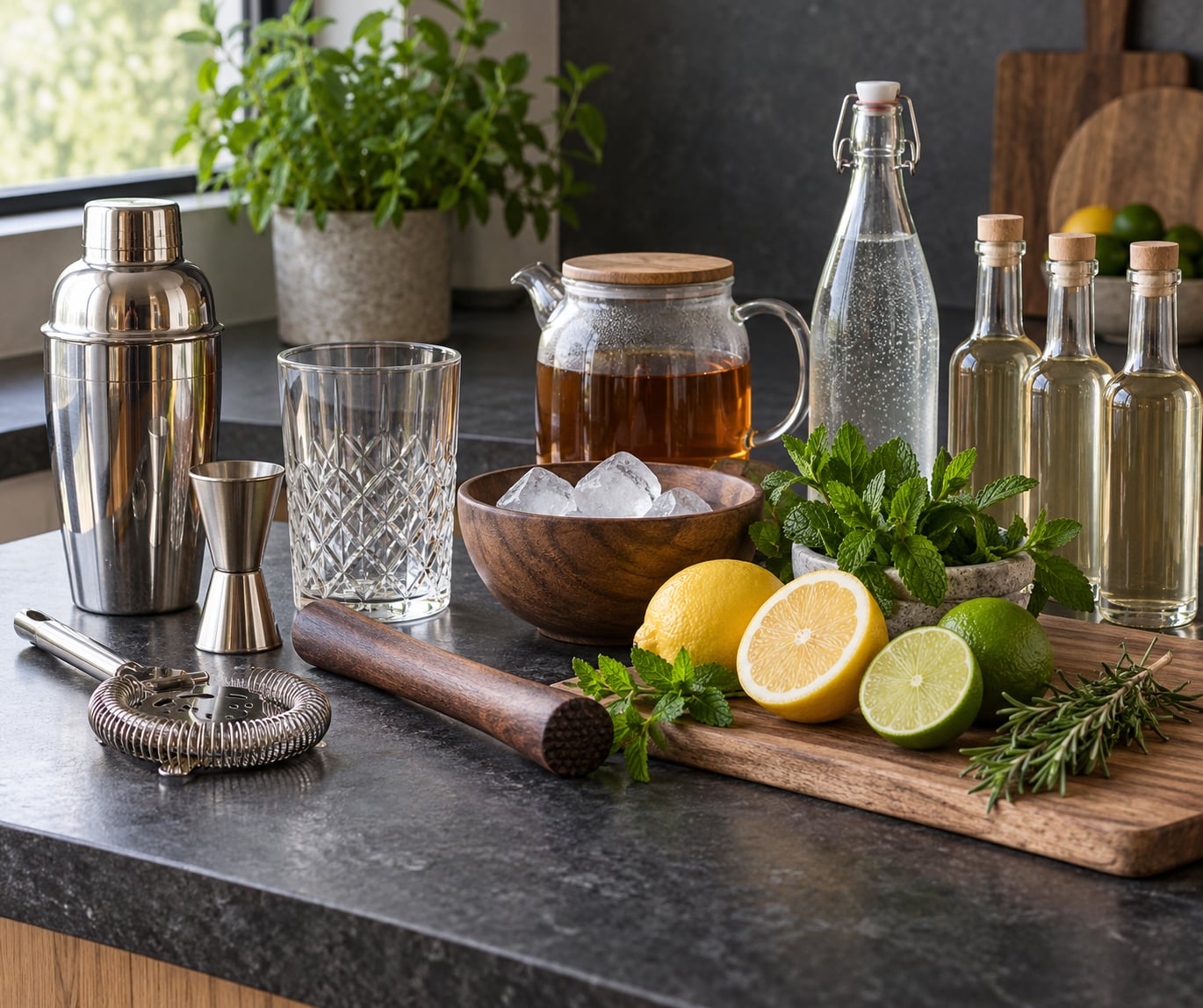
A jigger, a shaker or mixing glass, a strainer and a muddler cover everything. If you have none of those, a measuring cup, a fork and a fine sieve will get you a drink that still works.
The ingredient list is short because each item has a job. Here is the starting ratio I use before anything else gets added, with a swap for every slot.
- Sour, 30 ml. Acidity and lift. Any fresh citrus, verjus or pickle brine.
- Sweet, 15 ml of syrup. Roundness and body. Honey, agave, date or gomme syrup, or none at all.
- Bitter, 0.25 tsp. Contrast and length. Non-alcoholic bitters, strong tea or a shrub.
- Long, 75 ml. Dilution and lift. Soda water, tonic, ginger beer or cold brew tea.
- Aromatic, 6 to 8 leaves or a 2 cm knob. Nose and freshness. Mint, basil, rosemary, ginger or citrus peel.
- Texture, 2 dashes. Mouthfeel. Aquafaba, egg white, a drop of glycerin or saline.
Fresh citrus squeezed to order matters more than the brand of anything else. Bottled juice is pasteurized, flattened and often sweetened, which is why drinks built on it taste flat before anything else is even added.
For the bitter slot, check the bottle before you buy. Most classic bitters such as Angostura and Peychaud’s are around 40 percent alcohol, so for a genuinely alcohol-free drink you want a non-alcoholic bitter, or you skip the bottle entirely and use a strongly brewed tea, a spoon of shrub, or a splash of verjus.
A 2:1 ratio of sour to sweet is the line most people overshoot. If your drink is 1:2, it is a sweet drink with acid in it, not a balanced one.
Step-by-Step
1. Choose a Flavor Foundation
Decide what the drink is before you measure anything. Ginger, grapefruit, cucumber, berry, tea or spice all work as a single clear base; mixing two reads as mud, mixing four reads as perfume.
Then add two supporting notes and no more. Citrus and ginger, or berry and black tea, or cucumber and mint. Taste the concentrate in a spoon before it meets ice, because dilution will soften whatever you cannot fix later.
2. Add Sweetness, Acidity, and Bitter Contrast
Measure 30 ml of fresh citrus and 15 ml of syrup for a single serve. Taste that on a spoon. It should read sharp and round at once, with the syrup cutting the citrus rather than sitting on it.
Now add the bitter element, around 0.25 tsp to start, and taste again. Bitterness makes the sweet and sour notes feel louder, which is the whole trick behind cocktails that use two or three dashes of bitters and taste layered rather than flavored.
Easy adjustments: too sweet, add 5 ml of citrus at a time. Too sour, dilute with more long liquid rather than dumping in sugar. Too bitter, cut with citrus and a little more syrup. Add each in small increments, because syrup and acid both stack faster than you expect.
A pinch of salt is the cheapest depth in the drink. It does not make it salty; it firms up the fruit and berry notes so they taste like fruit instead of candy.
3. Build Aromatic and Textural Layers
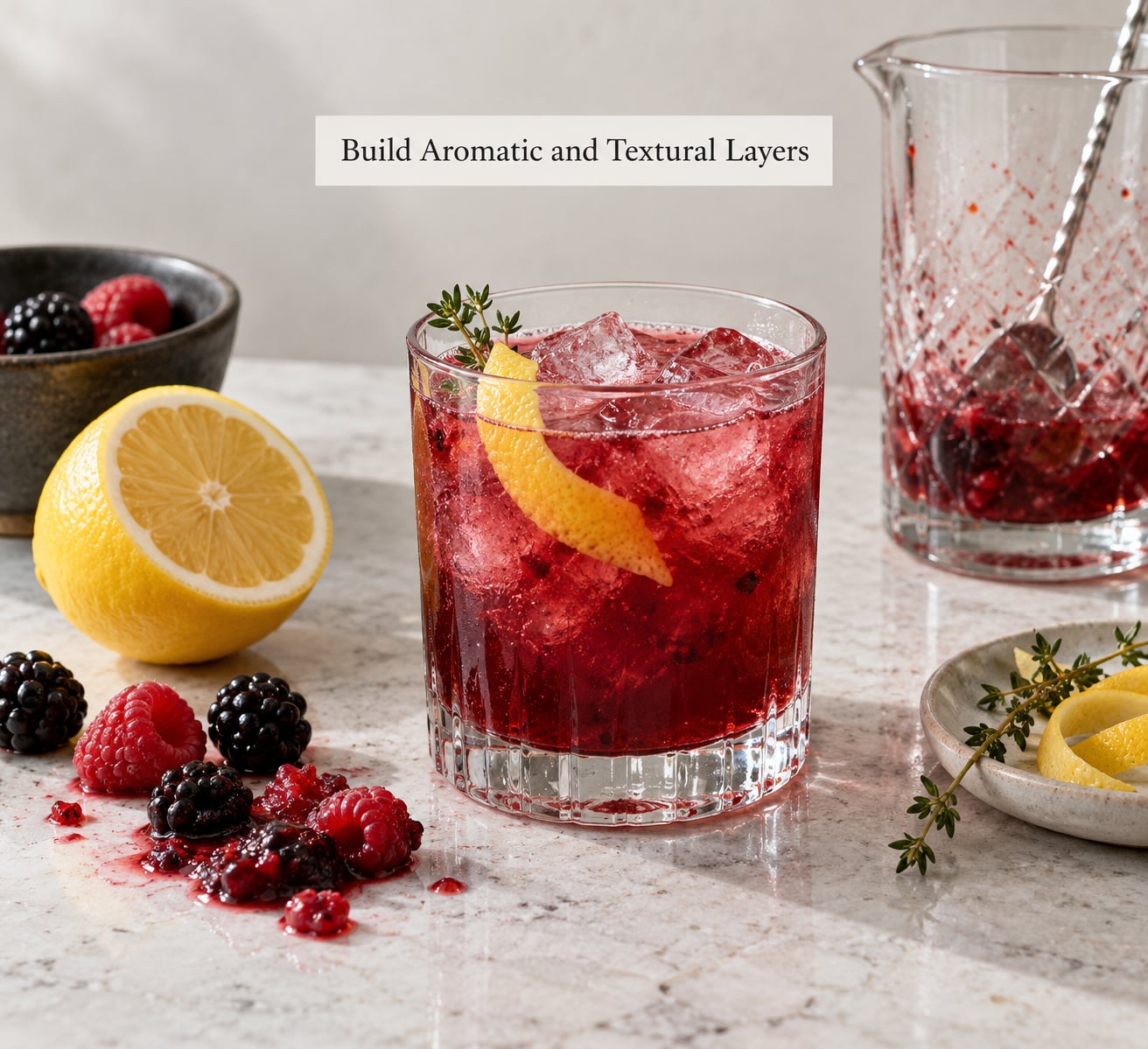
Muddle herbs gently, just enough to wake them up. Press six to eight mint leaves three or four times and stop. Shredding them releases bitter chlorophyll and grass notes, and your drink will smell like a lawn mower.
Knock ginger directly in the shaker and let it smash against the ice. That is the single most reliable move for making a mocktail read as a cocktail, and it is the first thing people suggest on r/Mocktails when someone asks for depth.
For a smoky or savory layer, brew lapsang souchong or another strong black tea and use it in place of some of the long liquid. The tannins give an astringent finish that reads as grown-up, and nobody can tell it was there.
On texture, two dashes of aquafaba or egg white shaken hard give a persistent foam that carries aroma to the nose. A drop of vegetable glycerin adds viscosity without adding sweetness, which solves thin drinks that taste harsh because there is no body to soften the acid.
Soda water keeps the base flavors loud. Tonic water adds quinine bitterness and sweetness that push the citrus forward. Ginger beer adds heat and a little funk. For a genuinely dry drink, cold brew tea or plain soda water leaves more room for what you built in steps one and two.
4. Shake, Strain, and Dilute
Shake when there is juice, syrup or egg white in the glass, because that is what emulsifies and chills. Stir when everything is already cold and you want to protect a delicate aromatic.
Use about 60 ml of ice per serve and shake for ten seconds, hard. If you want less dilution, use fewer cubes or bigger ones, since the surface area is what melts. A drink that arrives thin and watery is almost always an ice problem, not a recipe problem.
Strain over fresh ice into the glass rather than adding ice at the end. It looks better, keeps the temperature lower for longer, and stops the bottom of the drink turning into juice.
5. Taste and Fine-Tune the Balance
Taste before you garnish, then adjust in this order. Sweetness first, then acid, then bitterness, then aroma, then length. Correcting in that order stops you from chasing a balance problem with more sweetener.
You are close when three things are true at once. The first sip is bright rather than sweet, the middle is not empty, and the last mouthful leaves something behind instead of vanishing.
Strength comes last, and only in small steps. Dilute with long liquid rather than ice if the drink is too heavy, and add length a little at a time because that is also how you water down the flavor you worked for.
Common Mistakes
Too sweet. You usually started at the wrong ratio. Add 5 ml of fresh citrus at a time and taste, rather than reaching for the syrup bottle. Cutting sweetness with acid works; adding more sweetness never fixes sweetness.
Acid bomb, or salad dressing in a glass. Too much vinegar or verjus reads as undrinkable and is the most common failure mode home bartenders hit. Use a quarter teaspoon of vinegar to start, never a tablespoon, and always taste before the next addition.
Flat. Missing bitterness or aroma, not missing bubbles. Add two dashes of non-alcoholic bitters and a slap of herbs before you reach for more soda.
Watery. Too much ice, or not enough body. Use fewer, larger cubes, or add a drop of glycerin or a spoon of aquafaba foam to give the drink something to hold onto.
One-note. Everything came from the same family. Pair a citrus base with something bitter or savory, a berry base with tea tannins, a sweet base with heat.
Aromatics destroyed. Over-muddled herbs or a garnish dropped in hours ahead. Muddle lightly, and add delicate herbs like mint at the last second.
For a dinner party, build a base without the long liquid, then top each glass with sparkling water or tonic at the table. That keeps the bubbles lively and lets one batch serve six drinks without the last one tasting flat. A wide glass with clear ice, a strip of peel and a herb slap costs nothing and changes how the drink is received.
Frequently Asked Questions
What makes a mocktail taste more complex?
Complexity comes from hitting several flavor families at once instead of stacking sweetness. A drink feels layered when it has acidity for lift, a bitter element for contrast, aromatics for aroma and some texture for body. Aim for at least three of sweet, sour, bitter, salty, spicy and savory, held in balance rather than in equal parts.
What ingredients add depth to a non-alcoholic drink?
The strongest additions are bitter and aromatic. Non-alcoholic bitters, strongly brewed tea, verjus, drinking vinegar and shrubs all supply the contrast that juice cannot. Fresh herbs, ginger and citrus peel add aroma, and aquafaba, egg white or a drop of glycerin add the mouthfeel that makes a thin drink taste full.
How do I stop my mocktail from tasting too sweet?
Start at a 2:1 ratio of sour to sweet instead of pouring syrup to taste. If it is still sweet, add fresh citrus 5 ml at a time and stir before tasting again. Cutting sweetness with acid works in both directions, while adding more syrup or using a sweetened mixer will only bury the flavors you built.
Should I use tonic water, soda water, or sparkling tea?
Soda water is neutral, so it lets your own flavor and bitter notes lead. Tonic water adds quinine bitterness and sweetness that pushes citrus forward but can flatten delicate drinks. Sparkling tea brings tannin and a longer finish. For a dry, spirit-like result, soda or cold brew tea is the least intrusive choice.
Can I make a complex mocktail ahead of time?
Yes, with one rule: leave the carbonated or tea-based long liquid out of the batch. Mix the syrup, citrus, bitter and aromatic elements ahead and refrigerate them, then top each glass with soda, tonic or cold brew at the moment you serve it. Batches keep for about two days before the citrus loses its brightness.
How much ice should I use in a mocktail?
About 60 ml per serving is a good starting point, which is roughly a heaped half cup. Shake for about ten seconds, then strain over fresh ice. If the finished drink tastes thin and watery, use fewer but larger cubes, since surface area drives dilution and temperature loss.
Conclusion
Complexity is arithmetic before it is anything else. Begin with 30 ml of sour to 15 ml of sweet to 0.25 tsp of bitter, taste the concentrate on a spoon, then add aroma and texture around it. Adjust sweetness first, then acid, then bitterness, and stop adding length before the flavors go quiet.