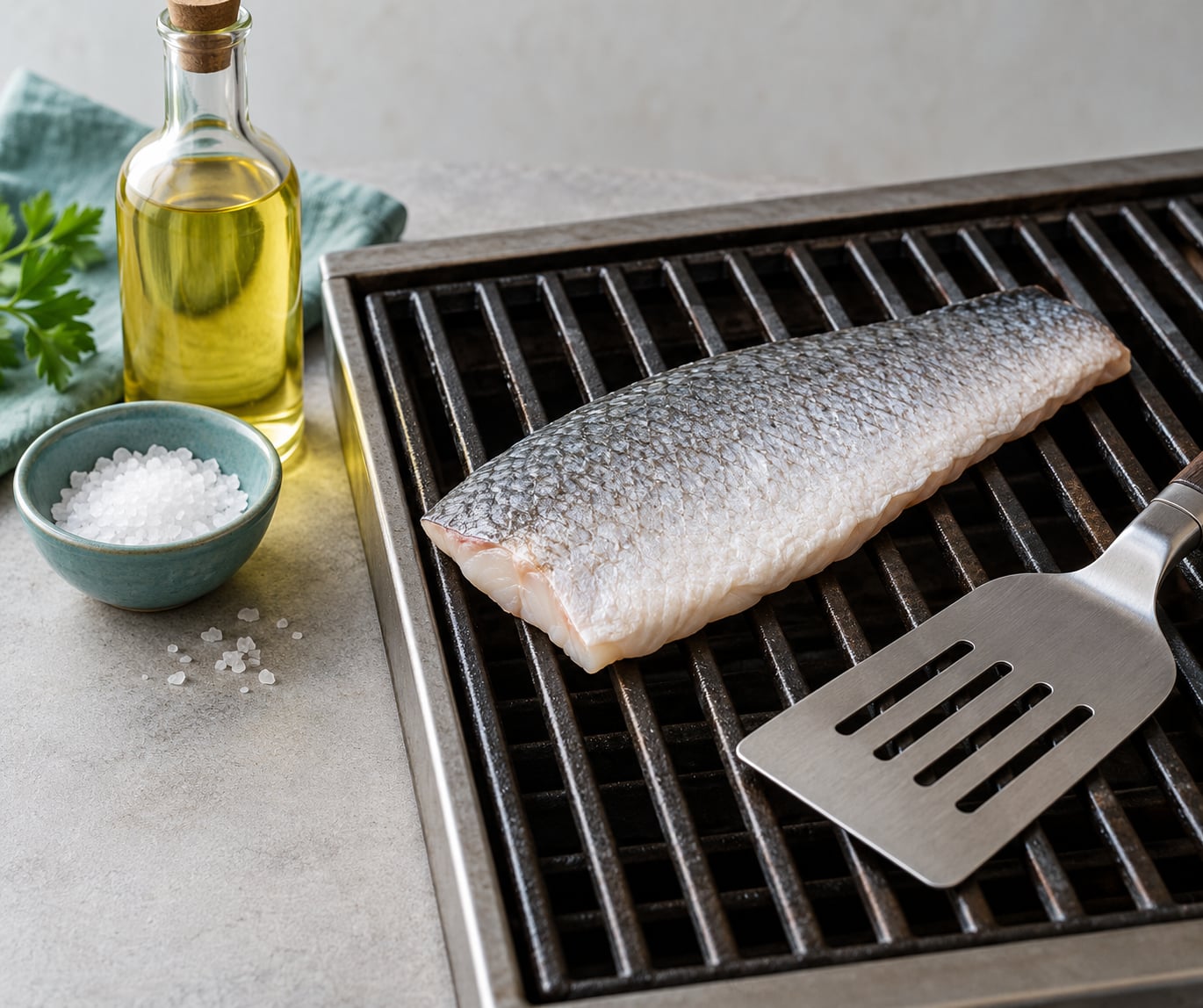
Start with a hot, clean grill grate, pat the fish completely dry, and oil both the fish and the grates. Then leave it alone long enough to form a crust before you touch it, because most fillets that break apart on the grill were pulled too early. The whole method takes about 15 minutes of active work and roughly 8 to 12 minutes of cooking, and honestly the hardest part is not flipping.
Fish has almost no connective tissue compared with steak or pork, so there is no second attempt once the flesh shears. Everything below is about protecting that one chance.
Table of Contents
- What You Need
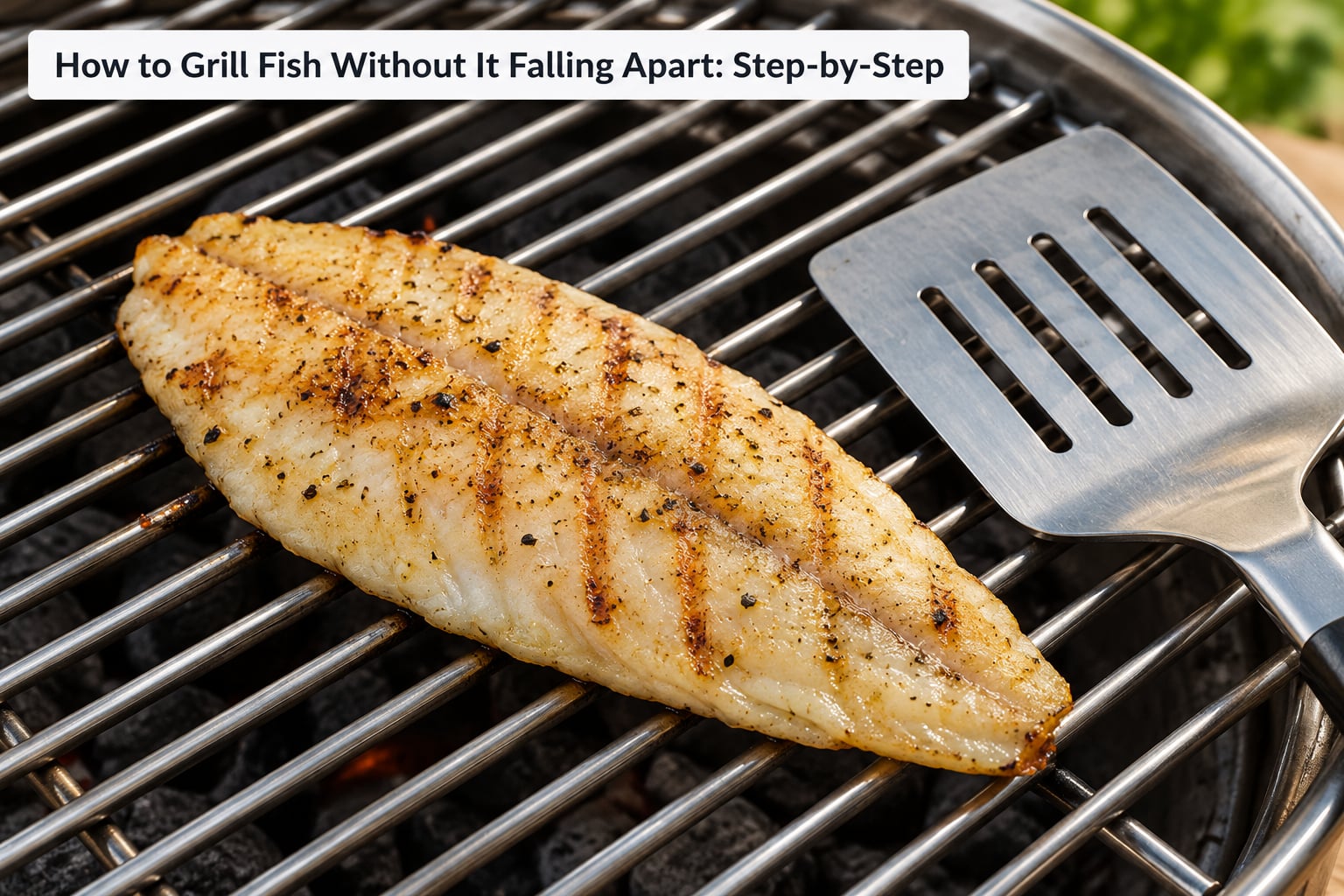
- How to Grill Fish Without It Falling Apart: Step-by-Step
- Common Mistakes
- Frequently Asked Questions
- What is the best fish to grill when you want it to stay intact?
- Should I grill fish with or without the skin to keep it from falling apart?
- Does removing the skin make fish less likely to fall apart on the grill?
- How can I stop fish sticking to the grill and tearing as I turn it?
- Can frozen fish be grilled without thawing it first?
- Conclusion
What You Need
None of this is specialty gear. A short list covers every failure I have had.
- A wide, thin-edged fish spatula or metal turner. The narrow plastic spatulas sold for pancakes are useless here. Look for a blade that goes thin enough to slide under a fillet without lifting the skin off the grate.
- Long-handled tongs with a scissor option, for handling a whole fish or lifting a very thin fillet at the edges.
- A stiff-bristled grill brush for the grate. A soft brush leaves carbon behind, and carbon is the main reason fish tears.
- Paper towels for drying the fish surface.
- A high-smoke-point neutral oil such as canola, grapeseed, or peanut. Olive oil burns on a hot grate, so reserve it for the food.
- Coarse salt and a pepper grinder.
- An instant-read thermometer. Not optional once you cook thin fillets, because a glance cannot tell you 130 from 150.
- A small board or sheet pan to carry the fish to the grill and take it back off. Sliding it onto hot metal from a damp cutting board causes the same tears as a bad flip.
Two extras earn their space: a light coat of mayonnaise for the flesh side, and a second tool for the two-spatula method described below. A grill basket, grill mat, or a bundle of soaked corn husks also work as carriers if your fillets are the fragile kind.
How to Grill Fish Without It Falling Apart: Step-by-Step
Choose and Prepare the Fish
Pick fillets of similar thickness so they finish cooking at the same time. Mixed thickness is why a batch of fish goes from perfect to dry in one stroke.
Run a fingertip along the flesh side and feel for pin bones, then pull them out with tweezers or the tip of a spoon. Bones are not what makes fish fall apart, but a surprise bone makes people yank at the flesh.
Pat the surface dry with paper towels until it feels dry to the touch, both sides and especially the skin. Moisture turns to steam under the fish, and a wet surface plus hot cast iron behaves like glue. This single step fixes more sticking than any oil you add.
Keep the skin on whenever you can. Skin is a structural binder, and a skin-on fillet survives a flip that would fold a skinless one in half. Trim the loose belly flap, which often hangs off and dries out, but leave the rest intact.
Rub both sides with a light coat of oil, then season with coarse salt and pepper just before it hits the grate. Salting 20 to 30 minutes ahead, called a dry brine, firms the surface proteins and gives a lean fillet more to hold onto. Any longer and the flesh firms unevenly.
Two warnings here. Acid marinades such as teriyaki, vinegar glazes, and heavy citrus marinades denature the surface proteins over time, so the flesh gets softer, not firmer, after an hour or more in them. And fish that has thawed slowly in the refrigerator, or fish that is very fresh and soft, needs gentler handling and less time over the fire.
Build Two Cooking Zones
Push all the coals to one side, or on a gas grill set one burner to high and leave the other off. That gives you a medium-hot direct zone and a cooler area to move the fish to when the first side is done.
Fish has no fat layer to insulate it. Held over screaming-hot coals, a thin fillet burns on the outside while the middle stays translucent, and burned flesh is dry flesh, and dry flesh tears.
Use a two-zone fire for anything delicate. Reserve a single high-heat zone for thick steaks such as swordfish or tuna, which can take the intensity.
Oiling the Fish and Grate Protects the Fillet
Preheat the grill, then scrape the grates. The burn-off trick helps: set the grate over full heat with the lid closed for 5 minutes, and loose carbon releases as ash. Then hit it with the stiff brush and wipe with a paper towel held in tongs.
Oil the grate with a paper towel. Wipe it on hot metal rather than pouring oil near the fire, and oil it once before the fish goes on and again if you are cooking more than one piece.
What gets left on that grate decides everything. Burned marinade, char from last night’s burgers, or the sugar in barbecue sauce all glue fish down harder than a dry fillet ever would. If you cook fish on a grill that has seen other food all summer, the answer is a clean grate and a new grate of charcoal, or grill fish first while the grate is still fresh.
For the fish itself, use a thin mayonnaise layer on the flesh side. It forms a barrier between the delicate protein and the metal, it browns well, and it pulls loose more reliably than oil alone. Many home cooks use it on cod and pollock with good results and no mayonnaise flavor at all. Olive oil with a heavy pinch of coarse salt works the same way if you would rather skip it.
Place the fillet on the grate with a wide spatula or the oiled board, not by dropping it. Set it down at a diagonal rather than flat across the bars, which gives you room to slide the spatula underneath later.
How to Grill Fish Without It Falling Apart: Flip in One Piece
Do not touch the fish for the first 3 to 4 minutes. This is where nearly every broken fillet dies, because early on the flesh is still translucent and has nothing to grip the grate with.
As the surface sets, the proteins bond to the metal, then release it. That is the natural release point you are waiting for: when the spatula slides underneath with almost no resistance, the fillet is ready.
When it is ready, slide the wide spatula well under the fish and lift just enough to see the grate beneath. If you feel drag, resistance, or the spatula scraping, put it down and wait another minute. Forcing a stuck fillet is how you tear it and take the crust with it. If you feel too much resistance, stop and walk away.
Turn it in one quick, confident movement rather than a slow peel. Two spatulas work as well for large steaks: one slides underneath, the other grips the top edge, and you roll the piece over between them.
Sometimes you never flip at all. A thin fillet cooked over gentle indirect heat with the lid closed for 5 to 7 minutes will release on its own and you lift it once, straight to the board. Fewer moves means fewer chances to tear, so when fish is delicate I cook it one side only.
Lifting the finished fish off the grate tears it about as often as the flip does. Slide the spatula far underneath, keep it level, and move sideways onto the board in one go.
Check the Thickest Part for Doneness
The flesh turns opaque and separates into flakes when it is done. Slide the spatula tip into the thickest part and press gently; if it opens into clean layers, it is finished.
For a thermometer, insert it into the thickest part at a shallow angle, just until the tip is in the center, and read it without piercing through to the board. Pull the fish at 130 to 135°F for moist results, since residual heat carries it the rest of the way.
Food safety guidance is firmer than texture preference: the USDA recommends a minimum internal temperature of 145°F or 63°C for fish. Most cooks find that arrives about 10°F above the pull temperature, but check rather than assume, especially on a thick steak.
Carryover cooking is the trap on thin fillets. A 0.5 inch piece left on for another 30 seconds can pass 160°F and turn dry and fragile, so start checking a minute before your timing says to.
Common Mistakes
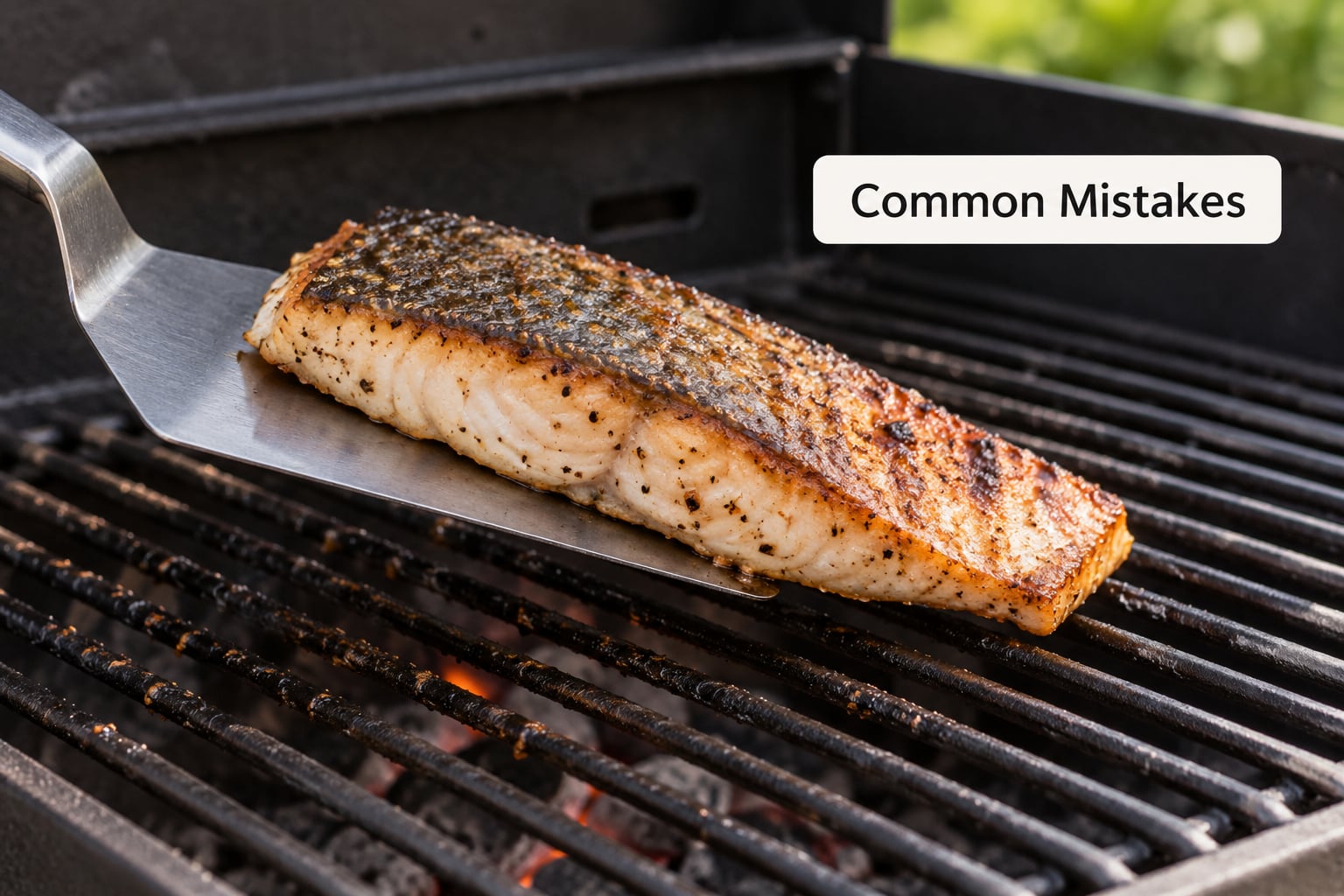
Each of these has a direct fix, and none of them are about buying something.
- Moving it too soon. The flesh has not set yet. Give it 3 to 4 minutes untouched, then test with the spatula instead of guessing.
- Flipping more than once. Every additional turn is another chance to tear. Flip once, or not at all with the lid-down method.
- Crowding the grate. Fish needs airflow and a steady heat zone. Cook in batches rather than stacking pieces on top of each other.
- A dirty or sugary grate. Old char and barbecue glaze glue the fillet. Burn off the grate, brush it stiff, wipe it with oil, and cook fish first on a grill that has seen other food.
- Excessively hot coals. Direct flame and searing heat scorch the outside before the center cooks. Use a medium-hot zone and move delicate fish to the cool side.
- Trimming the skin off. You lose the best binder you have. Keep skin on unless you specifically want the crisped skin detached from the flesh.
- Cutting into the fillet too early. Slicing a half-cooked fillet shears it into flakes. Rest it off the heat for a couple of minutes first.
- Using butter over the flame. Butter burns and drops the temperature. Use neutral oil on the grate and add butter, garlic oil, or lemon oil at the end.
Grilling Tips for Delicate Fish
Skin-on fillets. Cook them skin-side down first for 4 to 5 minutes to set the skin and the flesh underneath it, then finish on the cooler side. The skin lets you push the spatula through a natural seam to lift the fillet.
Fish steaks. Cross-cut steaks from swordfish or tuna have a bone in the center that holds everything together, so they are the most forgiving option. Cook them 3 to 4 minutes per side over medium-high heat and probe the thick edge with a thermometer.
Breaded or coated fish. A coating is its own barrier. Cook at a lower temperature than you would for bare fish, around 350 to 375°F, so the crumb browns before the flesh overcooks. Lift it with two spatulas.
Lean white fish. Trout, haddock, cod, grouper, and pollock lose moisture fast, so keep them over gentle heat and stop the moment they flake. Grilling them in a foil packet or on soaked corn husks adds a steam layer that keeps them from drying and binding to the metal.
Oily fish. Mackerel, sardines, and trout have enough fat to crisp without a coating. Oiling matters less; heat management matters more, since high-fat fish burns before it flakes.
Cedar plank. Soak the plank 30 minutes, oil it, and put the fish on top. The plank does the flipping for you, holds the fillet together, and adds smoke you cannot get from a bare grate. Cook over indirect heat and remove the fish with a spatula once the plank is firm.
Adjust for charcoal and gas. Charcoal burns hotter and cleaner once the coals settle, so bank it and wait for the gray ash. Gas is easier to control but often runs cooler at the edges, so preheat longer and keep the fish in the middle of the grate.
Frequently Asked Questions
What is the best fish to grill when you want it to stay intact?
Salmon, swordfish, tuna, mahi-mahi, and halibut hold together best because their flesh is dense and springy. Any thick cut from those fish survives a flip that would fold a thinner one. Choose pieces of even thickness, keep the skin on, and avoid anything paper-thin, since thin fillets have no structure left once the heat sets them.
Should I grill fish with or without the skin to keep it from falling apart?
Always grill with the skin on. Skin is a structural binder that holds the flesh to the bone side and gives your spatula a seam to slide through. Pat the skin very dry, salt it, and lay it down first on a medium-hot zone for 4 to 5 minutes. Only fillets with a damaged or loose skin need to go on skinless, and those benefit from a mayonnaise barrier.
Does removing the skin make fish less likely to fall apart on the grill?
No, removing the skin makes the problem worse. Without that outer layer, the delicate flesh has nothing to grip the spatula and it folds or tears when you try to lift it. If you want skinless fillets, cook them over indirect heat with the lid closed, skip the flip entirely, and lift them once with a wide spatula onto a board.
How can I stop fish sticking to the grill and tearing as I turn it?
Burn off residue by heating the closed grill at full heat for 5 minutes, brush the grates with a stiff wire brush, then wipe them with a paper towel and oil. Pat the fish dry before seasoning. When you flip, slide a wide thin-edged spatula underneath and lift slightly first; if you feel resistance, the fish is not ready and needs another minute.
Can frozen fish be grilled without thawing it first?
Not safely. Fish should be thawed in the refrigerator overnight, or under cold running water, before it goes on the grill. From frozen, the outside cooks before the inside thaws, so you get burnt crust around a raw center and flesh that tears because the two halves were never at the same temperature. Thawing also lets you pat the surface dry, which is half the anti-stick method.
Conclusion
Start tonight with a dry fillet, a light coat of oil, and a clean grate heated to medium-hot on one side only. Set it down skin-side first and do not touch it for 3 to 4 minutes.
The rule that fixes nearly every broken fillet is simple to state and hard to follow: wait for the flesh to firm before you move it. When the spatula slides underneath with no resistance, the fillet is ready, and one confident lift gets it onto the board whole.