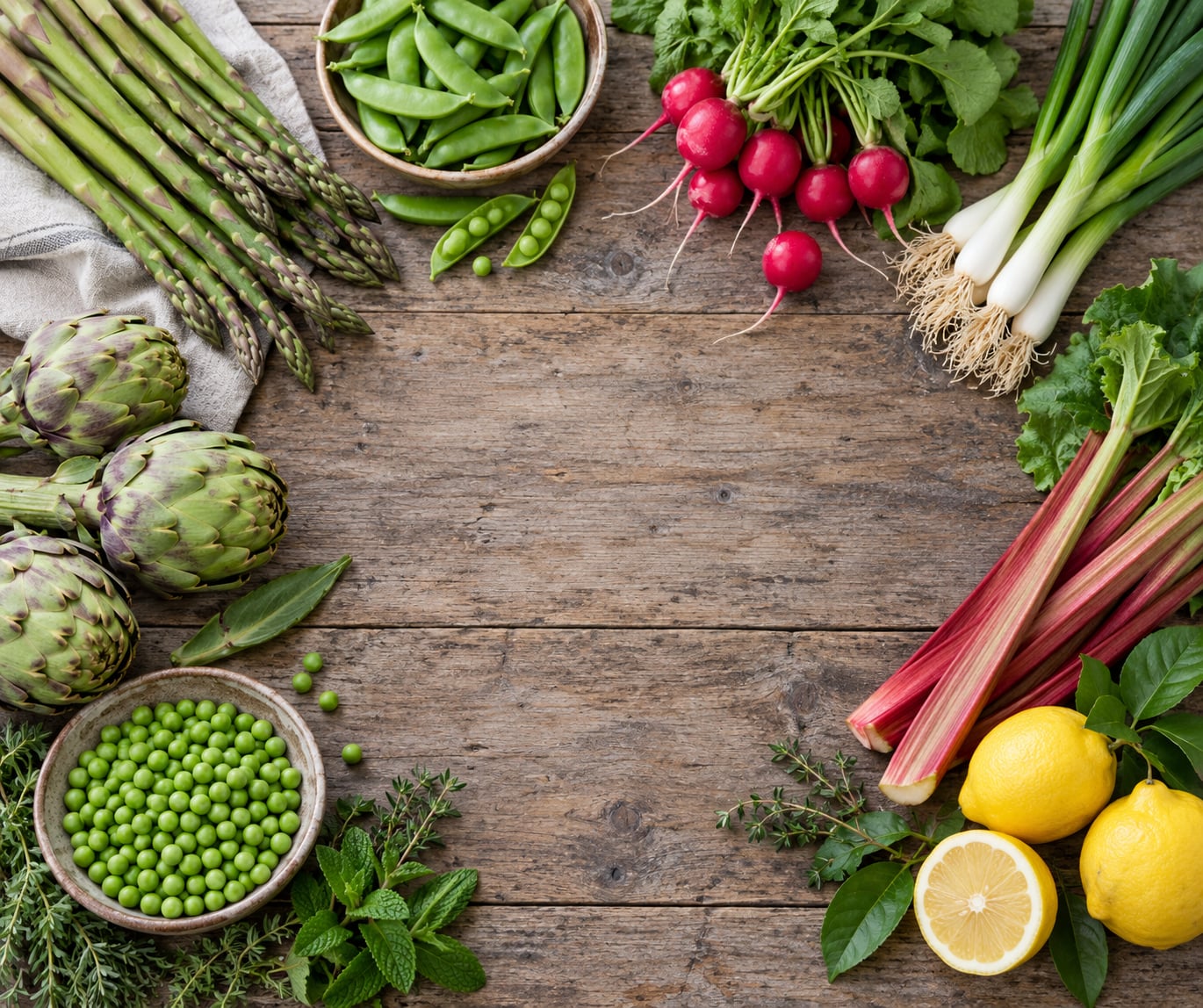
If you are wondering what to cook in early spring with US produce, the honest answer is a short list of cool-weather crops and the tail end of winter fruit: asparagus, English peas and snap peas, radishes, artichokes, rhubarb, spring onions, green garlic, tender greens, morels in some regions, and the last Meyer lemons and blood oranges. Twelve dishes cover that haul, and most take under 40 minutes.
Early spring is the thinnest part of the US growing year. The market stall that looked overflowing in February is down to six crates, prices on asparagus are the highest they will be all year, and the strawberries in the display case are almost certainly shipped in from somewhere warmer. Shopping early spring well means cooking one hero ingredient properly instead of building a salad out of six things that had to travel.
It also means cooking for two different weeks in the same month. Some days hit 62 degrees and the grill comes out; the next week it drizzles for three days and you want something with a spoon in it. Both get answered here, dish by dish.
Updated October 2026. Harvest dates shift two to three weeks each year by region, so treat every window below as a guide rather than a date.
Table of Contents
- What to Cook in Early Spring With US Produce at a Glance
- What to cook in early spring with US produce when the market is still thin
- 1. Charred Asparagus and Lemon Pasta
- 2. Spring Pea and Mint Soup
- 3. Radish and Cucumber Spring Salad
- 4. Roasted Spring Vegetable Grain Bowl
- 5. Herb and Spring Green Frittata
- 6. Grilled Spring Vegetable Flatbread
- 7. Early Spring Vegetable Curry
- 8. Sweet Pea and Ricotta Toast
- 9. Roasted Radish, Carrot and Chickpea Tray
- 10. Spring Green Pesto Pasta
- 11. Grilled Chicken with Asparagus and Potatoes
- 12. Spring Herb and Vegetable Galette
- Frequently Asked Questions
- What vegetables are typically eaten in early spring?
- Are strawberries in season in March?
- What are some good ideas for early spring dinners?
- How long does fresh asparagus keep before it turns to mush?
- What can I do with radish tops and carrot tops?
- What are some good recipes for spring?
- Conclusion
What to Cook in Early Spring With US Produce at a Glance
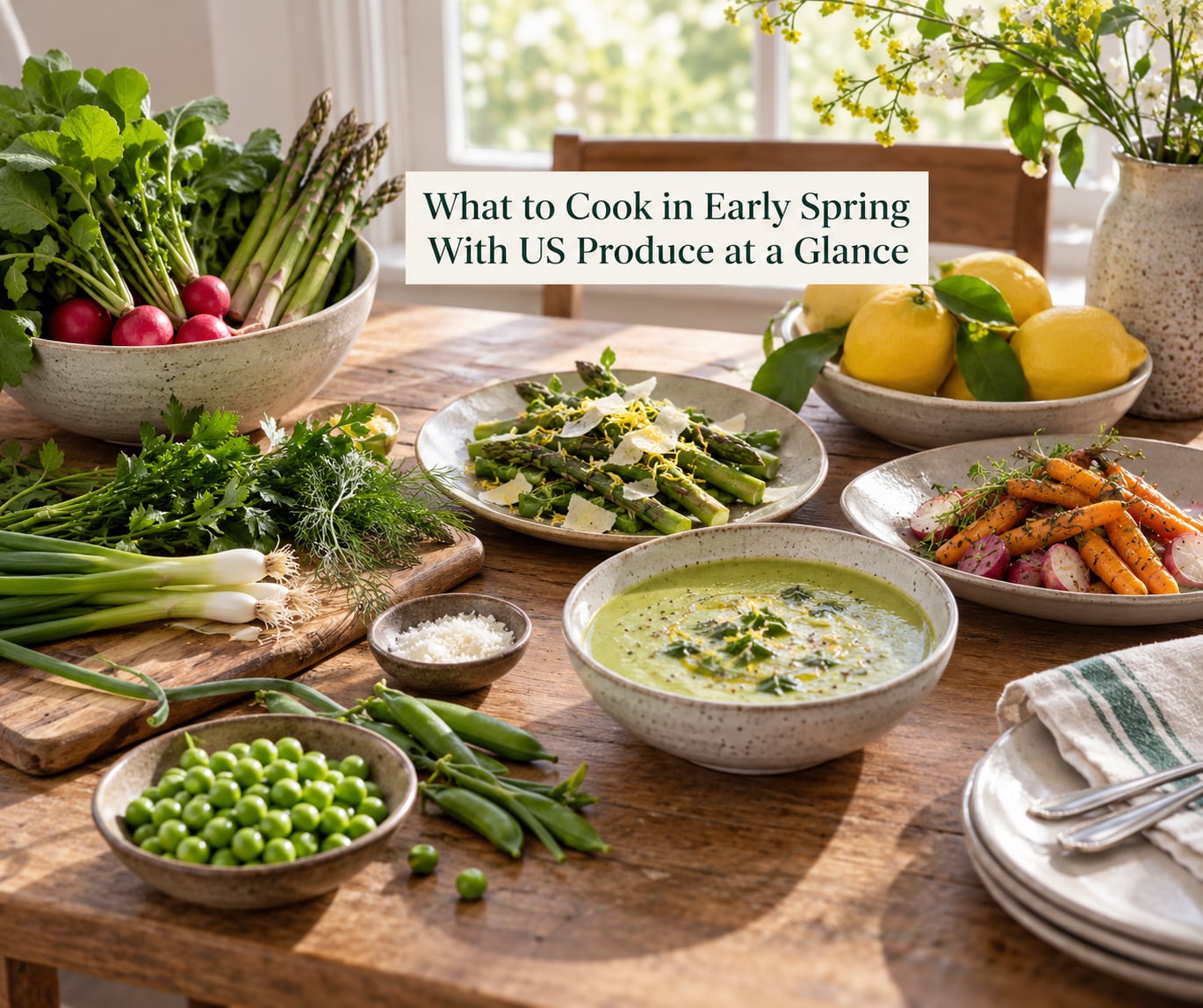
Every dish below uses one or two early-spring ingredients as the lead and keeps the rest of the shopping list short. Difficulty is judged honestly: a one-pan tray that goes into the oven counts as easy even if it takes 35 minutes.
| Dish | Lead produce | Cooking method | Best for | Difficulty |
|---|---|---|---|---|
| 1. Charred asparagus and lemon pasta | Asparagus | Sear then toss | Quick Tuesday dinner | Easy |
| 2. Spring pea and mint soup | English peas | Blanch and blend | Drizzly evening | Easy |
| 3. Radish and cucumber salad | Radishes | Raw, salted | Lunch or side | Easy |
| 4. Roasted vegetable grain bowl | Mixed spring veg | Roast 425 F | Lunch prep, two servings | Easy |
| 5. Herb and spring green frittata | Greens, herbs | Skillet, stovetop | Breakfast or light dinner | Easy |
| 6. Grilled vegetable flatbread | Asparagus, peas | Grill then broil | First grilling night | Medium |
| 7. Early spring vegetable curry | Peas, greens, carrots | Simmer | Batch cooking | Easy |
| 8. Sweet pea and ricotta toast | Peas | Mash, no cooking | Ten-minute lunch | Easy |
| 9. Radish, carrot and chickpea tray | Radishes, carrots | Roast 425 F | Sheet-pan dinner | Easy |
| 10. Spring green pesto pasta | Greens, herbs | Blend, emulsify | Cool-weather pasta | Easy |
| 11. Grilled chicken with asparagus and potatoes | New potatoes, asparagus | Grill plus roast | Weeknight, one pan plus grill | Medium |
| 12. Spring herb and vegetable galette | Greens, herbs, radish | Roll and bake | Dinner with a salad | Medium |
What to cook in early spring with US produce when the market is still thin
Three of these dishes work with almost nothing but pantry staples: the chickpea tray, the curry and the flatbread all stretch. If you came home with one bunch of asparagus and a bag of radish tops, that is still two meals, not zero.
Regions disagree about early spring more than people expect. California and the Southwest have artichokes and early greens while the Northeast is in slush, and the Pacific Northwest often gets morels in weeks when the East is still buying stored apples. Ask your growers what was picked that morning rather than trusting a chalkboard sign that says local for something shipped 2,000 miles.
1. Charred Asparagus and Lemon Pasta
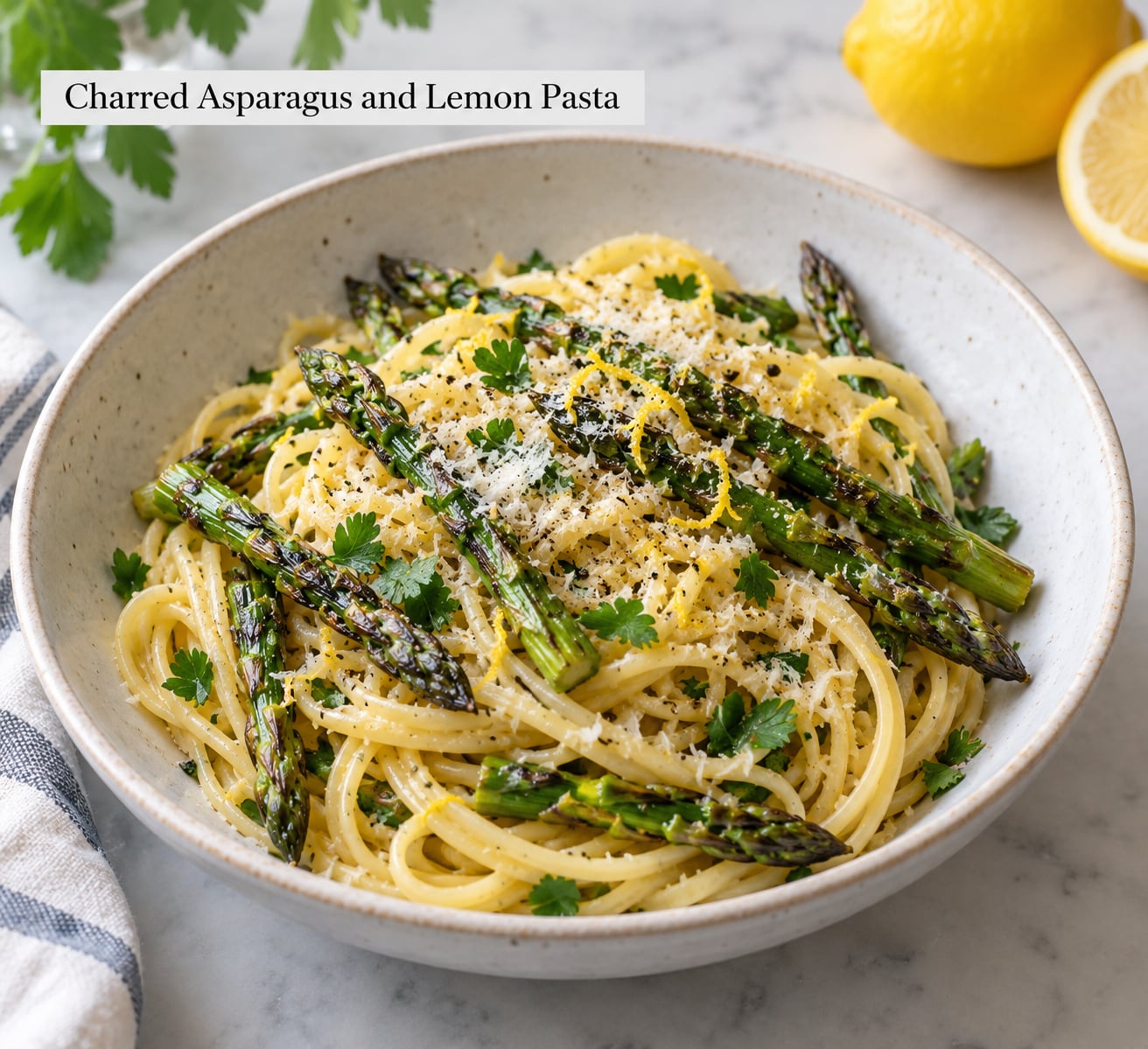
Char is the whole point here, and it takes less effort than it sounds. Get a skillet properly hot, add a thin film of olive oil, lay the asparagus down in one layer and leave it alone for roughly 3 to 4 minutes before turning. You want blackened patches on a third of the spears and just-tender stems.
Boil the pasta in salted water and pull it a minute early. In the pot, melt butter with lemon zest, a crushed garlic clove and a ladle of the starchy water; add the pasta and the charred asparagus and toss hard so the sauce clings. Parmesan, a fistful of parsley or chives, more black pepper than feels reasonable, and a drizzle of good olive oil off the heat. Twenty minutes start to finish.
Snap peas work in place of asparagus, sliced lengthwise so they char in the same time.
2. Spring Pea and Mint Soup
Bright pea soup is mostly a timing problem: overcook the peas and the color goes army green. Blanch shelled peas in boiling salted water for 90 seconds, scoop them out, and dunk them in ice water to stop the cooking.
Soften two sliced shallots in butter with a pinch of salt for 5 minutes, add a cup of stock and simmer 3 minutes, then add the peas and two packed cups of mint for the last 30 seconds before blending. Loosen with more stock until it pours, then finish with a splash of cream or a spoonful of creme fraiche off the heat. Fifteen minutes of work, and it tastes like April rather than like reheated freezer peas.
Undoubled peas from frozen work for this in a pinch, but reduce the mint so it does not taste like a pesto.
3. Radish and Cucumber Spring Salad
Salt is the technique here. Slice radishes paper thin, toss with a pinch of salt, and wait 10 minutes while they give up water and go from squeaky to silky. Drain and blot them dry. Do the same gentle treatment to thin-sliced cucumber with a little vinegar.
Dress with red wine vinegar, a good olive oil, mustard and honey in roughly equal parts vinegar to three parts oil, then add herbs you actually have: dill, chives, mint, chervil. Salt again lightly at the end. To make it a meal rather than a side, fold in a can of rinsed white beans or a handful of toasted sunflower seeds and serve it over greens with a slab of grilled bread.
Keep the radish tops. Chop them and put them in the salad, or blitz them into a green sauce; they are peppery and good.
4. Roasted Spring Vegetable Grain Bowl
Everything goes on one sheet pan at 425 F, and that is what makes this a weeknight answer rather than a project. Cut asparagus into short lengths, leave peas whole, half-moon the carrots and radishes, and toss with olive oil, salt and pepper. Spread out with space between the pieces so it roasts instead of steams.
Twenty-five to 30 minutes, stirring once at the halfway mark. Serve over farro, quinoa or brown rice with a dressing made from yogurt, lemon zest, a splash of the pan juices and a spoon of mustard; tahini thinned with lemon and water works just as well and keeps it dairy-free. Add a soft egg or a scoop of ricotta to make it dinner.
This doubles without complaint, which is the main argument for making it on a Sunday.
5. Herb and Spring Green Frittata
A frittata is the fastest way to turn a handful of greens into a meal. Wilt a packed cup of spinach, chard, arugula or leek greens in a hot ovenproof skillet with a tablespoon of olive oil and a pinch of salt, about 3 minutes, until the leaves have collapsed and any excess liquid has cooked off.
Beat 8 eggs with the chopped herbs you have, half a cup of grated Parmesan or pecorino, and a little lemon zest. Pour over the greens, then cook on medium-low without stirring for 10 to 14 minutes, until the edges set and the middle still has a slight wobble. Finish under the broiler for 2 minutes for browned edges. A 10-inch skillet serves two with bread.
Serve it warm, or cool it and eat half for lunch with a handful of arugula thrown through it.
6. Grilled Spring Vegetable Flatbread
Grilled vegetables change the flavor of this dish, and a cast-iron pan or the grill itself gives you that in about 8 minutes. Char halved snap peas, asparagus pieces, or scallions cut in half lengthwise until they are blistered and sweet, then set them aside.
Brush the flatbread with garlic oil, spread ricotta or low-moisture mozzarella in a thin layer, add the vegetables, and scatter on herbs and a little grated cheese. Bake at 450 F for 6 to 8 minutes until the crust is crisp and the cheese bubbles, or slide it under the broiler for 2 minutes with the oven on high. Slice with a pizza cutter so the toppings stay put.
Frozen pizza dough thawed on the counter works, and pre-baking the crust for 3 minutes first keeps it from going soggy under wet vegetables.
7. Early Spring Vegetable Curry
Curry is the most forgiving thing in this list, because you can swap any early-spring vegetable for another and the cooking method does not change. Warm the spices in oil first, 60 to 90 seconds, until they smell toasted and the oil is darker; skipping this step is the single most common way a home curry tastes flat.
Add onion and any sturdy vegetable, cook 5 minutes, then peas, asparagus tips, greens or chunks of new potato. Cover with stock or coconut milk and simmer 15 to 20 minutes until the potato is tender. Adjust at the end: more liquid for a pourable sauce, more simmering uncovered for a thick one that clings to rice. Finish with lime juice and cilantro if you have them.
Make a double batch. It is better on day two, and it freezes without dairy.
8. Sweet Pea and Ricotta Toast
This one needs no heat at all, which makes it the answer for a day between weeks. Mash shelled peas with a little lemon zest, a pinch of salt, a torn basil or mint leaf and a drizzle of olive oil, then crush them with a fork rather than a blender so the texture stays chunky.
Toast thick slices of sourdough well, spread ricotta across the top, spoon the peas on, and finish with olive oil, flaky salt and cracked black pepper. Thin radish slices underneath the ricotta add crunch and a little heat. Ten minutes total, and it holds up as a small lunch rather than a snack.
Sugar snap peas shredded raw with the ricotta work if you cannot find shelled peas.
9. Roasted Radish, Carrot and Chickpea Tray
Radishes roasted at high heat turn sweet and jammy, which surprises people who only know them raw. Halve or quarter them, pat them dry, and give them space on the sheet pan; wet radishes steam and stay peppery. Add carrot chunks, a drained can of chickpeas, olive oil, salt, cumin and a little coriander.
Roast at 425 F for 25 minutes, then turn everything and push the chickpeas toward the hot edges for another 10 minutes. The chickpeas crisp, the carrots caramelize at the edges, and the whole tray is a dinner with a yogurt or lemony salad alongside. Chickpeas from a can need to be dried well, which is the whole trick.
Canned or cooked beets can replace half the carrots if you want the color to go further.
10. Spring Green Pesto Pasta
Pesto does not have to be made from basil, and a spring version built on arugula, spinach, chard stems or even radish tops is sharper and cheaper. Blanch any tough greens for 30 seconds in boiling water, squeeze them dry, and blend with garlic, toasted seeds or nuts, lemon juice, hard cheese and enough olive oil to move the blade.
Cook the pasta, then blend a ladle of the starchy water into the pesto to loosen it before tossing. Add the noodles and a splash more water and toss over heat for a minute until the sauce turns glossy and coats rather than clumps. Pasta water is what separates a good pesto from a jar of green oil; add it in stages and it will come together.
Serve with a fried egg, or with blistered asparagus tips folded through at the end.
11. Grilled Chicken with Asparagus and Potatoes
Chicken on the grill next to tender new potatoes and asparagus makes the seasonal case in one pan of food. Boil the potatoes for 8 minutes, drain, then toss with oil and salt and roast at 425 F while the chicken cooks, about 25 minutes total for small potatoes.
Toss the chicken with oil, salt and pepper and grill over medium-high, about 6 to 7 minutes per side depending on thickness. Take it off the heat at 165 F internal temperature, then check with an instant-read thermometer in the thickest part. That is the number that matters, not the timer. Add the asparagus to the roasting pan for the last 10 to 12 minutes.
Rest the chicken 5 minutes before slicing. A squeeze of lemon over everything at the table finishes it.
12. Spring Herb and Vegetable Galette
A galette is a free-form tart, which means it does not require pastry skills. Roll a pie dough or a purchased all-butter crust into a rough circle on a sheet pan, leaving a wide border, and chill it for 15 minutes so it holds its shape.
Layer cheese, then your cooked spring vegetables and a generous amount of chopped herbs, keeping the filling inside the border so the crust can fold cleanly. Fold the edge over the filling, brush it with egg wash, and bake at 400 F for 35 to 40 minutes until the crust is deeply golden and the juices bubble where the fold meets the filling. Let it rest 10 minutes before cutting, or the cheese pulls every slice apart.
Wilted greens, sliced radishes, or peas and spring onion all fill it well. Gruyere and sharp cheddar handle the strong flavors best.
Frequently Asked Questions
What vegetables are typically eaten in early spring?
Asparagus, English peas, sugar snap peas, radishes, artichokes, spring onions, green garlic, fennel, turnips, new potatoes and tender leafy greens such as arugula, spinach and chard. Rhubarb and morels join them in many regions. All of these tolerate cool nights and short days, which is why they arrive before the warm-weather crops do.
Are strawberries in season in March?
Usually not in most of the US. The first real strawberry crop lands in Florida and Southern California around late March, then moves north through April and May. Grocers sell winter strawberries in January, and those come from Mexico or California, not from your local fields. Wait until your own region reports a first pick before planning around them.
What are some good ideas for early spring dinners?
On a warm day, grill asparagus and snap peas for a flatbread, or roast a tray of mixed spring vegetables and serve them over grains. On a drizzly day, make pea and mint soup, an herb frittata, or a vegetable curry that thickens enough to sit with rice. What to cook in early spring with US produce leans on short ingredient lists and fast heat, not elaborate technique.
How long does fresh asparagus keep before it turns to mush?
Trim the woody ends, stand the spears in an inch of water in the fridge, and cover loosely. They will hold for five to seven days that way and stay crisp enough to roast or grill whole. Left in a bag, asparagus usually starts to soften within two days. Snap peas keep about a week refrigerated, and radishes with their tops removed keep roughly two weeks.
What can I do with radish tops and carrot tops?
Chop radish tops and fold them into salads, soups or a green sauce where their peppery flavor works as a herb. Carrot tops make a strong chimichurri with garlic, olive oil and vinegar once you strip the woody stems. Beet greens sauté quickly with garlic and lemon. None of this is filler: the tops are usually the most flavorful part of the bunch.
What are some good recipes for spring?
Good recipes for spring take the same short ingredient list and change one element: char the asparagus instead of steaming it, blend the peas with mint instead of serving them plain, roast the radishes until they turn sweet. Early spring recipes built this way fit the season, because the produce barely needs technique. Pick three things from the market and let one of them lead.
Conclusion
Early spring gives you a narrow window and a short list, and that constraint is the reason these dishes work. Buy whatever looked best that morning, pick the one ingredient you want to taste on its own, and start there before adding anything else. Whichever of the twelve you choose first, cook it the same week you bought it, while the produce is still worth cooking.