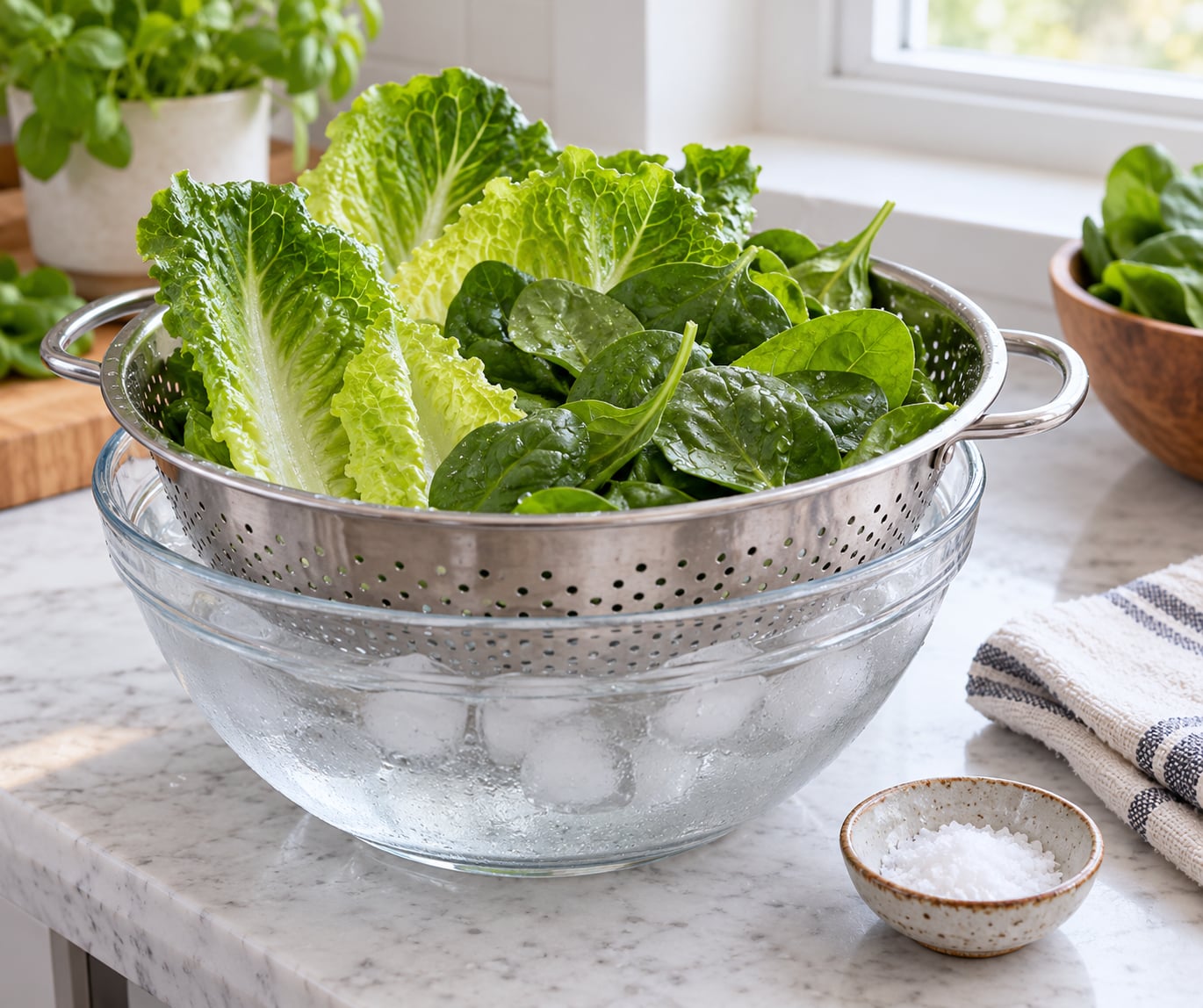
To know how to revive wilted greens, start here: cut off any dry or brown ends, submerge the leaves in ice water for 10 to 30 minutes, then drain and dry them thoroughly. Slower leaves like kale and collards also respond to a mild salt-water soak, and greens that are simply limp from storage can be warmed briefly in a skillet or steamer. The whole job takes under 30 minutes and needs nothing more than a bowl, cold water, and a towel.
I do this maybe twice a month. A head of romaine that has been sitting in a crisper drawer for four days goes from floppy to snappy about ninety percent of the time, which is the difference between eating a salad and ordering one.
The reason it works is pretty simple. Leafy greens are mostly water held rigid inside thousands of plant cells by pressure. When a leaf loses moisture, those cells go slack and the leaf droops. Put the leaf back in water and the cells fill up again, pressing the walls outward and making the leaf stiff. Cold water does it slowly and gently. Warm water opens the tissue faster, which is why some kitchens use it for very soft greens.
Table of Contents
- What You Need
- Step-by-Step
- Revive Wilted Greens in Ice Water
- Use Salt Water for Heavier Greens
- Warm Wilted Greens in a Skillet or Steamer
- How to Tell Wilted Greens Are Still Usable
- How to Keep Revived Greens Fresh
- Common Mistakes
- Frequently Asked Questions
- Can all wilted greens be revived?
- How long does it take to revive wilted greens?
- Does sugar or vinegar help revive greens?
- How do you revive greens without making them soggy?
- Why does wilted lettuce crisp up in cold water?
- Can you cook with wilted greens?
- Conclusion
What You Need
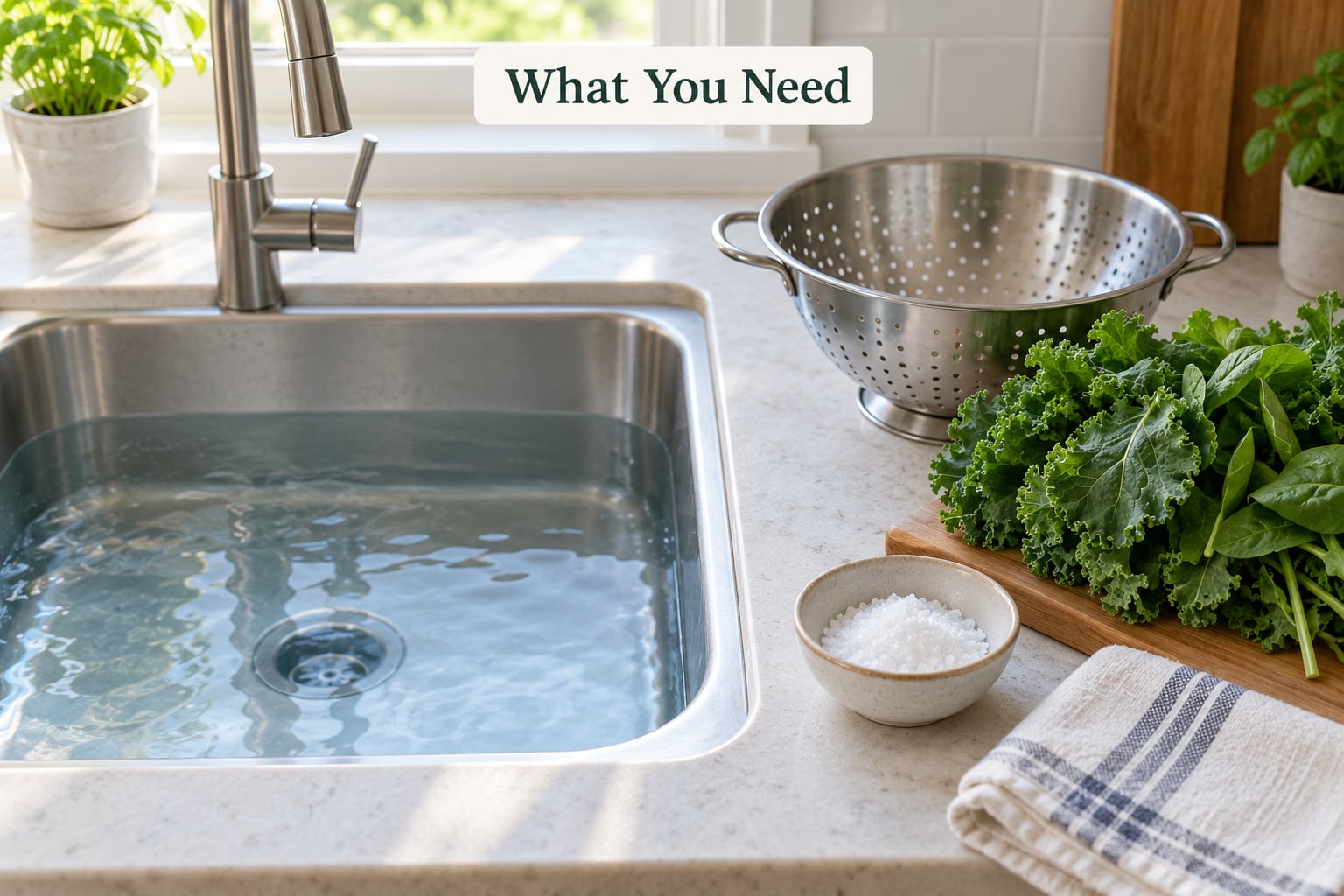
Not much. Grab the following and you can handle romaine, butter lettuce, spinach, arugula, kale, collards, chard, bok choy, and most fresh herb bunches.
- A large bowl, or the sink with the plug in
- Cold water, plus a handful of ice cubes for the cold method
- A colander or strainer
- A clean kitchen towel or a salad spinner
- A small dish of salt for the sturdy-leaf method
- A skillet with a lid, or a steamer basket, for the warm method
One piece of equipment matters more than the rest: whatever you use to dry. Greens stored wet go limp again faster than they wilted the first time.
Step-by-Step
Revive Wilted Greens in Ice Water
This is the fastest way to revive wilted greens, and the right one for romaine, butter lettuce, iceberg, baby spinach, arugula, mixed greens, spring mix, and bok choy.
- Pull off any leaves with brown edges, tears, or dry patches. Those do not recover.
- Cut about half an inch off the base of the head or the stem ends of a bunch. The cut surface absorbs water faster than an unbroken one.
- Fill a large bowl with cold water and drop in several handfuls of ice so it stays genuinely cold.
- Submerge the greens completely. Push the leaves under with a plate or a smaller bowl if they float.
- Wait 10 to 30 minutes. Delicate leaves such as arugula and spring mix usually perk up in 5 to 10; a whole head of romaine may need the full 30.
- Gently swish and separate the leaves in the water, then drain in a colander.
- Dry immediately. Spin in a salad spinner, or shake the colander and pat the leaves dry in a towel.
You will know it worked when a leaf that folded like wet paper feels stiff when you hold it up. The color does not always return to what it was at the store, but the snap does, and that is what matters in a salad bowl.
A very light squeeze of lemon into the water is optional. It does nothing for crispness; it just keeps cut edges from browning while you work.
Use Salt Water for Heavier Greens
Kale, collards, Swiss chard, and mature spinach have thick, fibrous leaves that take longer to rehydrate. A mild salt solution gives the water something to draw through the leaf, which firms them up faster than plain water.
Dissolve about a teaspoon of salt in a quart of cold water, submerge the greens, and soak 20 to 30 minutes for kale and collards, 10 to 15 for chard. Spinach usually firms in under 10. Drain and dry as before.
Keep the salt mild. If the water tastes seasoned, the greens will taste seasoned, and leaves left in strong brine for an hour go limp again instead of crisper. A teaspoon in a quart is a nudge, not a cure.
Some cooks go further and blanch sturdy greens for 30 seconds in boiling salted water, then chill them in ice water. That is a cooking method rather than a revival, but it does make kale and chard excellent for salads that will sit for an hour before being eaten.
Warm Wilted Greens in a Skillet or Steamer
Warm treatment suits greens that are limp but perfectly healthy and destined for a hot dish. Think a wilted romaine going into soup, or a bunch of chard for a saute. It also works well on very large, sturdy leaves that cold water struggles to reach all the way through.
For steaming: put a shallow layer of water in a pan, bring it to a gentle boil, set the greens in a basket above the water, cover, and steam 30 to 60 seconds until the leaves darken and soften. That is all you need.
For the skillet: heat a little olive oil over medium, add the greens, toss, cover, and let them collapse for 30 to 60 seconds. A splash of water into the pan and another covered minute brings back steam. Season and eat right away.
Do not aim for crispness here. Warm leaves come back tender, not crunchy. Use them within the hour; they will not hold a salad’s worth of texture in a bowl.
How to Tell Wilted Greens Are Still Usable
Wilting is reversible. Spoiling is not, and no soak will fix it. Learn the four checks before you start.
- Color. Bright green, deep purple, or red as the variety should be means it is fine. Dark brown, black, or yellowed patches spreading across multiple leaves means toss.
- Smell. Wilted greens smell faintly like the vegetable. A sour, fermented, or musty odor is a clear signal to throw them out.
- Texture. Limp is fine. Slimy or slippery leaves are not, no matter how briefly you soaked them.
- Mold. Any fuzz, white or grey spotting, or a matted clump means the whole bag or head goes, not just the spotted leaf.
Roots also tell you something. If the roots on a bunch of spinach or parsley are brown and mushy, the whole bunch has been sitting too long. Trim the greens and skip the roots.
For food safety basics: refrigerate greens at or below 40F within two hours of buying or cutting them, use them within three to five days, and wash them right before eating, not before storing. Leafy greens are eaten raw with no cooking step, so how they were handled matters more than for most vegetables. If you are unsure and the leaves smell off, compost them.
How to Keep Revived Greens Fresh
Drying is the step that decides whether greens you just revived survive another three days or go soft by tomorrow. Water sitting on the leaf keeps the cells hydrated but starves them of air, and rot starts there. Anyone learning how to revive wilted greens for storage has to get this right.
A salad spinner is the fastest option: fill it halfway, spin in short bursts, and check. A towel works nearly as well. Lay the leaves in a clean towel, roll it up, and press firmly all over. Repeat with a dry section if the towel is soaked.
For storage, put the dry greens in a perforated bag or a container lined with a paper towel, and keep it in the crisper drawer rather than a shelf. The drawer holds humidity around the leaves without letting them sit in water. Replace the towel every day or two for a big batch.
A short trick from people who waste the least food: keep the trimmed stems and stalks in a jar of water in the fridge. They make stock, and they last about a week that way.
Common Mistakes
Soaking too long. Past about an hour in ice water, delicate leaves start losing flavor and can turn mushy. Check at 10 minutes, then at 30. If it is crisp, stop there.
Using hot water on delicate greens. Water above 140F is for sturdy leaves or cooking, not for romaine or arugula, and boiling water cooks them into mush. Cold water restores texture without changing the vegetable.
Skipping the trim. A dry brown base wicks water away from the rest of the head. Cut it off and the whole leaf drinks.
Storing them wet. Drained but un-dried greens will be limp again within a day, no matter how good the soak was.
Reviving spoiled leaves. Soaking hides slime and dilutes odor for a few minutes. It does not remove bacteria. Smell, slime, or mold means the batch is done.
Over-salting. A quarter teaspoon in a quart is enough for a head of kale. Heavier and the leaves turn limp again and taste brined.
Two habits help more than anything else. Separate the leaves in the water instead of leaving a tight head submerged, since trapped air blocks contact. And lift greens out with a slotted spoon or strainer rather than pouring them, which crushes the softened leaves against the bowl.
Frequently Asked Questions
Can all wilted greens be revived?
Most leafy greens can be brought back if they are limp but not spoiled. Romaine, butter lettuce, spinach, arugula, kale, chard, collards, and bok choy all respond to a cold soak, and fresh herbs such as parsley and cilantro revive in about 10 to 15 minutes. Stems and stalks like celery and broccoli soak faster than leaves. Anything slimy, moldy, or sour-smelling should be discarded, because soaking will not remove bacteria.
How long does it take to revive wilted greens?
Delicate leaves such as arugula, spring mix, and baby spinach perk up in 5 to 10 minutes of ice water. Romaine and other sturdy heads usually need 15 to 30 minutes, and kale or collards in a mild salt soak want the full 30. A five-minute dip can firm bagged salad mixes that are only slightly limp. Add draining and drying time and the whole process stays under 30 minutes.
Does sugar or vinegar help revive greens?
Neither does much for crispness. A squeeze of lemon or a splash of mild vinegar slows browning on cut edges while you prep, which is useful for herbs and lettuce you are about to serve. Sugar has no real place in a revival soak; it makes the water sticky and can dull the flavor. Plain cold water plus a little salt for sturdy greens is the combination that actually firms the leaves.
How do you revive greens without making them soggy?
Cold water, a short soak, and thorough drying. Use ice water rather than warm for anything you plan to eat raw, cut off the dry base so the leaf drinks evenly, and pull the leaves out of the soak at the first sign of crunch. Drain in a colander, then spin or towel them dry before they go anywhere near a container. Wet leaves stored in a closed bag turn limp and slimy fast.
Why does wilted lettuce crisp up in cold water?
A leaf wilts when water leaves its cells through the surface and the pressure inside those cells drops, so the leaf goes slack and floppy. Submerging it in water reverses that movement: water passes back through the membrane and refills the cells, which press outward again and stiffen the leaf. Cold water slows the exchange slightly, which is why it is gentler on delicate greens than warm water.
Can you cook with wilted greens?
Yes, and cooking is a great destination for greens that will not crisp back up. Wilted but fresh leaves are fine in soups, curries, sautes, and braises, where they collapse further anyway. Warm them in a covered skillet for 30 to 60 seconds, or steam them until tender. Their reduced volume also makes them a good filler for frittatas, pasta, and grain bowls, so a tired head of lettuce still gets used.
Conclusion
Start by looking at the leaves. If they are limp and clean-smelling, they are worth saving: cut off the dry ends, soak them in ice water for 10 to 30 minutes, and dry them properly before storing. That is how to revive wilted greens in the simplest way that actually works. Kale and collards do better in a mild salt soak, and anything destined for soup or a saute can skip the cold water entirely and get a quick covered warm treatment instead.
And if a leaf is slimy, spotted, or sour, do not argue with it. No bowl of water fixes that, and throwing it out is the cheaper decision in every way that matters.