You can cook pasta in less water than the box tells you to: about 1 quart (1 litre) of cold water with 1.5 teaspoons of salt per 1 pound (450 g) of dried pasta, brought up to a steady simmer rather than a hard boil. The whole job takes about 10 minutes, uses one pot instead of three, and leaves you a cup of starchy cooking water that turns a thin sauce glossy without any cream or flour.
Large pots of water are a habit, not a requirement. If you have been searching for how to cook pasta in less water, the answer comes down to three things: a wide pot, measured water and a steady hand. Pasta hydrates by absorbing water, not by swimming in it, and the reason cooks reach for six quarts is convenience of stirring and a fear of boil-overs. Both are easy to solve.
Table of Contents
- What You Need
- How to Cook Pasta in Less Water, Step by Step
- Step 1: Combine the pasta, water and salt
- Step 2: Heat to a simmer, not a rolling boil
- Step 3: Stir for the first few minutes
- Step 4: Simmer and start testing early
- Step 5: Reserve the water, then serve
- Common Mistakes
- Too much or too little water
- Letting the water hit a violent boil
- Not stirring in the first few minutes
- Crowding the pot
- Cooking past al dente while you wait for the sauce
- Adding oil to the water, or salting heavily out of habit
- Frequently Asked Questions
- Can I cook pasta in less water than the package directions recommend?
- How much water do I need to cook pasta in less water?
- Why does pasta stick when I cook it in a small amount of water?
- Should I cover the pot when cooking pasta in less water?
- Does cooking pasta in less water change the cooking time?
- Conclusion
What You Need
The list is short. Everything you already own will do.
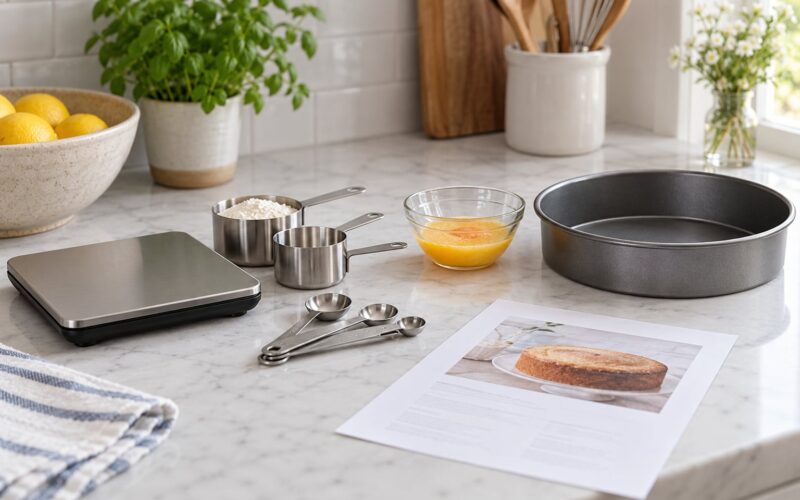
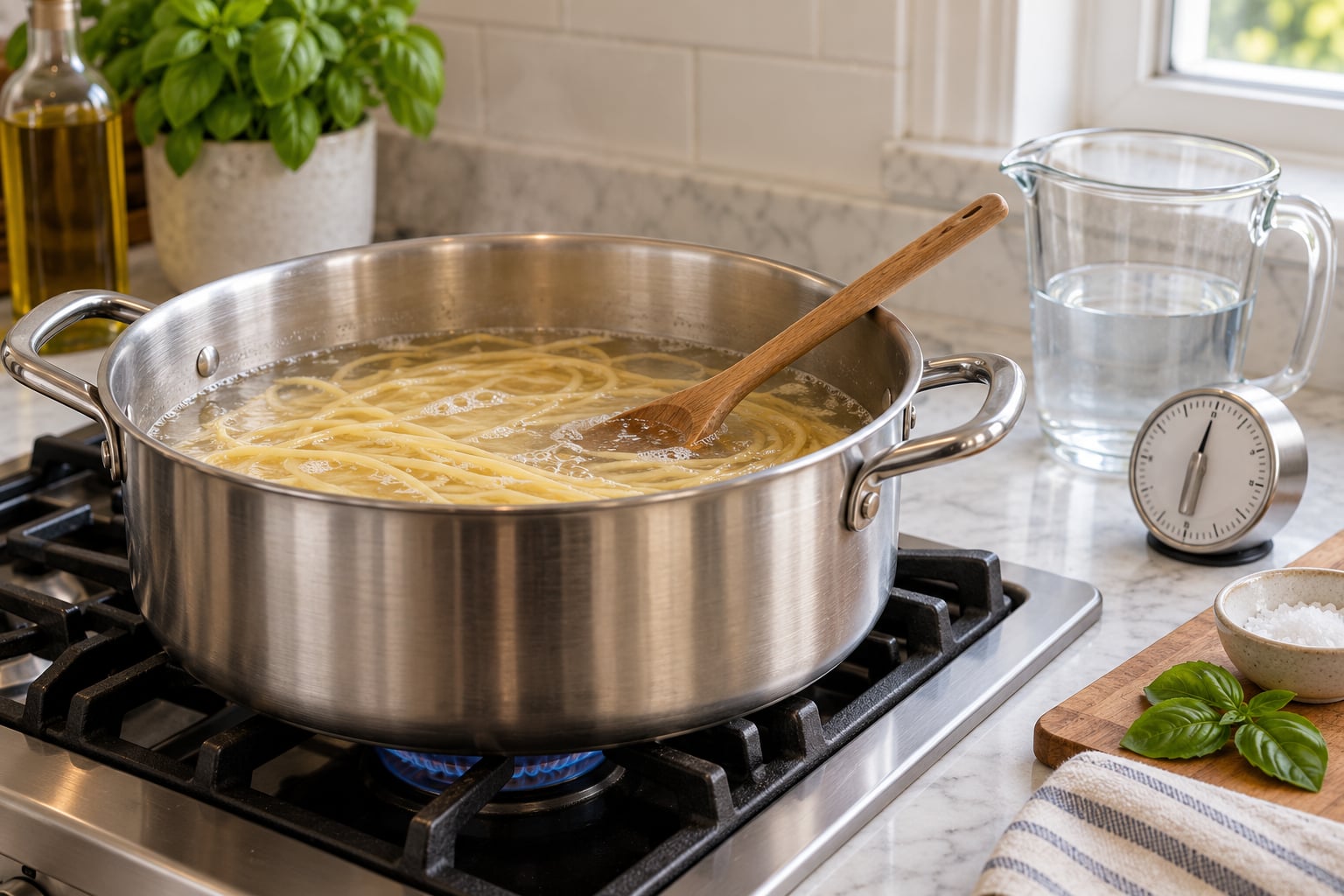
- A wide pot or a 12-inch skillet with a lid. Wide matters more than deep, because surface area is what keeps noodles moving. A 3-quart saucepan works for short shapes; long strands want a skillet.
- A measuring jug. This is the one tool that changes your results. Guessing is how people end up with too little water and a cement-textured batch.
- Salt. Kosher or fine sea salt, about 1.5 teaspoons per pound of pasta.
- Dried pasta. Long strands, penne and other short shapes are the easiest to cook this way. Fresh and frozen pasta want their own timings.
- A timer. With less water, stovetop heat is less forgiving, so the clock replaces the cue of watching a big pot boil.
- A spoon or tongs for stirring, and a mug or small bowl to reserve starchy water before you serve.
Here is the amount to measure. Treat these as a starting point and adjust for the shape you are cooking.
| Dried pasta | Water | Salt |
|---|---|---|
| 2 oz (55 g) | 1 cup (250 ml) | 1/2 tsp |
| 4 oz (115 g) | 1.5 cups (375 ml) | 3/4 tsp |
| 8 oz (225 g) | 2 cups (500 ml) | 1 tsp |
| 1 lb (450 g) | 1 quart (1 litre) | 1.5 tsp |
| 2 lb (900 g) | 2 quarts (2 litres) | 1 tbsp |
The practical test is simple: the water should sit roughly an inch above the pasta after you add it. With long strands in a wide pot, go a little heavier on the water so they can move freely, and keep the heat moderate.
How to Cook Pasta in Less Water, Step by Step
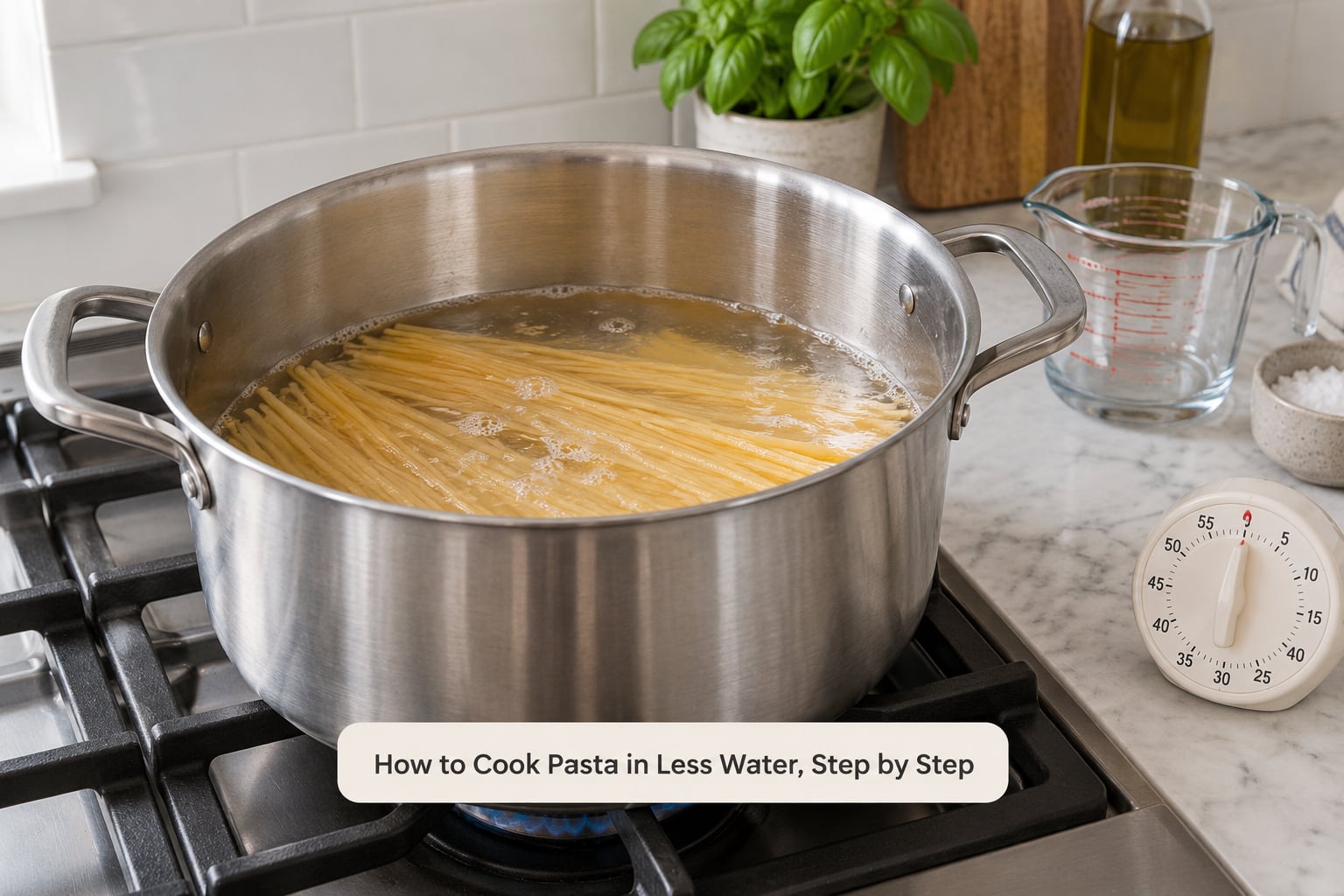
Follow these five steps in order and you will get pasta that cooks evenly, seasons through and holds its shape. You will know each step worked by what you see, not by guesswork.
Step 1: Combine the pasta, water and salt
Put the pasta, the measured water and the salt into the pot together, cold. Starting cold is the trick: the noodles hydrate at roughly the same rate as the water heats, so the outside of a strand never cooks long before the middle. It also means no clumping, because there is no violent boiling water to slam the pasta into a mound.
Step 2: Heat to a simmer, not a rolling boil
Turn the burner to high and bring the pot up, then drop to medium or medium-low once you see the first bubbles breaking the surface and steam coming off steadily. In a shallow amount of water, a rolling boil is fast, which is exactly why it splashes. A gentle simmer around 190 to 200°F keeps the pot moving without throwing water over the rim.
Step 3: Stir for the first few minutes
As soon as the water warms and the pasta starts to move, stir with a spoon or tongs for 30 seconds, then every minute or two. The strands are most vulnerable in the first two minutes, when surface starch is exposed and nothing is moving yet. You are looking for separate strands, not a solid mat.
Step 4: Simmer and start testing early
Cook at a steady simmer, stirring occasionally, and begin checking 2 to 3 minutes before the package time runs out. A strand squeezed between your fingers should bend easily and still have a defined core in the centre. If it snaps cleanly, it needs more time; if it collapses into mush, you have gone past al dente and the starch is breaking down.
Step 5: Reserve the water, then serve
Before you drain or serve, scoop out a mug of the cloudy liquid. That water is the emulsifier for your sauce. Toss it into the hot pan with the pasta and sauce and stir hard for 30 seconds; it will cling instead of sliding off. In the low-water method there is not much liquid to spare, so this step is not optional.
One safety note worth repeating. Shallow water heats faster and splashes harder than a full pot, and a lid on a hard boil traps steam and can force it out around the edges. Use the lid ajar for a gentler surface, and turn the burner down before you put it on.
Common Mistakes
Nearly every bad batch traces back to one of a handful of habits. Here is what goes wrong and the fix that solves it.
Too much or too little water
Too much and your sauce turns thin, because the noodles release less starch per cup of liquid and you end up diluting. Too little and the pot runs dry on the bottom, the noodles fry and scorch, and you get an uneven cook. Measure instead of eyeballing, and if you are unsure, add another half cup of hot water partway through. You cannot take water back out.
Letting the water hit a violent boil
This is the mistake that turns people off the method. A wide pan with an inch of water goes from simmer to chaos in seconds, and pasta dropped into it breaks, sticks to the pan bottom and sends steam at your wrist. Heat to a boil with the lid on, drop the heat the moment it bubbles, then add the pasta and keep it at a lazy simmer.
Not stirring in the first few minutes
Starch on the surface of each strand acts like glue. When strands touch before that starch is washed off or coated in oil from the pot, they bond. One firm stir every minute for the first three minutes fixes nearly every clumping complaint. After that, occasional stirring is enough.
Crowding the pot
Twice as much pasta in the same amount of water means the noodles press against each other and against the sides, so the undersides overcook before the middles soften. The pot needs room for every strand to move. Cook a second batch, or start earlier.
Cooking past al dente while you wait for the sauce
Drain the pasta a minute or two before the sauce is ready and toss it with a spoon of oil, or spread it on a warm plate. Pasta finishes cooking in the sauce, and low-water noodles have a smaller margin because the starch load is so high. Pull it a shade early and let it finish in the pan.
Adding oil to the water, or salting heavily out of habit
Oil floats on the water, does nothing about sticking and makes the sauce greasy and hard to emulsify. Skip it. On salt, a small volume of water does concentrate seasoning, so use the amounts in the table rather than the heaping tablespoon most people add to a stockpot. Season the sauce too, and taste as you go.
Two bonus variations. Swap the water for chicken broth and you get a one-pot pasta with the seasoning built in, which is what many Italian home cooks have always done. Cook the pasta in the sauce itself with a splash of liquid, keep the lid on and stir often, and you get what cooks call pasta risottata, which never needs draining at all. Just keep a cup of plain water nearby in case the pan dries out.
If you have no stove, the same logic still holds. Boil pasta and water separately, tip both into a wide-mouth insulated flask, seal it and wait roughly 35 minutes. Same ratios, same starch, no burner.
Frequently Asked Questions
Can I cook pasta in less water than the package directions recommend?
Yes. The quantities on the box assume a large stockpot you never need to fill to the top. About 1 quart of water and 1.5 teaspoons of salt per pound of dried pasta is enough, as long as the water sits roughly an inch above the pasta. Keep the heat at a steady simmer and stir in the first few minutes, and the noodles cook evenly with nothing left behind in the colander.
How much water do I need to cook pasta in less water?
Measure 1 quart, or 1 litre, for every 1 pound (450 g) of dried pasta, and add 1.5 teaspoons of salt. Scale down from there: 2 cups for 8 oz (225 g), 1.5 cups for 4 oz (115 g), 1 cup for 2 oz (55 g). Long strands in a wide pot can take an extra half cup so they slide instead of press against each other. The check that matters is depth, not the number.
Why does pasta stick when I cook it in a small amount of water?
Sticking comes from starch, not from water volume. The starch on the outside of each strand gets sticky as it hydrates, and strands that touch before the water is moving glue themselves together. In a shallow pan it happens faster because there is less room to swirl. Stir firmly every minute for the first three minutes, keep the pot at a gentle simmer, and give the noodles enough space to move. Oil in the water does not help.
Should I cover the pot when cooking pasta in less water?
A lid helps once the pasta is in and the heat is moderate, because the trapped steam keeps the strands moist and cooks the tops of long pasta that sit above the waterline. Use it ajar rather than sealed, and never put a tight lid on a pot at a hard boil, since the pressure will push hot steam out around the rim. Skip the lid while the water is heating so you can watch for boil-over.
Does cooking pasta in less water change the cooking time?
It changes the schedule more than the cook time. You no longer wait 10 to 15 minutes for a big pot to reach a rolling boil, so the whole job finishes faster overall. Once the pasta is in, the simmering time is about the same as the package states, though a gentle simmer runs slightly slower than a hard boil. Start testing 2 to 3 minutes early and squeeze a strand rather than trusting the clock alone.
Conclusion
Cooking pasta in less water works because the noodle only needs enough liquid to hydrate, and because concentrated starch makes a better sauce than thin water does. Measure the water, salt it, start cold, keep the heat at a simmer and stir early. Reserve a mug of the cloudy liquid before you serve.
Start tomorrow with one box of spaghetti and a wide pan: 1 quart of water, 1.5 teaspoons of salt, medium heat. It takes ten minutes, it uses one pot to wash, and the sauce will cling better than anything you have made in a stockpot.