How to store tomatoes so they stay flavorful comes down to ripeness: keep firm whole tomatoes at room temperature, stem-side down in a single layer, and move only the very ripe ones or cut pieces into the fridge. Wash them right before you eat, not before you store. That is the whole method, and it takes about two minutes.
The fridge myth confuses people because both halves are true. Cold slows ripening, so fridge-stored tomatoes outlast counter tomatoes. It also dulls the aroma and firms the flesh in a way that reads as mealy once the fruit comes back to room temperature. So the real question is not which is better, it is how many days you need to buy.
If you are eating them within two or three days, the counter wins on flavor. If a haul needs to last a week or more, the fridge wins on survival, and you give a little texture back by letting chilled fruit sit out about an hour before serving. Updated for 2026, here is the full plan.
Table of Contents
- What You Need to Store Tomatoes
- How to Store Tomatoes Step by Step
- Step 1: How to Store Tomatoes at Room Temperature Before They Ripen
- Step 2: Refrigerate Very Ripe Tomatoes
- Step 3: Use the Right Container for Whole Tomatoes
- Step 4: Refrigerate Cut Tomatoes Promptly
- Step 5: Wash Only Before Using or Before Storing Cut Fruit
- Step 6: Freeze Tomatoes You Will Not Eat Fresh
- Common Mistakes That Ruin Tomatoes Fast
- Frequently Asked Questions
- Should tomatoes be refrigerated or stored at room temperature?
- How long do whole tomatoes stay fresh at room temperature?
- Does washing tomatoes make them spoil faster?
- How should cherry or heirloom tomatoes be stored?
- How can you keep tomatoes from getting too soft?
- Can frozen tomatoes retain their flavor for later cooking?
- Conclusion
What You Need to Store Tomatoes
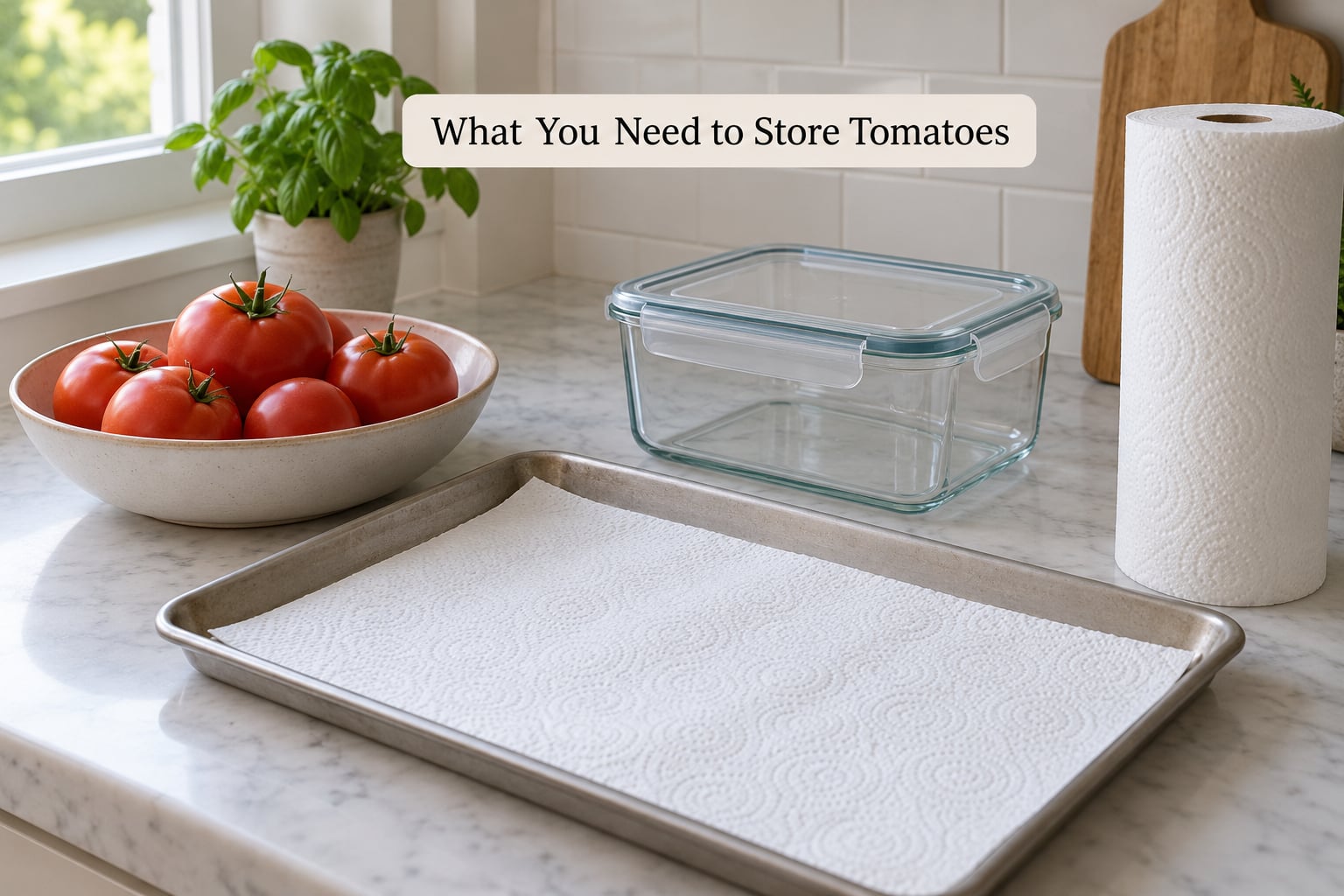
You do not need anything special. Most of what people buy for tomato storage does nothing. Here is the short list that does:
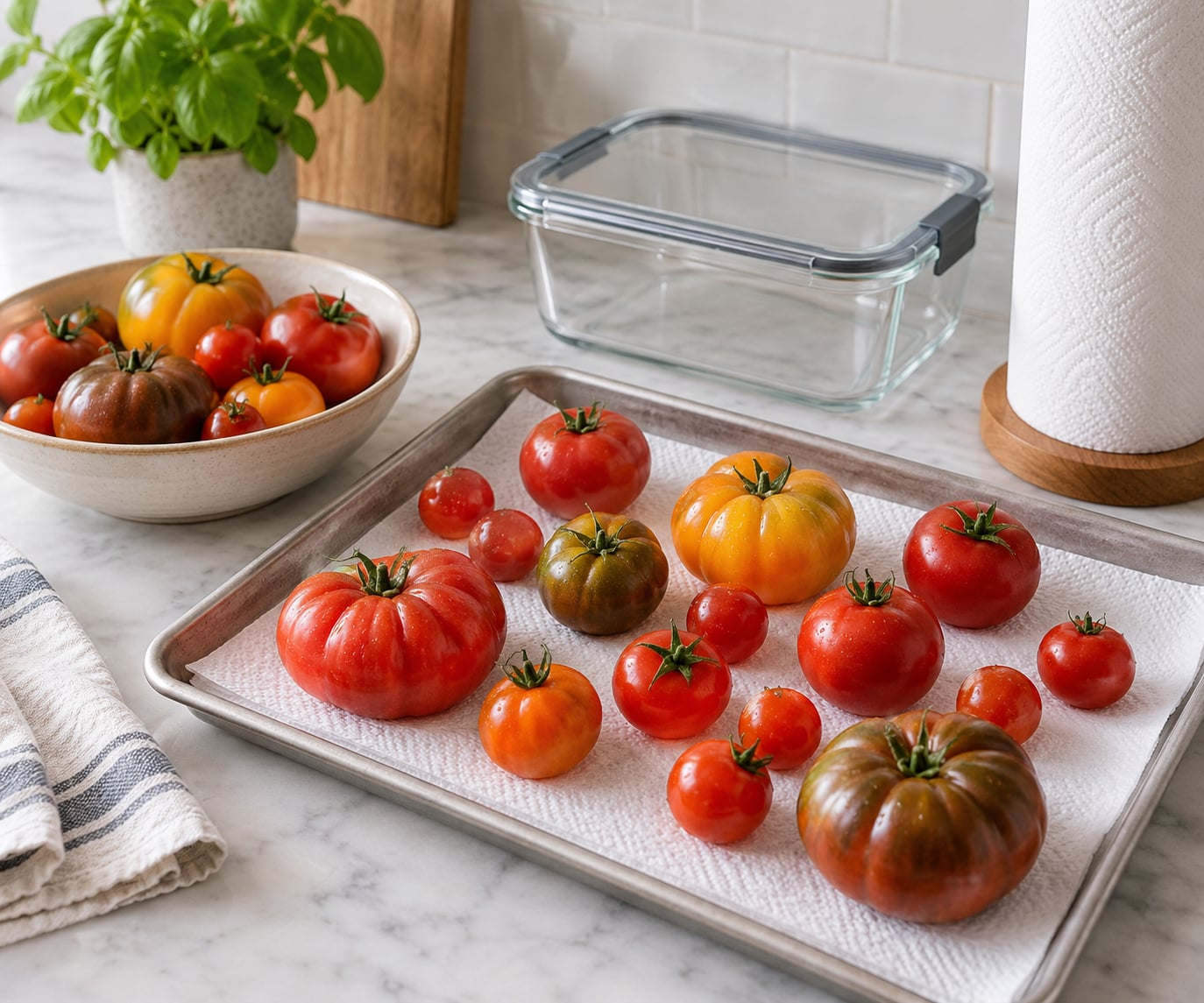
- A rimmed baking sheet or a plate. The rim keeps a tomato from rolling onto a neighbor, which is how bruising starts.
- Paper towels. One layer under the fruit wicks up moisture and gives the skin somewhere dry to sit.
- A shallow bowl. Useful for fruit that is already soft enough to bruise from being handled.
- An airtight container. Only for cut tomatoes, where you are trading airflow for moisture retention and food safety.
- A breathable bag or produce bag. A perforated bag or a paper bag gives you airflow and a little humidity. A plain zip bag sealed tight does the opposite.
- Freezer bags and a rimmed tray. For the surplus pile you will not eat fresh.
No container fixes a wet tomato, a hot kitchen or fruit that is already moldy. Handle those three things first and the rest is easy.
How to Store Tomatoes Step by Step
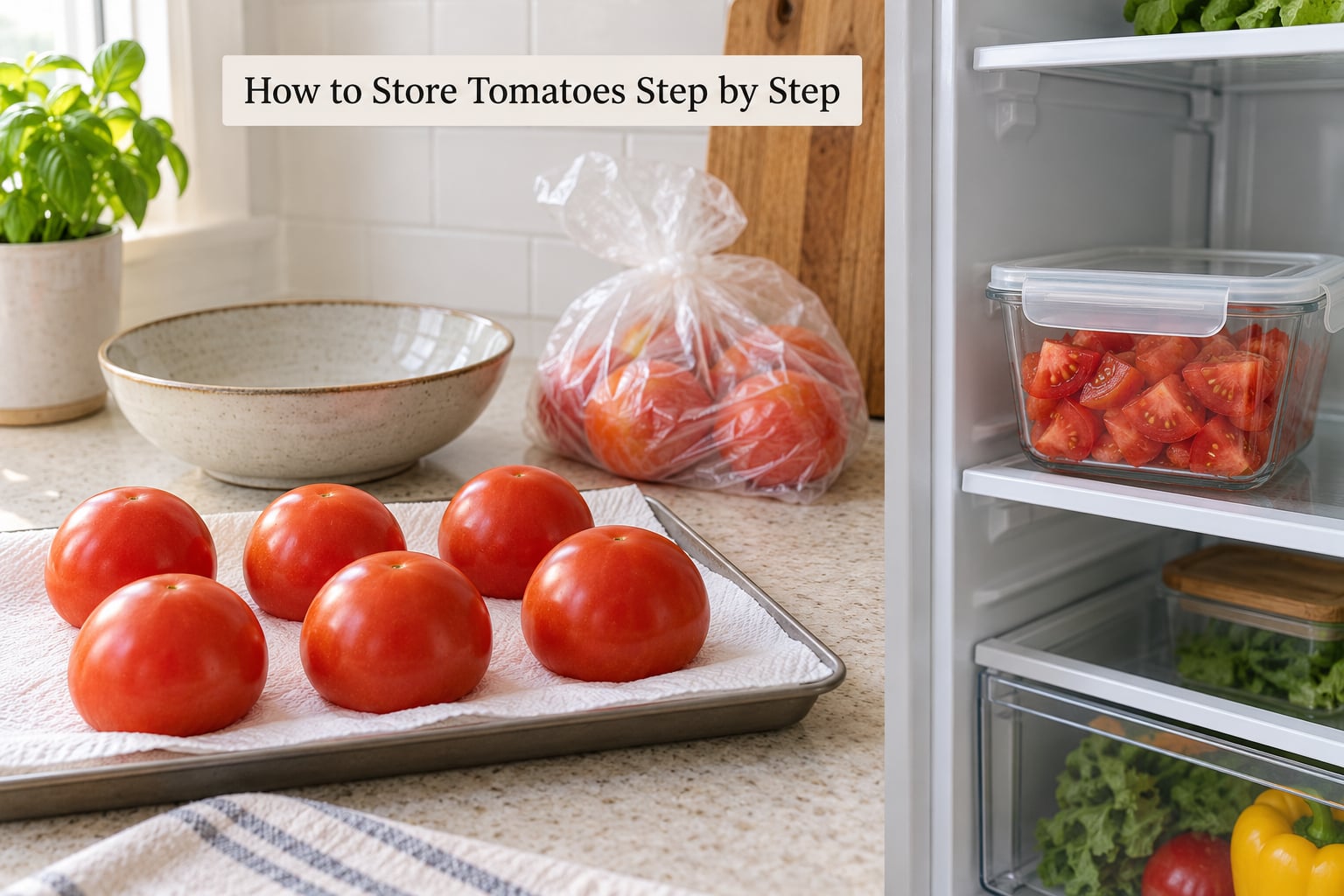
Step 1: How to Store Tomatoes at Room Temperature Before They Ripen
Firm tomatoes that still smell like tomato and feel heavy for their size belong on the counter. Heirlooms, garden fruit and anything you picked before it turned fully red keep more aroma at room temperature than in a cold box.
Set them stem-side down, so the little scar where the stem was removed sits flat against the tray, and space them so nothing touches. That scar is the wettest spot on the fruit and the usual place mold starts, so putting it down and keeping it dry buys you days.
Keep the tray out of direct sun and away from the stove, dishwasher and oven. Those spots warm the fruit and cook the flavor out of it from a short distance. Check once a day and eat in the order of ripeness, softest first.
Step 2: Refrigerate Very Ripe Tomatoes
Refrigeration is right for tomatoes that are already deeply colored and give slightly to the touch, ones with a bruise, and any fruit you want to eat within a day or two. Cold slows the ripening process enough that ripe-now fruit becomes ripe-later fruit.
Put them in the fridge in a bowl or a produce bag with holes. Do not seal soft tomatoes in airtight plastic, because trapped condensation is what turns a tomato into a fuzzy one. Bring them back out about an hour before serving so they are not straight from the box.
Step 3: Use the Right Container for Whole Tomatoes
Airflow is the deciding factor for whole fruit. Paper-towel-lined trays, shallow bowls and perforated produce bags all let moisture escape, and that is what keeps mold from starting at the stem scar and spreading down the shoulder.
A sealed zip bag with no holes works against you unless the fruit is very ripe and you plan to eat it tomorrow. Cherry and grape tomatoes fit a vented container or a single layer on a plate. Large heirlooms and beefsteaks need space so nothing presses on one shoulder.
Step 4: Refrigerate Cut Tomatoes Promptly
Once a tomato is cut, treat it like any other cut produce. Use a clean knife and board, blot the cut faces dry, and put the pieces in an airtight container lined with paper towel.
Chill it within two hours and keep it cold until you use it. The USDA guidance for cut tomatoes held in a refrigerator is about three to four days. Food52 suggests treating fridge-stored cut tomatoes as a two-day ingredient and whole tomatoes as about five, which is the more cautious end of the range.
Step 5: Wash Only Before Using or Before Storing Cut Fruit
Washing adds moisture, and moisture on the skin is the main driver of early mold. Dry, unwashed tomatoes keep noticeably longer in storage than washed ones, so leave them dirty until the moment you cut them.
If a tomato is muddy, rinse it and dry it thoroughly, including the stem scar, before it goes anywhere near your storage tray. For cut fruit the order flips: wash first, sanitize the board, cut, blot off excess liquid, cover and refrigerate.
Step 6: Freeze Tomatoes You Will Not Eat Fresh
Freezing stops the clock entirely, and it is the answer for a farmers market haul or a garden glut. Rinse the fruit, cut away any soft or damaged areas, and slice or dice.
Spread the pieces on a rimmed tray so they freeze separately, then transfer them to labeled freezer bags or containers. Thawed tomatoes lose their structure, so use them for sauce, soup, curry and braises rather than eating them raw or in a salad.
These best-by figures come from published tests rather than my own kitchen, mostly Food & Wine’s eight-method comparison of the same greenhouse slicing tomatoes under the same conditions:
| Storage method | Best by | Flavor impact |
|---|---|---|
| Stem end covered with tape, counter | About 9 days | None |
| Covered, on the counter | About 6 days | None |
| Stem-side down on a rimmed baking sheet | About 6 days | None |
| Sealed plastic bag, on the counter | About 5 days | Mild |
| Refrigerated in an airtight container | About 4 days | Dulled |
| Refrigerated uncovered | About 2 days | Dulled |
The Kitchn runs a similar test and lands on the same winner, with stem-side down beating stem-side up by a wide margin. If you want one extra day, press a small piece of tape over the stem scar. It costs nothing and it blocks the moisture escape route.
Common Mistakes That Ruin Tomatoes Fast
- Refrigerating everything on day one. Cold dulls aroma compounds and firms the flesh. Fix: keep firm fruit on the counter and move only ripe or damaged tomatoes to the fridge.
- Washing first, storing second. Surface water sits in the stem scar and invites mold. Fix: store dry, wash at the moment of use.
- Sealing firm tomatoes in airtight plastic. Trapped moisture does not preserve fruit, it feeds bacteria and fungus. Fix: tray, bowl or perforated bag.
- Crowding the tray. Contact points bruise, and bruises go soft and leak first. Fix: one layer, nothing touching, rimmed pan so nothing rolls.
- Storing tomatoes next to bananas, avocados or apples. Those fruits give off ethylene gas, a plant hormone that pushes everything nearby into ripening. Fix: give tomatoes their own shelf or corner.
- Leaving cut tomatoes uncovered. Exposed cut flesh dries out and picks up everything in the air. Fix: airtight container, paper towel underneath, refrigerated within two hours.
- Treating every method as a fixed number of days. Kitchen temperature, ripeness on purchase and how you washed the fruit all move the date. Fix: judge by feel, smell and the stem scar rather than the calendar.
- Using fruit that already shows mold or leaking juice. One soft, weeping tomato can wet the whole tray. Fix: sort at the door and eat the questionable one first.
Frequently Asked Questions
Should tomatoes be refrigerated or stored at room temperature?
Firm tomatoes belong on the counter, stem-side down in a single layer, because cold dulls their aroma. Very ripe, bruised or damaged fruit belongs in the fridge, where the cold slows ripening and buys you two to four more days. Bring chilled tomatoes out about an hour before eating so the texture comes back.
How long do whole tomatoes stay fresh at room temperature?
On the counter in a cool spot out of direct sun, expect roughly five to seven days for tomatoes that were firm when you bought them, and two to four days for very ripe ones. Stem-side down with airflow stretches that window. Test by smell and by feel rather than counting days.
Does washing tomatoes make them spoil faster?
Usually yes. Washing leaves moisture on the skin, and that water collects in the stem scar, which is where mold starts first. Store tomatoes unwashed and dry, then rinse under running water right before you use them. If a tomato is muddy, dry it thoroughly before it goes into storage.
How should cherry or heirloom tomatoes be stored?
Cherry and grape tomatoes hold up better than large slicers and tolerate the fridge longer. Keep them on the counter in a single layer or a vented container, and move them to the fridge once they split or soften. Heirlooms are thinner-skinned and bruise easily, so give them a rimmed tray and their own space.
How can you keep tomatoes from getting too soft?
Ripeness moves faster than you can catch it, so slow it down early. Keep tomatoes away from bananas, avocados and apples, which release ethylene gas, keep the tray out of sun and heat, and refrigerate anything already deeply colored and soft. Check daily and eat the softest fruit first.
Can frozen tomatoes retain their flavor for later cooking?
Frozen tomatoes keep their ripe flavor well but lose their texture, which suits sauces, soups, curries and cooked dishes rather than raw eating. Freeze whole or diced without blanching, spread pieces on a tray first so they freeze separately, then bag them in portions. Roast and freeze instead for a sweeter, more concentrated result.
Conclusion
Start with the firm ones: leave them unwashed on a rimmed tray, stem-side down, in a single layer somewhere cool and out of the sun. Move only the ripe or damaged fruit to the fridge, and cover and chill anything you cut within two hours.
Then forget the calendar. A tomato tells you when it is turning with a soft shoulder, a leaking skin or a smell gone sour, and that is a more reliable clock than any number in a table.