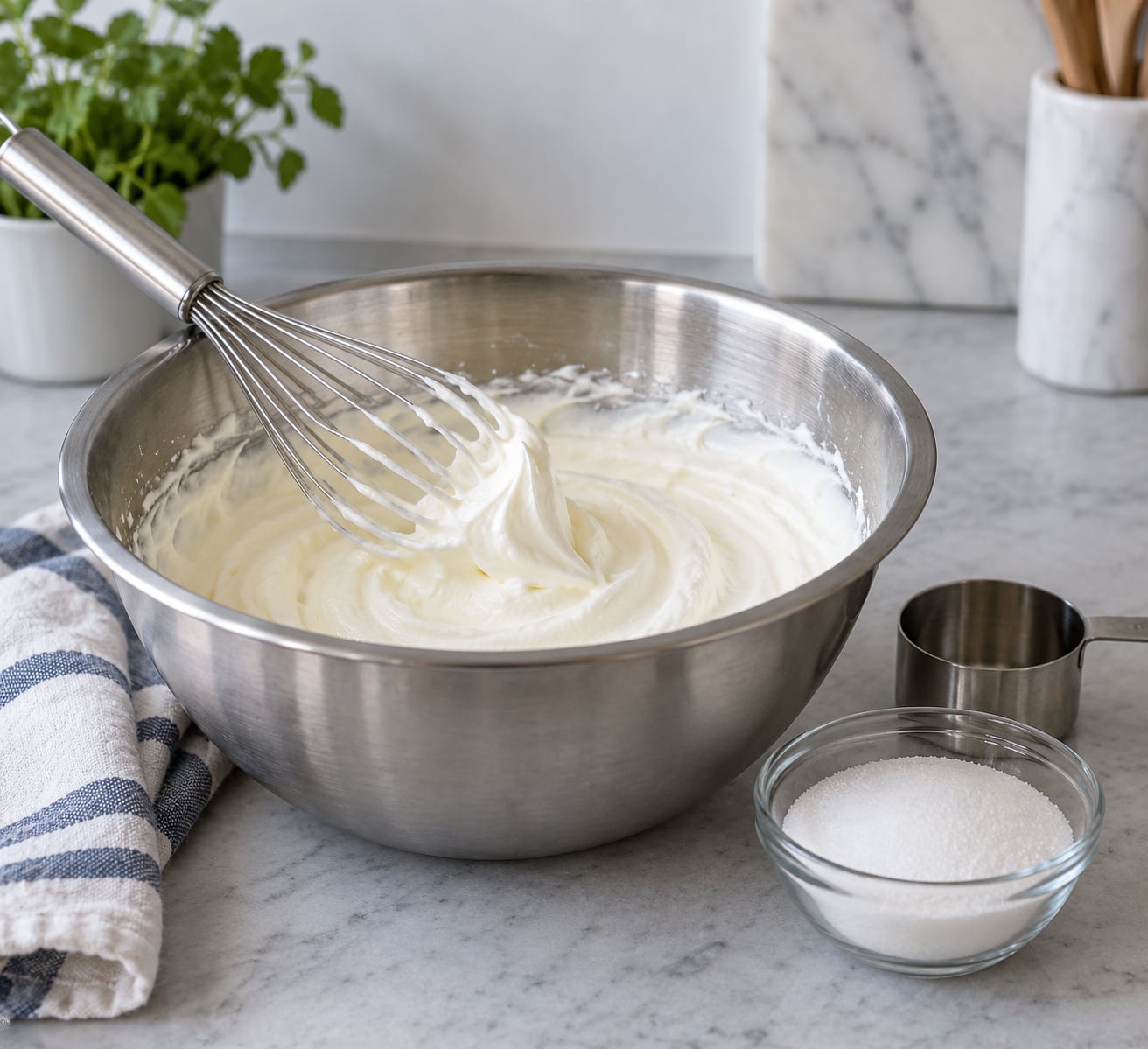
To whip cream by hand, chill the bowl and the cream, then use a balloon whisk with small wrist circles for about 2 to 5 minutes for a single cup until the cream holds medium-firm peaks. Cold is the whole trick: warm cream and a warm bowl will not thicken no matter how long you whisk.
I do this most weeks for coffee and for the odd dessert, and the thing that catches people out is not the whisking. It is the waiting. The cream can sit in the bowl looking completely flat for several minutes while it is quietly starting to build a foam, and then it turns in about thirty seconds. That is normal, and knowing it up front saves you from beating the life out of a perfectly good bowl of cream.
Table of Contents
- What You Need
- How to Whip Cream by Hand: Step-by-Step
- Chill the Bowl and Whisk
- Add the Cream and Sugar
- Begin Wiping Slowly
- Increase the Wrist Speed
- Stop at the Right Peak
- Adjust the Cream for Your Recipe
- Common Mistakes
- Tips for Consistent Results
- Frequently Asked Questions
- How long does it take to whip cream by hand?
- Do I need sugar to whip cream by hand?
- Why is my whipped cream not getting thick?
- How do I know when hand-whipped cream has reached stiff peaks?
- Can I whip cream by hand with a fork?
- How do I keep hand-whipped cream from turning grainy?
- Conclusion
What You Need
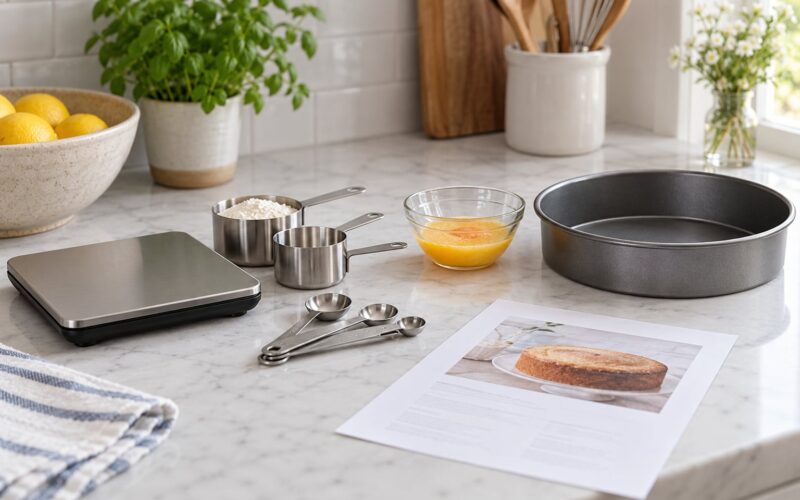
Hand-whipping needs very little. One cup of heavy cream and a decent whisk will carry you through most of a week of desserts.
- 1 cup (240 ml) cold heavy whipping cream with 36% milk fat, straight from the fridge. Double cream at 48% works well too, and whips faster.
- A balloon whisk, ideally one that is taller than the bowl is deep. A balloon shape traps more air than a flat whisk because the wires push more cream in front of them.
- A large mixing bowl, metal or glass. Metal chills faster and conducts cold better; glass holds its chill slightly longer once it is in.
- 1 to 2 tablespoons granulated sugar, optional but recommended for flavour and stability.
- A pinch of fine salt and a teaspoon of vanilla extract, both optional.
- A damp kitchen towel to nest under the bowl so it stops skating across the counter.
A measuring jug matters more than people think. Wiping the cream in a narrow jug with a spoon is how most first attempts end up in the bin, because a narrow base gives the whisk nowhere to travel.
On which cream to buy, the fat percentage decides everything. Anything at 30% milk fat and under is a fight you do not need.
| Cream | Milk fat | Can you whip it? |
|---|---|---|
| Double cream | about 48% | Yes, fastest of all; expect butter if you go past firm peaks |
| Heavy whipping cream | 36% | Yes, the reliable everyday choice |
| Whipping cream | 30 to 35% | Yes, but softer peaks and less headroom |
| Light or single cream | 18 to 25% | Mostly no. It stays loose and soupy |
| Half-and-half | 10 to 18% | No, there is not enough fat to hold air |
If your carton says UHT or aseptic, put it back on the shelf. Ultra-pasteurised cream has been heat-treated and the proteins that help stabilise the foam never recover, so it will not hold peaks properly for more than an hour.
How to Whip Cream by Hand: Step-by-Step
Chill the Bowl and Whisk
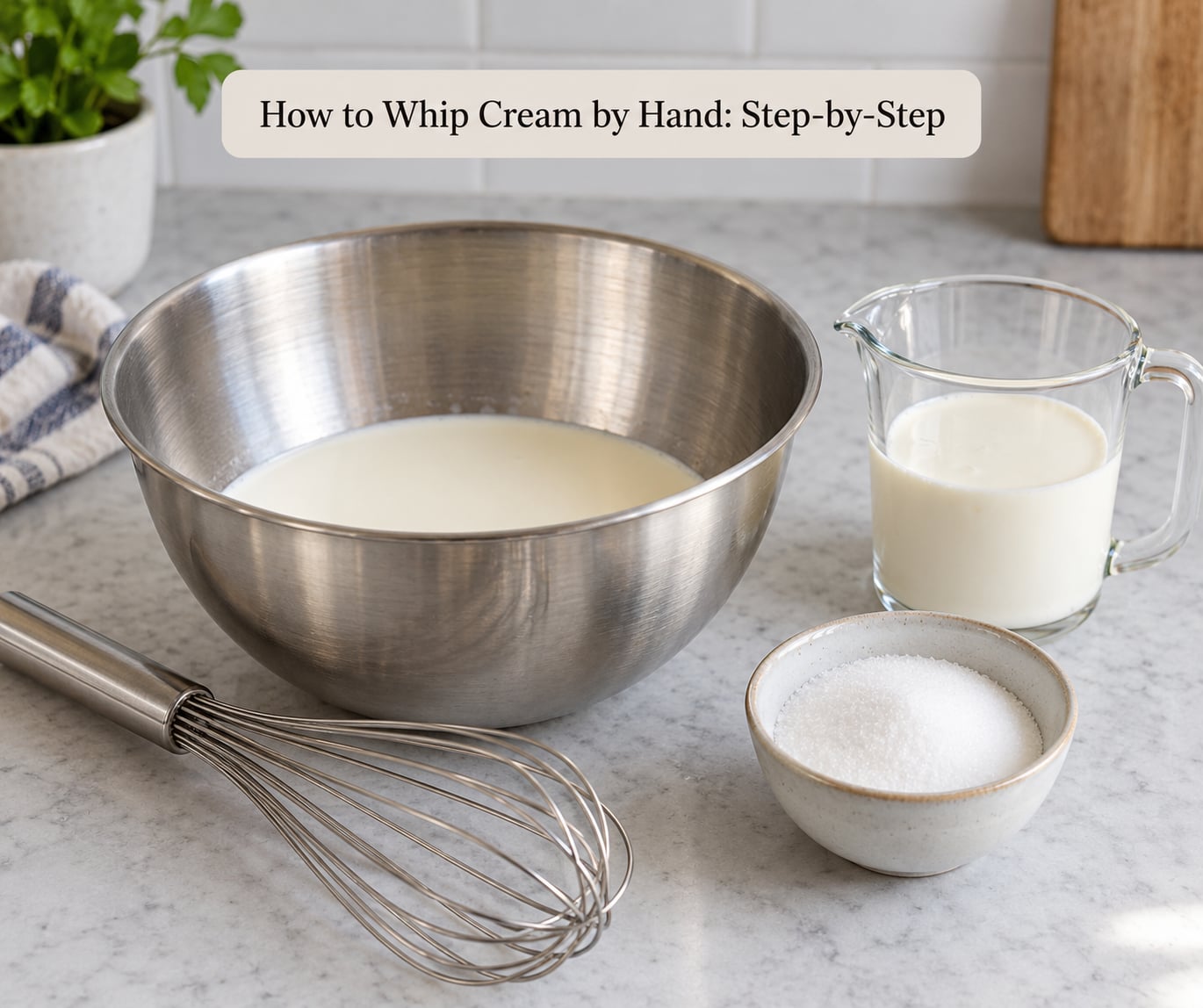
Put the bowl and the whisk in the fridge while you gather everything else, or freeze them for 15 minutes if you are impatient. A frozen bowl is the fastest route to stiff peaks and it is the single change that most improves the result.
Whisking works by folding air into cream and holding it there. Cold butterfat is firm, so it grips the bubbles and forms a network around them. Warm butterfat is soft, the network collapses, and the air escapes as fast as you add it.
Add the Cream and Sugar
Pour the cold cream into the cold bowl. For a cup of cream, one tablespoon of granulated sugar is the sweet spot and two is the ceiling before it starts tasting like sugar rather than cream. Sprinkle it in gradually rather than dumping it in one go, because undissolved crystals are what make whipped cream feel grainy on the tongue.
Add the vanilla and salt now if you are using them. Salt is not a gimmick here, it is the same trick used in baking: a fraction of a teaspoon makes everything else taste more like itself.
Begin Wiping Slowly
Start at the bottom of the bowl with slow, small circles. The first thirty seconds are about getting sugar dissolved and cream moving, not about making foam. Speed here just splashes cream up the sides of the bowl.
Keep your upper arm pinned against your ribs and move only the wrist. That single change is what separates a five-minute effort from a five-minute workout, and it is the difference most people never make. If your shoulder is burning, your arm is doing the whisk’s job.
Increase the Wrist Speed
Once the cream looks slightly thicker and leaves a faint trail behind the whisk, move up a gear. Steady, quick circles in the centre of the bowl, drifting outwards every few seconds to pick up what is stuck at the edge.
Scrape the sides with the whisk itself rather than a spatula if you can. Every scrape puts loose cream back in the aeration zone, and cream left clinging to the bowl is wasted volume.
Stop at the Right Peak
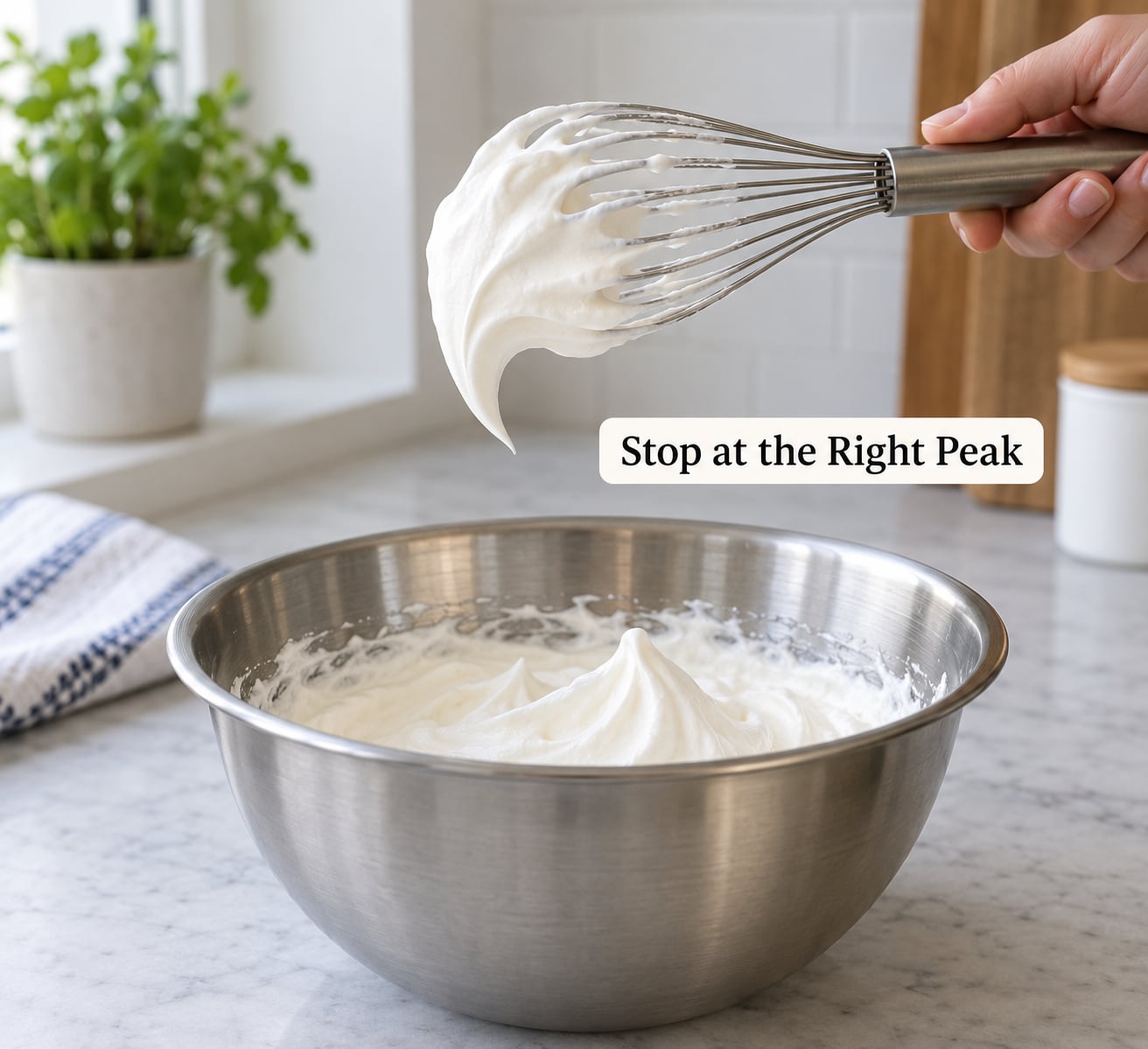
Whipped cream passes through five recognisable stages, and each one tells you a different use. Pull the whisk out and tilt it at an angle to check the peak as you go.
| Stage | What it looks like | Best for |
|---|---|---|
| Ribbon | Thin liquid trailing off the whisk, bubbles just appearing on the surface | Too early to use; keep going |
| Soft peaks | The tip of the peak droops over when you lift the whisk | Folding into mousse or pudding |
| Medium peaks | The tip curls but stays upright, holds its shape on the spoon | Filling a tart or layering a trifle |
| Medium-firm peaks | A defined peak that keeps its shape but still looks soft and glossy | Piping, topping pies, most recipes |
| Stiff peaks | Firm ridges that stand up when the bowl is tipped | Piping borders, holding under hot fruit |
Stop at medium-firm for most jobs. Past stiff the butterfat structure starts breaking down, whey begins to squeeze out, and you are on your way to grainy cream and then to butter.
Under-whipped cream looks almost identical to a broken batch, which is why so many people give up early. If it is loose but glossy and pleasant to taste, it simply needs another minute, not rescuing.
Adjust the Cream for Your Recipe
Whipped cream goes flat fairly quickly once it is out of the bowl, so plan the order of work. Pipe the cake first, fill the pies next, and save whatever is meant to sit on a hot fruit dessert for last.
For a filling that will sit for hours, stabilise it. Half a teaspoon of gelatin bloomed in cold water and stirred into the cream while it is still liquid adds roughly a day of holding power without tasting of anything. Cream cheese does the same job for cheesecake toppings, at the cost of some air.
A cup of cream roughly doubles in volume, so one cup gives you about two cups of whipped cream. That is the number that trips people up when they plan a party.
Common Mistakes
Nothing is happening for five minutes. Working as intended. The foam is forming before your eyes can pick up the change. Judge the cream by the whisk trail, not by the clock.
The bowl spins across the counter. Nest it in a damp towel. You are losing more cream to the gap between bowl and worktop than you think.
Sugar added all at once. The crystals do not dissolve and the result tastes gritty. Add it a spoonful at a time in the first minute of whisking.
Over-whipping. The cream goes dull and grainy, then separates into butter and buttermilk. It is not ruined: beat in a couple of tablespoons of fresh cold cream by hand and it comes back to soft peaks.
Warming up too fast early on. Cranking to full speed in the first ten seconds splashes and aerates air into the top of the bowl instead of the cream.
Tips for Consistent Results
Timing is the thing recipe sites get wrong for this method. One cup in a chilled bowl with a big whisk takes about two to five minutes. Double the recipe into a narrower bowl with a smaller whisk and you can be looking at 10 to 15, which is exactly what readers report in the comment sections of the hand-whipping posts.
Nobody hand-whips more than a cup or two. Beyond that, the arm gives out before the cream does and a hand mixer is the honest answer.
If you have no whisk at all, a fork works, badly. It takes roughly twice as long and you get a slightly looser foam, so use more cream than the recipe calls for. A mason jar with a tight lid works better: half a cup of cream, secure the lid, and shake hard for two to three minutes, checking through the glass until peaks form. Two cups and a pair of clean hands, one cup of cream each, clapped together once a second, is the oldest version of the same trick and it still works.
For storage, refrigerate homemade whipped cream in a sealed container and use it within two days. It will deflate overnight but a short whisk brings most of the volume back. Freezing works in small dollops on a tray, moved to a bag once solid, and it is genuinely useful for the coffees you need on a Tuesday morning in three weeks’ time.
Flavour variations are easiest added at the start: citrus zest steeped in the cream for an hour, cinnamon stirred in at the end, a spoonful of instant coffee, cocoa powder sifted over the finished bowl. The cream should be cold and clean-tasting before anything goes into it.
Frequently Asked Questions
How long does it take to whip cream by hand?
A cup of cold heavy cream in a chilled bowl takes about 2 to 5 minutes with a balloon whisk. Doubling the batch into a narrower bowl with a smaller whisk can stretch that to 10 or 15 minutes. Cream can look completely flat for the first few minutes while the foam builds, so judge it by the trail the whisk leaves rather than by time.
Do I need sugar to whip cream by hand?
No, sugar is optional. Plain whipped cream whips fine on its own, and many people prefer it unsweetened on fruit or coffee. Sugar does help the foam hold its shape and stay stable a little longer, so most recipes include one to two tablespoons per cup. Add it gradually at the start so the crystals dissolve instead of making the cream grainy.
Why is my whipped cream not getting thick?
The usual cause is temperature. If the bowl or the cream started warm, the butterfat cannot hold the air and nothing happens. Chill both for 15 to 20 minutes and start again. Other causes: light or half-and-half cream with too little fat, UHT cream, a tiny batch in a wide bowl, or a whisk that is too small for the bowl you are using.
How do I know when hand-whipped cream has reached stiff peaks?
Tip the bowl sideways. If the ridges of cream stay exactly where they are and do not slump or slide toward the rim, you have stiff peaks. They should look matte-dry and firm rather than glossy. For most cakes and pies, stop one stage earlier at medium-firm peaks, which hold a curled tip on the whisk but still look soft.
Can I whip cream by hand with a fork?
Yes, though it is the slowest option and the foam comes out slightly looser. Use a sturdy fork, work in a bowl narrow enough that the tines stay submerged, and expect roughly twice the time a whisk would take. A mason jar shaken hard for two to three minutes is faster still and gives a more even result.
How do I keep hand-whipped cream from turning grainy?
Stop whipping the moment the cream reaches the stage you need. Graininess comes from over-aeration: the fat network breaks down and the whey separates out. Watch the peak on the whisk rather than the clock, and if you have already gone too far, beat in a couple of tablespoons of fresh cold cream until it smooths back to soft peaks.
Conclusion
Chill the bowl and the whisk first, pour in cold 36% cream, and start with small slow wrist circles before speeding up. Watch the peak on the whisk instead of the timer, and stop at medium-firm for most recipes. That single cup takes about two to five minutes and no electricity at all.