Dry brining a turkey means coating the bird in salt and letting it sit in the refrigerator before roasting, with no water anywhere in the process. The working rule is 1 tablespoon of kosher salt per 4 pounds of turkey, applied 24 to 72 hours ahead. Salt pulls moisture out of the meat by osmosis, the turkey drinks that moisture back in as a natural brine, and you get juicy breast meat plus skin that browns harder than it would without it.
The hands-on part takes about ten minutes. The rest is patience and refrigerator space, which is why the method appeals to people who have never had room for a tub of wet brine. Here is the whole process, including the timings by bird size and the mistakes that turn a good turkey into a salty one.
Table of Contents
- What You Need
- How to Dry Brine a Turkey: Step-by-Step
- How to Dry Brine a Turkey Without Oversalting
- How Long Should You Dry Brine a Turkey?
- How to Season a Dry-Brined Turkey
- Common Mistakes
- Frequently Asked Questions
- Can I dry brine a turkey overnight?
- How much salt should I use to dry brine a turkey?
- Should the turkey be uncovered while dry brining?
- Can I add herbs and garlic before dry brining a turkey?
- How long should a dry-brined turkey rest before roasting?
- What internal temperature tells me a dry-brined turkey is done?
- Conclusion
What You Need
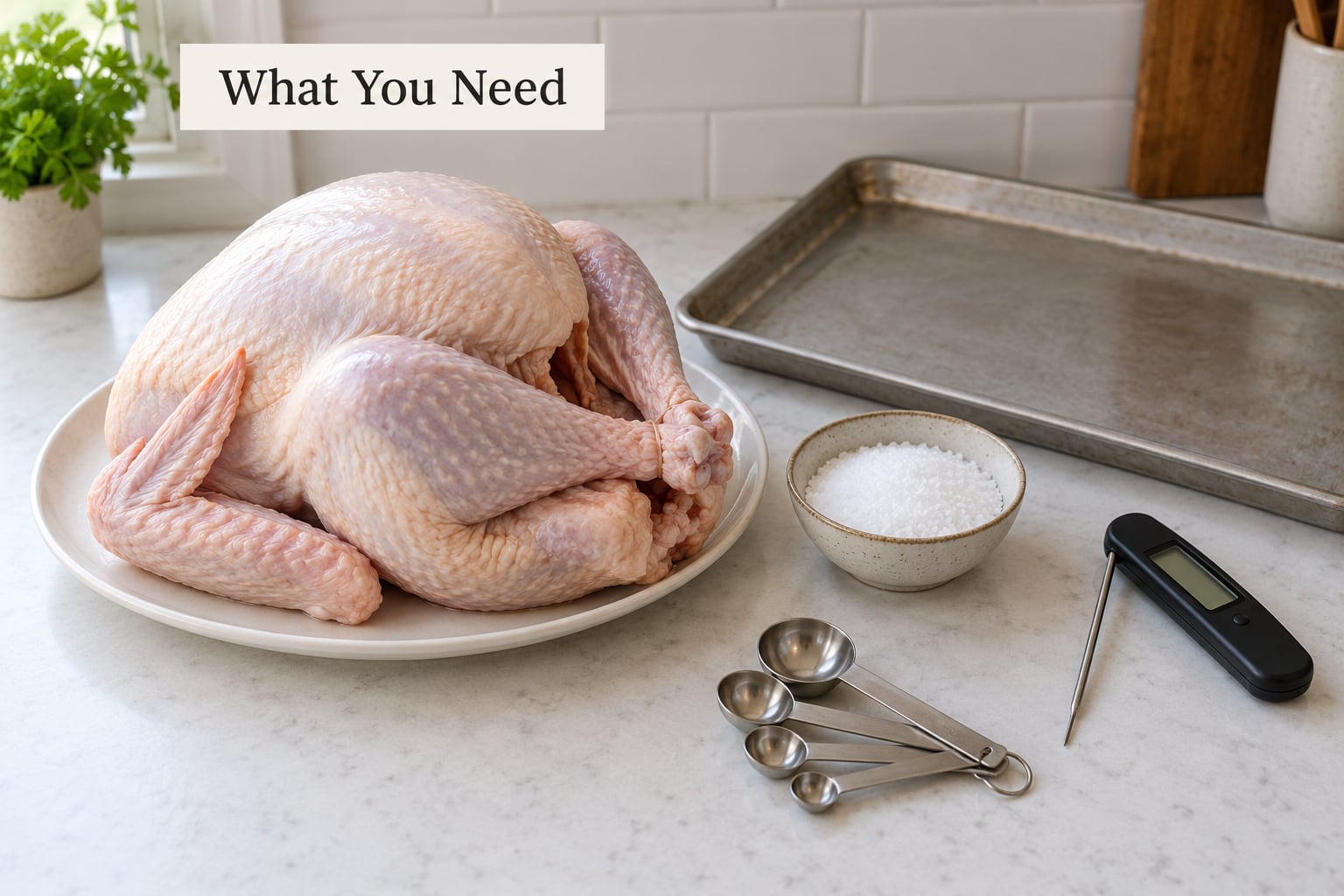
You need very little, and most of it you already own. The one ingredient worth getting right is the salt.
- A turkey, fully thawed. A frozen bird salted on the outside will not cure evenly, so finish thawing in the refrigerator first.
- Kosher salt. Diamond Crystal or Morton. Table salt and fine sea salt are roughly twice as salty by volume, so a tablespoon of either will oversalt the bird.
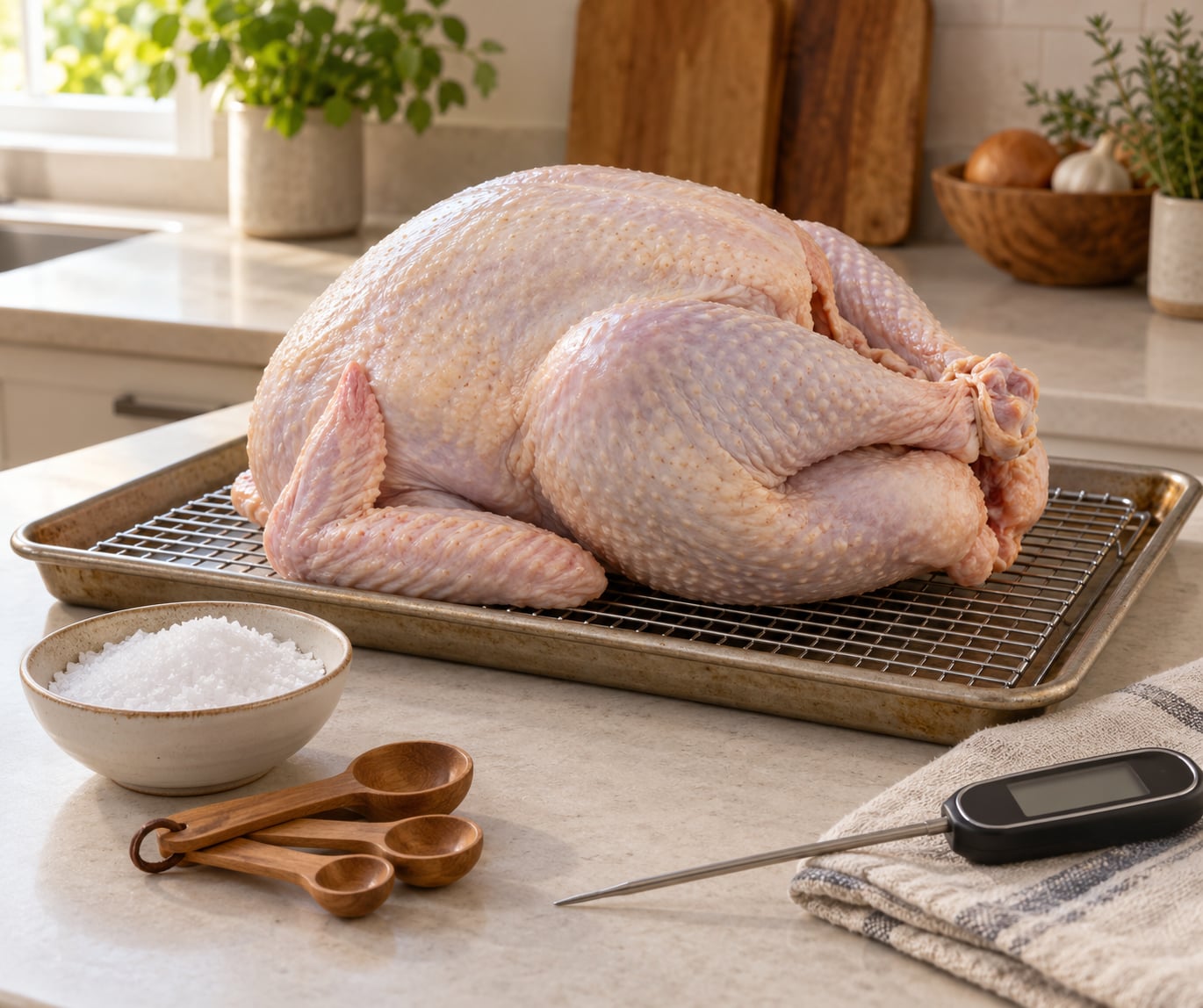
- A rimmed baking sheet and a wire rack, or one large unscented plastic bag. Both work; the rack dries the skin better.
- Optional baking powder, 1 tablespoon per 4 pounds, mixed into the salt for extra crisp skin.
- Optional aromatics: black pepper, garlic powder, paprika, dried thyme, rosemary, onion powder. Herbs can go on at any stage.
- An instant-read thermometer. This is the only reliable way to know when the bird is done.
- Paper towels for patting the skin dry.
Salt amounts scale with the bird, not with the recipe. Measure by weight in pounds:
| Turkey weight | Kosher salt |
|---|---|
| 4 lb | 1 tablespoon |
| 8 lb | 2 tablespoons |
| 12 lb | 3 tablespoons |
| 14 lb | 3 1/2 tablespoons |
| 16 lb | 4 tablespoons |
| 20 lb | 5 tablespoons |
| 24 lb | 6 tablespoons |
One warning before you start: never dry brine a turkey labeled pre-brined, self-basting, self-basting with solution, or enhanced. Those birds already carry salt in the breast and thigh meat, so the second round of curing makes them inedible.
How to Dry Brine a Turkey: Step-by-Step
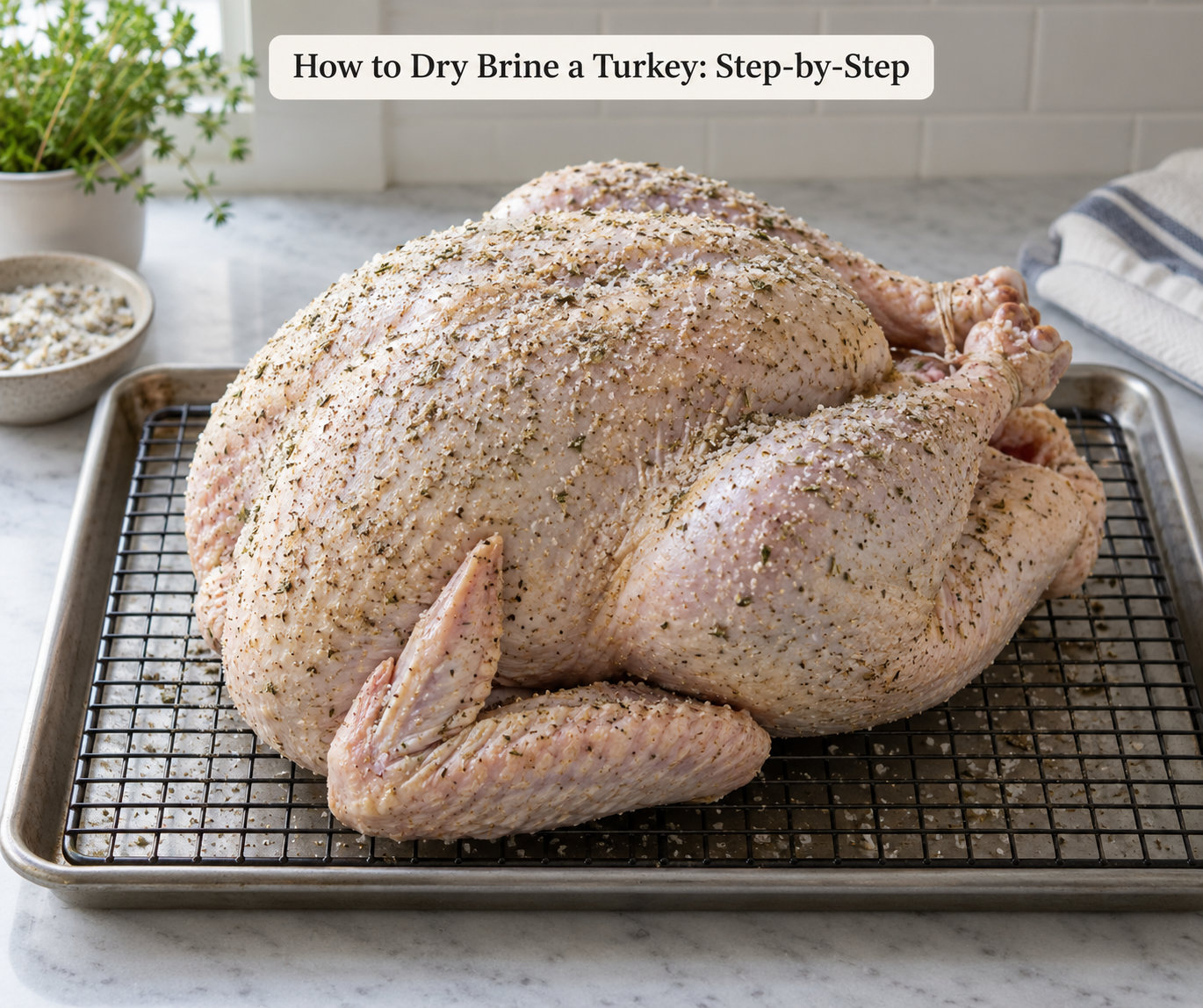
Read these once before you start, then work down the list in order. Each step has a reason, and skipping one usually shows up in the carving.
- Thaw the bird completely. Move it to the refrigerator 24 to 48 hours ahead if it is still frozen. Salting an icy turkey leaves the center untouched.
- Remove the giblets and neck from the cavity. Leave the wing tips and tail on. Do not rinse the bird, inside or out; splashing raw poultry spreads bacteria around your sink, and rinsing does nothing for flavor.
- Pat the skin dry with paper towels. Dry skin takes salt evenly. Damp skin pools the salt into streaks you will taste later.
- Mix the salt with any baking powder, pepper, or powdered seasonings. Combine them in a small bowl so the seasoning spreads with the salt instead of settling in patches.
- Work the mixture onto the turkey by zones. Rub a layer over the breast, the thighs, the drumsticks, the wings, and the back, then work a little into the cavity and under the skin at the breast. Use roughly a third of the mix under the skin on the breast and the rest on the outside.
- Set the bird uncovered on a rack over a rimmed sheet, or slip it into a large unscented bag if your refrigerator is tight. A sheet pan catches the juices that will collect, and leaving the bird uncovered lets the skin dry instead of sitting wet.
- Refrigerate 24 to 72 hours. Flip and massage the bird once a day so the juices redistribute and no dry patch forms under the wings or thighs. The liquid that gathers underneath is the cure working; leave it there.
- Cook straight from the refrigerator without rinsing. Wipe off any thick salt crystals, tuck in fresh herbs and onion if you like, and roast, smoke, grill, or fry. A bone-dry surface is also what makes deep frying safer.
How to Dry Brine a Turkey Without Oversalting
Stick to 1 tablespoon of kosher salt per 4 pounds and scale back if you are adding a seasoned salt blend or a heavily peppered rub. Cooks on r/seriouseats consistently advise using less salt and baking powder than published recipes call for, because the salt concentrates in the pan juices and in the breast, which is the driest part.
Even coverage matters more than the total amount. Piled salt in one spot cures that spot harder and leaves the rest under-seasoned, which is how you get a salty thigh next to a bland breast.
The oversalting story that shows up most often on r/AskCulinary comes from using a quarter-cup of kosher salt on a large bird. Half a cup on a 22 lb turkey, as one cook tried, lands well past the ratio and tastes salty once the breast and juices are hot.
To distribute evenly, hold the mix in one hand and rub it across a small area at a time until you can see the salt disappear into the skin. Repeat until the bird is lightly and uniformly speckled rather than crusted.
How Long Should You Dry Brine a Turkey?
Give it at least 24 hours. Two days gives noticeably deeper seasoning, and three days is where you get the flavor people describe as working all the way to the center, especially in a bird over 16 pounds.
Time by bird size:
| Bird | Minimum | Best range |
|---|---|---|
| Turkey breast (3 to 5 lb) | 4 hours | 8 to 12 hours |
| Whole turkey, 8 to 12 lb | 12 hours | 24 to 48 hours |
| Whole turkey, 14 to 18 lb | 24 hours | 48 to 72 hours |
| Spatchcocked turkey, any size | 6 hours | 12 to 24 hours |
A spatchcocked bird is thinner and flatter, so salt reaches the center much faster, and it cooks more evenly. Cut the time roughly in half for a flattened bird, and skip the third day.
Plan backward from your cook date. Dinner at 4 pm on Thursday means starting Wednesday morning for a 24-hour cure, or Tuesday morning if you want the full three days. For a weeknight bird, overnight is genuinely enough; you are seasoning, not curing.
How to Season a Dry-Brined Turkey
Fresh herbs and aromatics can go on any time. Stuff halved onions, a whole head of garlic, lemon halves, sprigs of thyme and rosemary into the cavity right before roasting, which protects them from the salt in the dry brine and still perfumes the meat.
Rubbing butter or olive oil under the skin before the oven adds fat that the lean breast benefits from. It is a small extra step and most people notice it.
For the crispest skin, add 1 tablespoon of baking powder per 4 pounds to the salt mix. The alkaline salts raise the skin pH so it dries out and browns faster. Two cautions: go lighter than you think, and keep the pan ventilated, because a heavy dose leaves a noticeable soapy smell on the bird and in the kitchen.
One more lever most guides skip: leave the salted bird uncovered in the refrigerator for the last 12 to 24 hours before cooking. Drying the skin overnight is what gives you glassy, crackling skin rather than merely browned skin.
Common Mistakes
- Using table salt or measuring salt by volume across brands. A tablespoon of Diamond Crystal is a smaller volume than a tablespoon of Morton for the same weight. Buy one brand and use the tablespoon measure consistently, or weigh it: about 0.25 ounce of kosher salt per pound of turkey.
- Leaving the turkey in a covered container. A sealed bag or roasting bag traps moisture against the skin, and wet skin will not crisp. Leave it uncovered, or open the bag at least once during a long cure.
- Salting too close to roasting. A turkey salted an hour before cooking tastes like salted skin and nothing else. The cure needs at least 24 hours, and 48 is better on a big bird.
- Overcrowding the refrigerator. Fridge space is the reason most people skip brining entirely. Use the rack-and-sheet method instead of a tub of wet brine, or a spatchcocked bird, which flattens into a much smaller footprint.
- Pouring off or worrying about the pooled juices. The liquid collecting under the bird during the cure is concentrated turkey juice. Leave it in the pan and let it reduce into the gravy.
- Skipping the thermometer. Cooking time is a guess. Pull the bird when the thickest part of the breast and the innermost thigh reach 165°F, then rest it 20 to 30 minutes before carving so the juices redistribute.
If the bird comes out salty anyway, serve the breast with a starch and keep the thighs, drumsticks and stuffing on the outside of the menu. Saltiness concentrates in the leanest, driest meat, and there is no fixing it after cooking.
Frequently Asked Questions
Can I dry brine a turkey overnight?
Yes, an overnight cure of 12 to 24 hours is the practical minimum and works well for a turkey under 12 pounds. It seasons the surface and the meat just under it. Larger birds need 48 to 72 hours because salt has further to travel to the center. Overnight brining is also enough for a turkey breast.
How much salt should I use to dry brine a turkey?
Use 1 tablespoon of kosher salt for every 4 pounds of turkey. That means 2 tablespoons for an 8 pound bird, 3 for a 12 pounder, 4 for a 16 pounder and 6 for a 24 pounder. Measure kosher salt by volume and stay on one brand, since Diamond Crystal and Morton pack differently. If you add baking powder or a seasoned salt, cut the plain salt back.
Should the turkey be uncovered while dry brining?
Uncovered is better. Set the salted bird on a wire rack over a rimmed baking sheet and refrigerate it with no wrap, lid or bag. Airflow dries the skin, and dry skin is what browns and crackles in the oven. A large unscented bag works in a tight refrigerator, but leave it open or loosen it so condensation does not sit against the bird.
Can I add herbs and garlic before dry brining a turkey?
You can, but wait if you can. Fresh herbs, garlic cloves and citrus placed in the cavity before a multi-day cure will lose their aroma and may turn dull or bitter. Season the cavity with salt, then add fresh rosemary, thyme, garlic and lemon halves right before the bird goes in the oven. Powdered seasonings like garlic powder can go on at any stage.
How long should a dry-brined turkey rest before roasting?
It does not need to rest before roasting, since it has been sitting in the refrigerator for hours already. Take it out of the cold and cook it straight away, which gives you a hot bird and the crispiest skin. The rest happens after cooking: 20 to 30 minutes before carving lets the hot juices settle back into the breast instead of running out onto the board.
What internal temperature tells me a dry-brined turkey is done?
165°F is the safe internal temperature for poultry, and that is the number to watch on an instant-read thermometer. Check the thickest part of the breast and the innermost thigh without touching bone. Cooking a brined turkey past that point is the main reason brined birds get blamed for dryness, so pull it the moment both spots hit 165°F and let it rest.
Conclusion
Start with the bird and the arithmetic: weigh the turkey, then measure 1 tablespoon of kosher salt for every 4 pounds. Rub it on by zones, set the turkey uncovered on a rack in the refrigerator, and leave it 24 to 72 hours while you flip it once a day.
When it comes out, wipe off any salt crystals and roast it without rinsing, using the thermometer instead of the clock as your guide to 165°F. That is the whole method behind how to dry brine a turkey, and it takes no more refrigerator space than a dinner plate.