To reduce food waste in a small kitchen, you need four habits, not a bigger fridge. Plan purchases around food you already own, store it where you can see it, cook only what you will actually eat, and freeze or share the rest before it turns. None of it asks for more counter space than you have.
The reasons to bother are unglamorous and well documented. The UNEP Food Waste Index puts roughly 43 percent of global food waste happening in households, and research on US date labels suggests confusion about best-before dates alone drives a meaningful slice of consumer waste. Food thrown out at home is also food you paid for, and once it goes into a landfill bin it produces methane for years.
Table of Contents
- What best-before, use-by and sell-by actually mean
- What You Need
- Step-by-Step: How to Reduce Food Waste in a Small Kitchen
- Audit What You Already Have
- Shop With a Meal and Storage Plan
- Store Food in a Small Kitchen So It Stays Visible and Fresh
- Turn Leftovers Into Planned Meals
- Freeze, Preserve, and Use Scraps
- Common Mistakes
- Frequently Asked Questions
- What can I do with wilted vegetables instead of throwing them out?
- Should a small kitchen avoid buying food in bulk?
- How long do cooked leftovers keep in the fridge?
- How do I organize a refrigerator when there is almost no space?
- What can I compost in an apartment kitchen?
- Is it safe to eat food past the best-before date?
- Conclusion
What best-before, use-by and sell-by actually mean
Best-before is about quality: flavour, texture and the snap of a crispbread. Use-by is about safety and applies to perishable food like raw meat, cut produce and ready-to-eat seafood. A best-before date passed is usually a quality question, not a safety one. A use-by date passed is a safety question, and smell, appearance and texture cannot reliably clear it.
What You Need
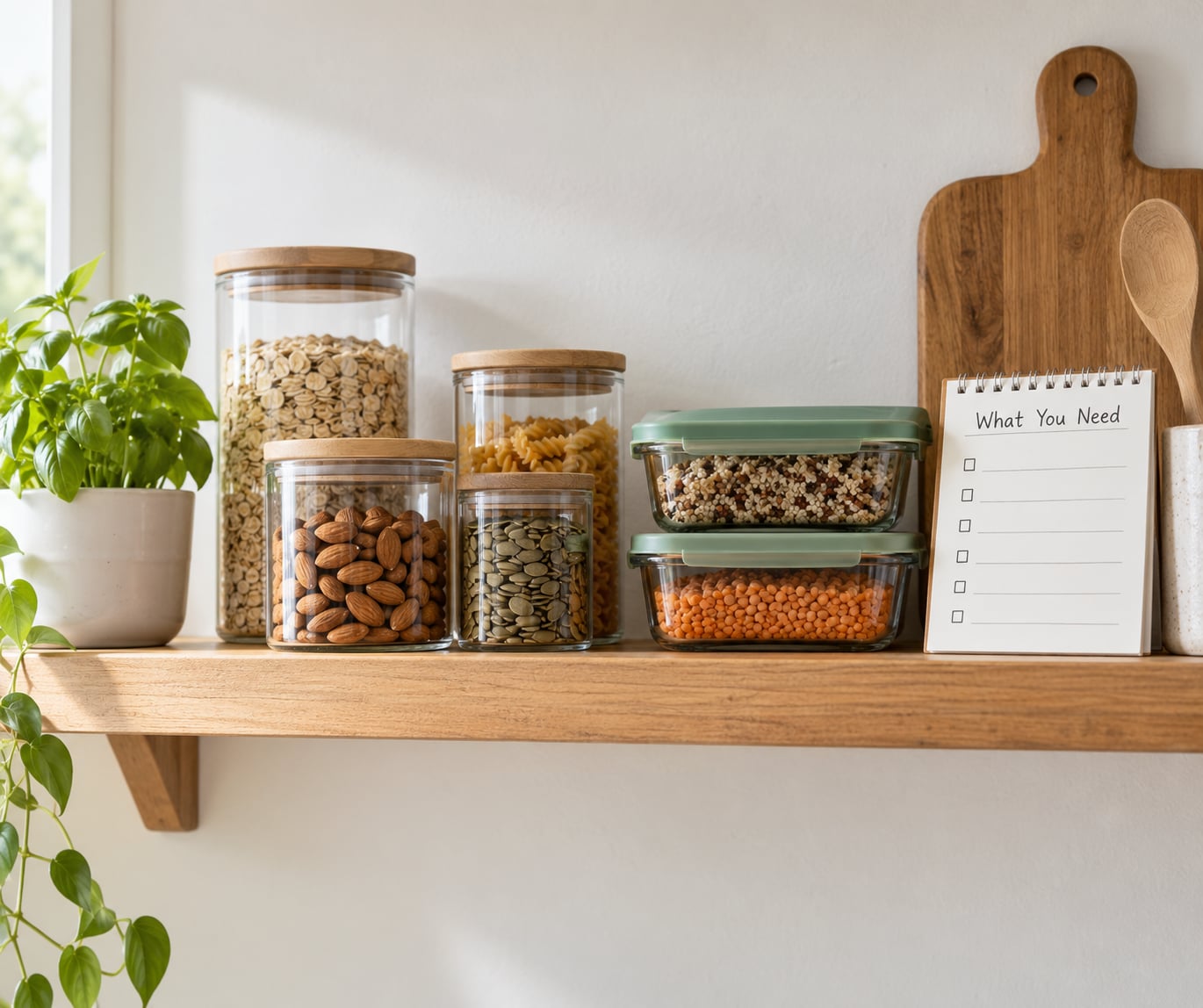
You need almost nothing bought. Everything below is either something you already own or something you can make in a minute.
- A ten-minute clear-out. Empty one shelf at a time. Food you forget at the back is food you replace without noticing.
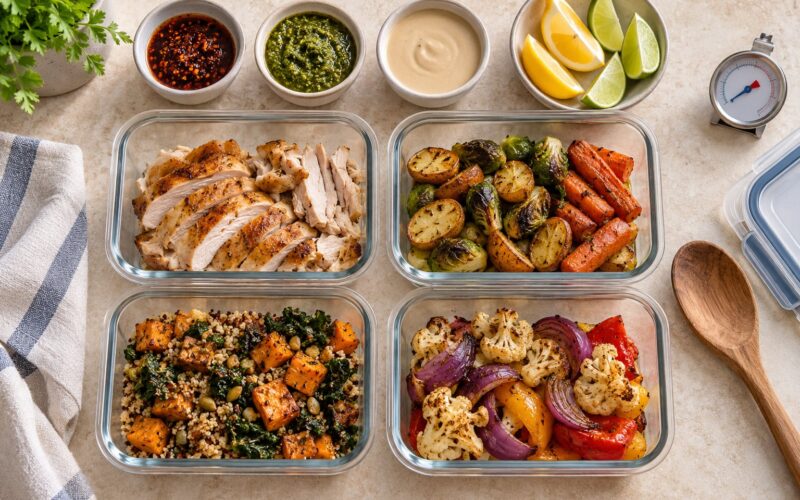
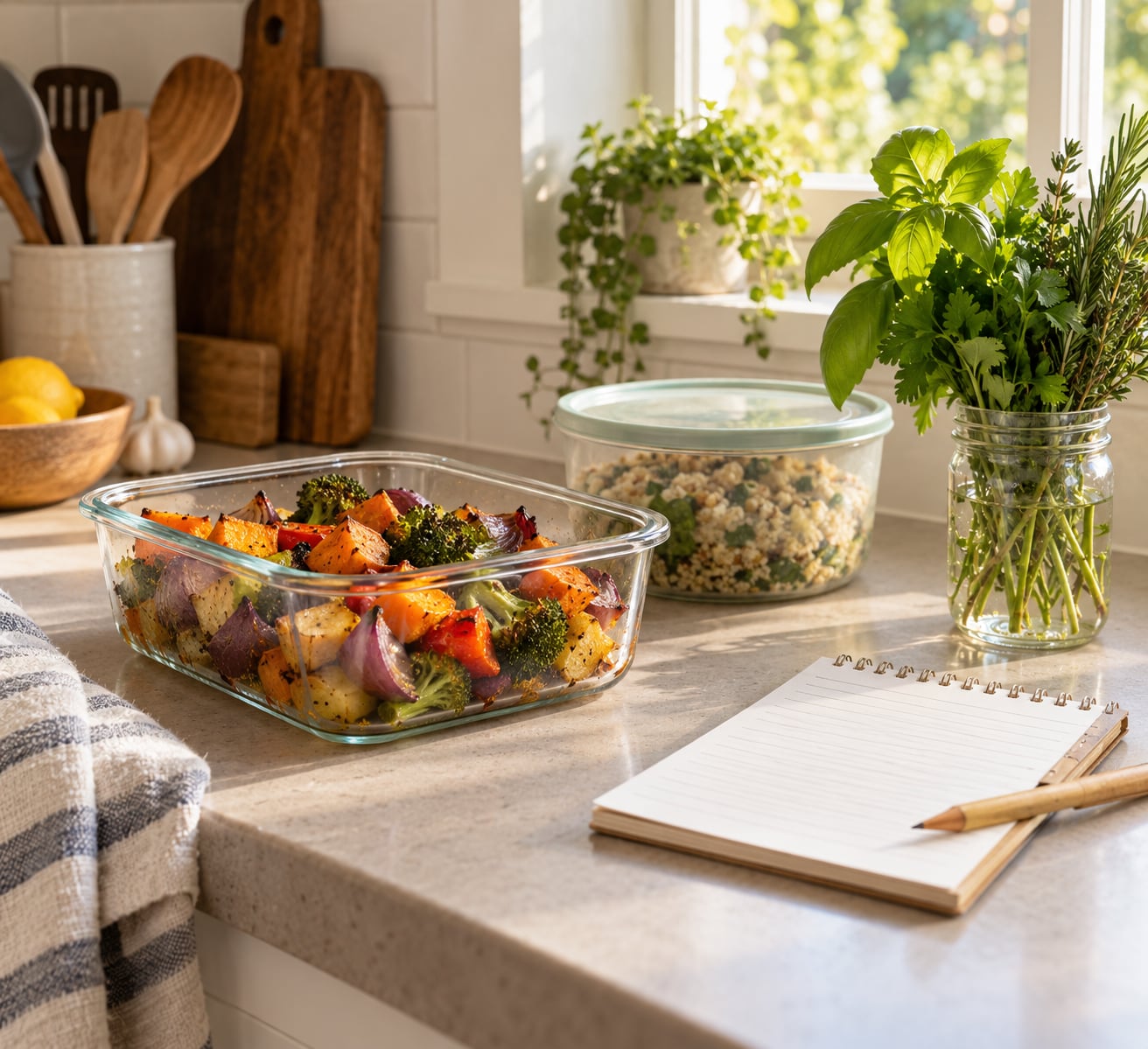
- Airtight containers you can see through. Clear glass or plastic beats a solid tupperware lid you have to open to check on.
- A written shopping list. Paper or your phone. Either beats shopping from memory in a tight aisle.
- One visible leftovers spot. A fridge door shelf, a clear bin on top of the fridge, or a designated container that is never anything else.
- Masking tape and a pen. For dates. Label the container, not the shelf, because containers move.
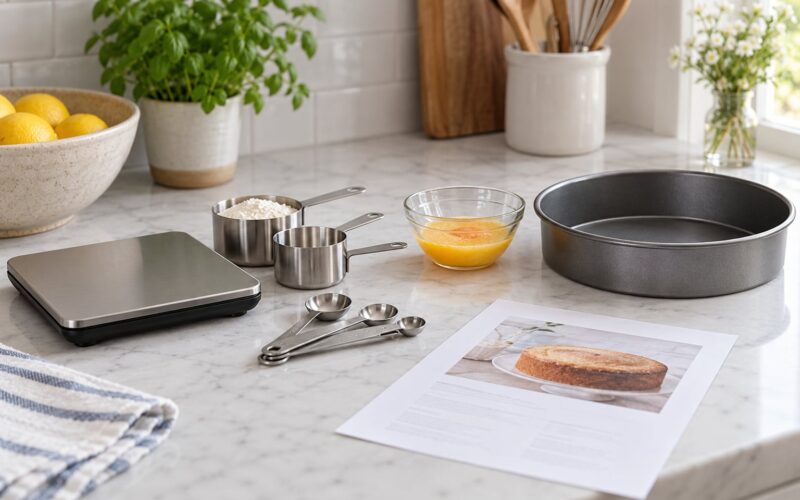
- A kitchen scale, optionally. Useful when you are scaling a recipe down for one and the recipe calls for 350 grams of something.
If you have almost no storage, buy nothing yet. Run the system for a month first and see which single item is actually missing. For most small kitchens, that turns out to be one stackable clear container, not a whole organizer.
Step-by-Step: How to Reduce Food Waste in a Small Kitchen
Audit What You Already Have
Before your next shop, spend one session looking at everything you own. Fridge, freezer, pantry shelves, counter, and the spice shelf where mustard powder goes to retire. The point is not to judge what you bought. It is to know what you have before you add to it.
Then sort into three piles: eat this week, freeze now, and use soon. The middle pile is the important one. Most home waste is food that looked fine, sat behind a jar of mustard nobody touched, and spoiled unseen.
People who cut their waste most often report checking twice a week rather than once, because a week is long enough for the good intentions of Sunday to fail. A five-minute Sunday sweep is the single highest-return habit in this whole guide.
Shop With a Meal and Storage Plan
Write down the meals you will actually cook before you leave the house, then build the list around them. The order matters: meals first, ingredients second. A list of abstract items is just a wish, a list of three specific dinners produces far less waste because you already decided what each purchase is for.
Then check the plan against your audit. If you have half a bag of rice, three tired carrots and a stubborn half onion, that is the beginning of tonight’s dinner, not three things to buy replacements for.
Scale quantities to the space and the people, not to the shelf in the shop:
- Buy for what your fridge holds. If three trays of chicken breast does not fit above the leftovers, buy two.
- Choose the smaller pack when the difference in price per unit is small. Two smaller packages beat one large one you finish half of.
- Skip loose bulk bins of anything you cannot finish within a few days, unless it is a shelf-stable item like pasta or rice.
- Cook for one without orphaning ingredients. Halve the recipe and freeze half immediately, or plan dishes where a single egg, a single onion or half a can of beans is not left staring at you.
Fresh produce is where the buying usually goes wrong, because shoppers underestimate how long a bunch of herbs, a head of lettuce or a tray of strawberries will last in a small, frequently opened fridge. Buy two bunches of parsley instead of one large one, and skip the pre-washed bag if you will not finish it in two days.
Store Food in a Small Kitchen So It Stays Visible and Fresh
Most of the shelf-life you gain in a small kitchen comes from fixing where things sit, not from buying anything. Cold air sinks, so the bottom shelf is the coldest part of the fridge and the door is the warmest.
| Where it goes | What belongs there | Why |
|---|---|---|
| Top shelf | Leftovers, drinks, anything already cooked | Least spill risk and easiest to see first |
| Middle shelf | Dairy, cooked grains, open packets | Consistent cool temperature |
| Bottom shelf | Raw meat, fish, poultry, in a sealed tray | Coldest shelf, and drips cannot fall onto other food |
| Door shelf | Condiments, butter, opened jars | Warmer, so it suits things that tolerate it. Not milk or eggs |
| Humidity drawer, high | Leafy greens, herbs, broccoli, cauliflower | Moisture keeps leaves from drying out |
| Humidity drawer, low | Fruit, tomatoes, peppers, squash | Drier air cuts mould |
| Counter, not fridge | Potatoes, onions, garlic, bananas, avocados | Refrigerating these damages flavour and, for potatoes, can increase sugar |
Ethylene gas is the other storage rule worth learning, because it is invisible and it ruins food you were planning to eat. Apples, bananas, tomatoes, avocados and pears all release it, and it makes nearby produce ripen and spoil faster. Keep them away from leafy greens and broccoli, and put a banana next to an avocado you want ripe tomorrow.
For a small kitchen, visibility is the whole game. Take the leftovers container out of the back and put it where you will physically see it when you open the door. That single move catches more food than any storage system bought later.
On safety: refrigerate perishables within two hours, keep raw meat on the bottom shelf in a tray, and cook poultry to 165°F (74°C), ground meat to 160°F (71°C), and whole cuts and fish to 145°F (63°C). Realistic storage times for cooked leftovers are three to four days in the fridge. Fresh poultry and ground meat last one to two days chilled, most raw cuts three to five, and hard-cooked eggs about a week.
Turn Leftovers Into Planned Meals
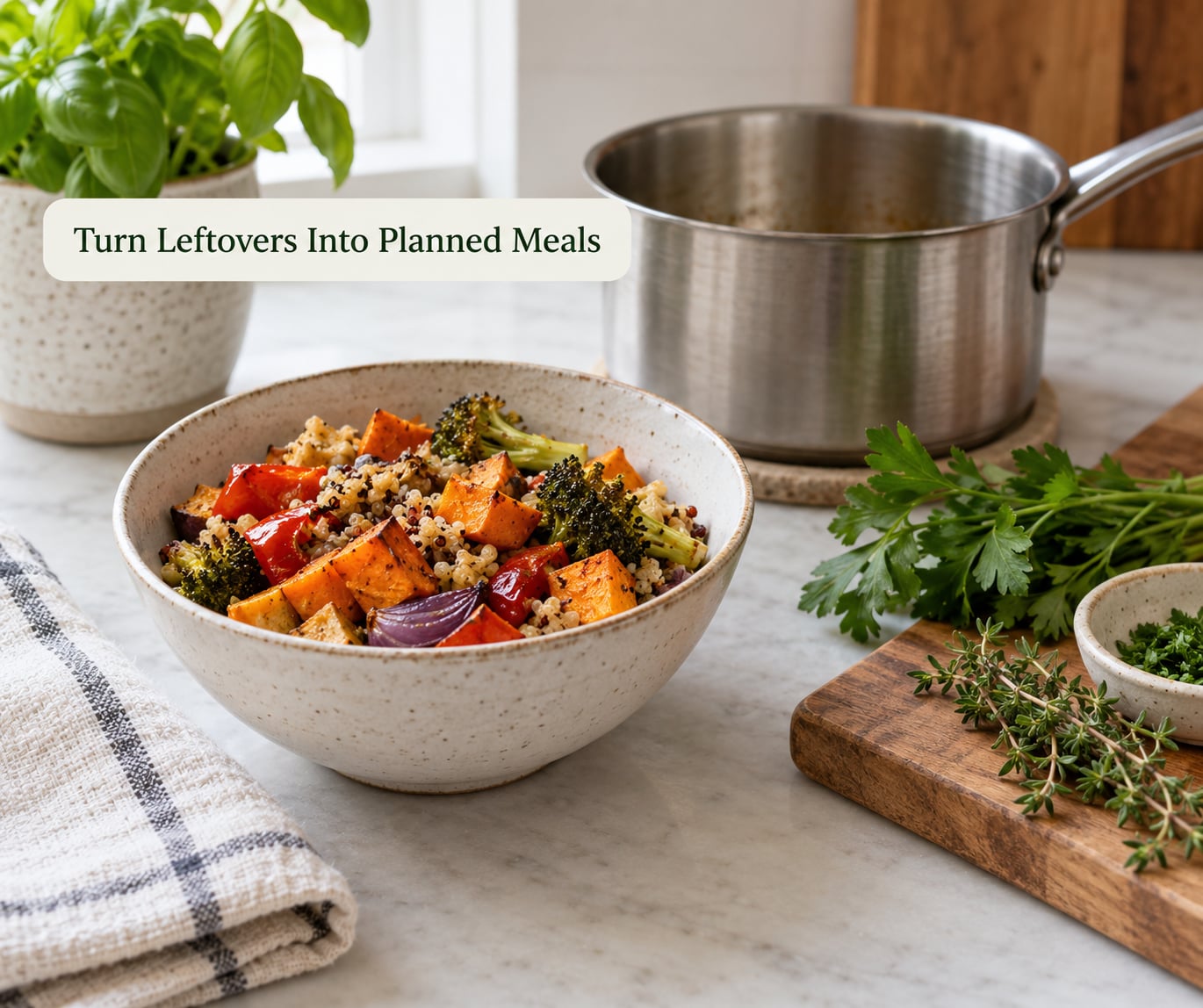
Leftovers get skipped because they arrive unplanned. Nobody decides at 6pm to eat Tuesday’s roast chicken. So reserve a portion deliberately at the end of dinner, put it in the labelled leftovers container, and decide now what it becomes tomorrow.
The rule that makes this work: every leftover gets combined with something from the pantry. Dried pasta, rice, canned beans, an egg, tortillas, whatever is stable and on hand. A leftover on its own is an afterthought; leftover plus staple is dinner.
| What is going soft or drying out | Turn it into |
|---|---|
| Dry chicken or roast meat | Soup or broth, simmered with stock and onion |
| Wilting spinach or chard | Pasta sauce, stirred in at the end off the heat |
| Stale bread | Croutons, breadcrumbs for meatballs, or a thick soup |
| Overripe bananas | Frozen for smoothies, or baked into banana bread |
| Half a cabbage or broccoli stalk | Stir-fry, or a grain bowl with a fried egg |
| Yogurt or sour cream drying out | Potato mash, soup, or a salad dressing loosened with it |
| Roasted vegetables cooling down | Fried rice, frittata, or a grain bowl |
Pick one night a week as leftover night and put it in the calendar. It sounds minor and it is not. Naming the night turns leftovers from an obligation into a plan, which is the only way they get eaten.
Freeze, Preserve, and Use Scraps
Freezing is not a failure. It is a second fridge that holds food at the exact moment you realise you will not cook it this week. The problem people report is not freezing, it is forgetting. So freeze flat in labelled bags or small tubs with the date written on them, keep a list of the freezer contents on the door, and aim to eat down the oldest item every week.
Some food cannot be frozen safely, which is why the list matters:
| Freezes well | Does not freeze well |
|---|---|
| Raw meat, poultry and fish | Cooked rice and pasta, reheated |
| Cooked soups and stews, in single portions | Salad greens and raw salad vegetables |
| Hard cheese, grated | Custard, cream sauces and mayonnaise |
| Bread, sliced | Soft or cream cheese |
| Herbs in oil or butter in ice cube trays | Eggs in their shells |
| Sliced fruit, berries, bananas | Potatoes, cooked, for texture |
| Grated cheese, butter, chopped nuts | Dairy drinks and milk |
For a small freezer, portions beat family-size. A tray of six flat tacos will sit there unopened; six individually wrapped tacos get eaten. Same logic for soups: freeze in a mug or a small tub so one serving comes out at a time.
Not everything needs freezing. Carrot tops, onion skins, celery ends and mushroom stems go into a bag in the freezer and simmer into stock whenever the bag is full, then the spent solids go to the compost. For renters and small kitchens, the freezer bucket is the least smelly composting option: scraps go into a lidded container in the freezer, and once full it thaws onto the compost when the weather turns. A counter caddy works too, as long as you keep roughly equal parts green scraps and browns like shredded cardboard or dry leaves, which is what stops the smell.
Common Mistakes
Buying fresh produce like it will last a week and a half. In a small fridge it will not. Fix: buy smaller quantities more often, and skip anything you cannot see. Prevention habit: check the produce drawer before the shop, not after you get home.
Storing food out of sight. The back of the fridge, behind the milk, under the frozen peas. Fix: one container at eye level for anything expiring this week. Prevention habit: new leftovers go to the front, old stock goes to the back.
Freezing and forgetting. Frozen food survives, then burns and gets binned a year later. Fix: label with the date and keep a written or phone list on the freezer door. Prevention habit: pull the oldest item out when you make room for something new.
Cooking oversized portions. A four-serving stew for one person is three servings of waste you already cooked. Fix: halve the recipe and eat the second half within three or four days or freeze it the same evening. Prevention habit: portion as you freeze, not the night you remember.
Treating leftovers as a separate meal. Fix: plan the leftover’s next life while the pan is still hot. Prevention habit: one named leftover night a week.
Washing produce before storing it. Moisture sitting on leaves and berries speeds mould. Fix: wash just before you eat, not at the shop. Prevention habit: dry anything you do wash thoroughly before it goes in the drawer.
Two maintenance habits keep the system alive. Walk the fridge for five minutes twice a week, and keep the shopping list on the fridge so it is the first thing you see when you open the door to grab milk.
Frequently Asked Questions
What can I do with wilted vegetables instead of throwing them out?
Wilted does not mean spoiled. Soft greens such as spinach, chard and kale belong in pasta sauce, soup, curry or a frittata, and they are fine to eat as long as they still smell clean and there is no slime or mould. Softer roots, carrots and beets, are good for roasting or soup. Berries that are soft or leaking go into smoothies or baking. Mould, a sour smell or a slimy surface means bin them regardless of how the texture looks.
Should a small kitchen avoid buying food in bulk?
Yes, for almost everything fresh. Bulk packaging is good value only if you can realistically finish the contents before they turn, and a small fridge rarely lets you. For dry goods like rice, pasta, oats and tinned beans, bulk is fine because those keep for months in a sealed container. For fresh meat, cut produce, dairy and anything opened, buy the smallest pack that covers the meal you planned.
How long do cooked leftovers keep in the fridge?
Three to four days is the safe window for most cooked food kept at or below 40°F (4°C), counted from the day you cooked it, not the day you moved it to a container. Reheat until steaming hot all the way through. If you will not eat something inside four days, freeze it that evening rather than leaving it to slide past the window while you forget about it at the back of the shelf.
How do I organize a refrigerator when there is almost no space?
Take everything out, wipe the shelves, and put it back in zones: raw meat on the bottom shelf in a tray, dairy and cooked food in the middle, leftovers on the top shelf where you will see them first, condiments in the door. Use one drawer for fruit and one for vegetables and set the humidity control correctly for each. Clear containers matter more than organizers, because you stop needing to open something to check on it.
What can I compost in an apartment kitchen?
Fruit and vegetable scraps, coffee grounds, tea leaves, eggshells, and small amounts of paper are all fine. The two methods that work without smell are a counter caddy kept on the freezer or a small lidded bucket in the freezer itself, which holds smell completely until you can empty it. Keep roughly equal parts green scraps and dry browns like shredded cardboard, or the pile turns anaerobic and unpleasant. Check whether your municipal collection takes organics, because many cities do.
Is it safe to eat food past the best-before date?
Usually yes, for quality rather than safety. Best-before marks when flavour and texture decline, so stale crackers or a cloudy oil are the usual outcomes. Use-by dates are different and apply to perishable food such as raw meat, cut produce and ready-to-eat seafood, where the date reflects a genuine safety risk. Use your senses on top of either label: an off smell, slime or mould means bin it, whatever the date says.
Conclusion
Start with one thing: before your next grocery trip, clear the fridge, the freezer and one pantry shelf, and write down everything you own grouped into eat this week, use soon and freeze now. That inventory is also your shopping list, so you buy to complete a meal instead of browsing and hoping.
Everything else follows from it. Store so you can see it, plan meals around what is already in front of you, and cook the amounts you will actually finish. Reducing food waste in a small kitchen is a set of repeatable habits, not a storage upgrade.