If you know how to use leftovers without eating the same meal twice, you stop reheating dinner in a loop and start cooking once for two different meals. The trick is to treat leftovers as raw ingredients, not as finished food: change the base, add a sharp new sauce, or switch the cooking method, and the second night tastes like a different dinner. It takes the same 20 minutes of reheating either way, so the extra effort is small and the food waste stops.
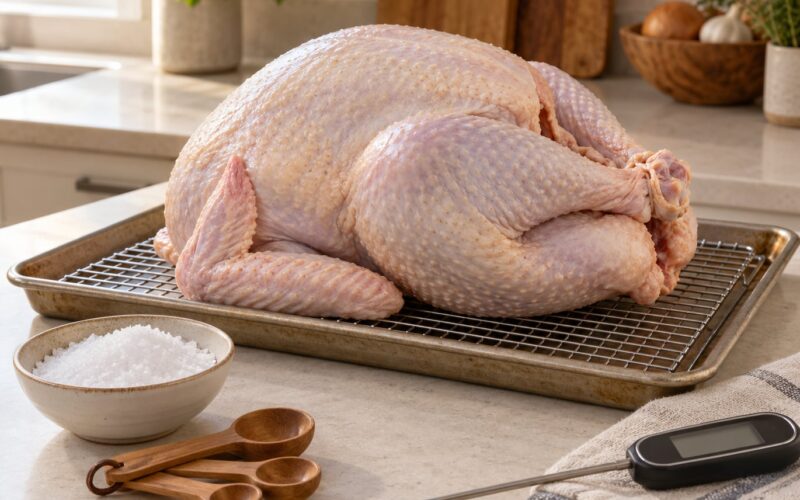
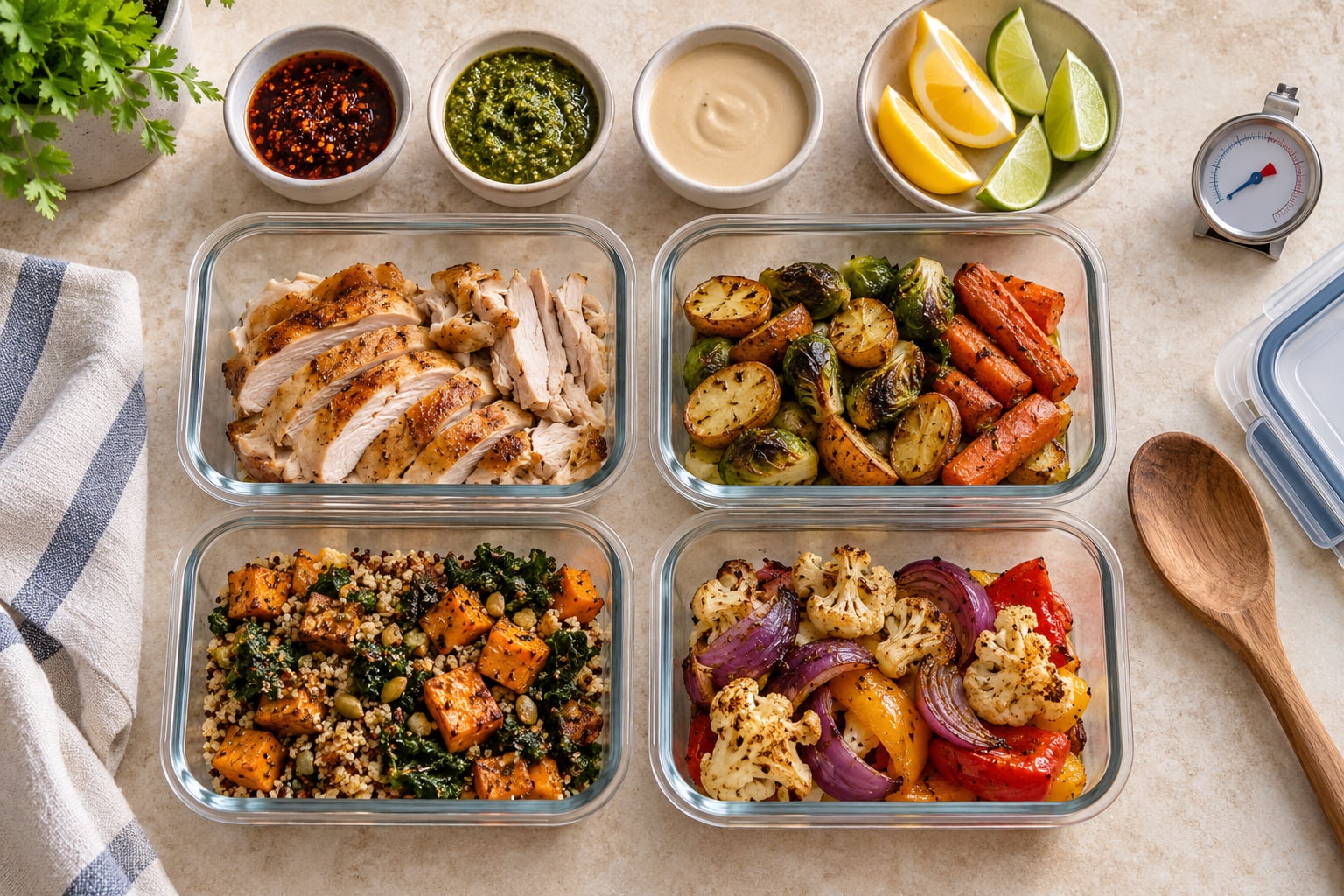
I do this every week with a roast chicken, and the thing that makes it work is boring discipline rather than inspiration. I decide before I cook how much is surplus and where it goes next. Cooked chicken gets portioned, dated and boxed before anyone sits down to eat, and by the time dinner is over I already know that half of it becomes soup and the rest gets crisped in a skillet with chili crisp and lime.
Table of Contents
- What You Need
- Step-by-Step
- 1. Cool and Store the Extra Food Promptly
- 2. Inventory Leftovers Before Planning the Next Meal
- 3. Change the Base Instead of Rewarming the Whole Dish
- 4. Add a New Sauce, Seasoning, or Crunch
- 5. Switch the Cooking Method
- 6. Reheat Only What You Will Eat
- Common Mistakes
- Simple Leftover-Planning Tips
- Frequently Asked Questions
- How long can I keep leftovers before using them?
- What is the easiest way to make leftovers taste different?
- Can I freeze cooked chicken, rice, or roasted vegetables?
- Is it safe to reheat leftovers more than once?
- Which leftovers should not be reheated or refrozen?
- Conclusion
What You Need
None of this needs special equipment, but a few habits do the work for you.
- Planned leftovers. Decide what comes off the plate before you serve it. Surplus you did not plan for is surplus you will bin.
- Shallow airtight containers that are roughly two inches deep. Deep tubs cool too slowly in the middle.
- A marker or masking tape for labels. Write the food and the date; food without a date is food nobody trusts on day four.
- A refrigerator thermometer so you are not guessing at the temperature. Keep it at or below 40°F (4°C).
- Pantry staples that make any leftover look deliberate: canned tomatoes, broth, rice, eggs, breadcrumbs, curry paste, tahini, pesto, canned beans.
- Flavor-changing ingredients — something acidic, something fatty, something sharp and something crunchy. This is the group that actually stops the repeat feeling.
Step-by-Step
1. Cool and Store the Extra Food Promptly
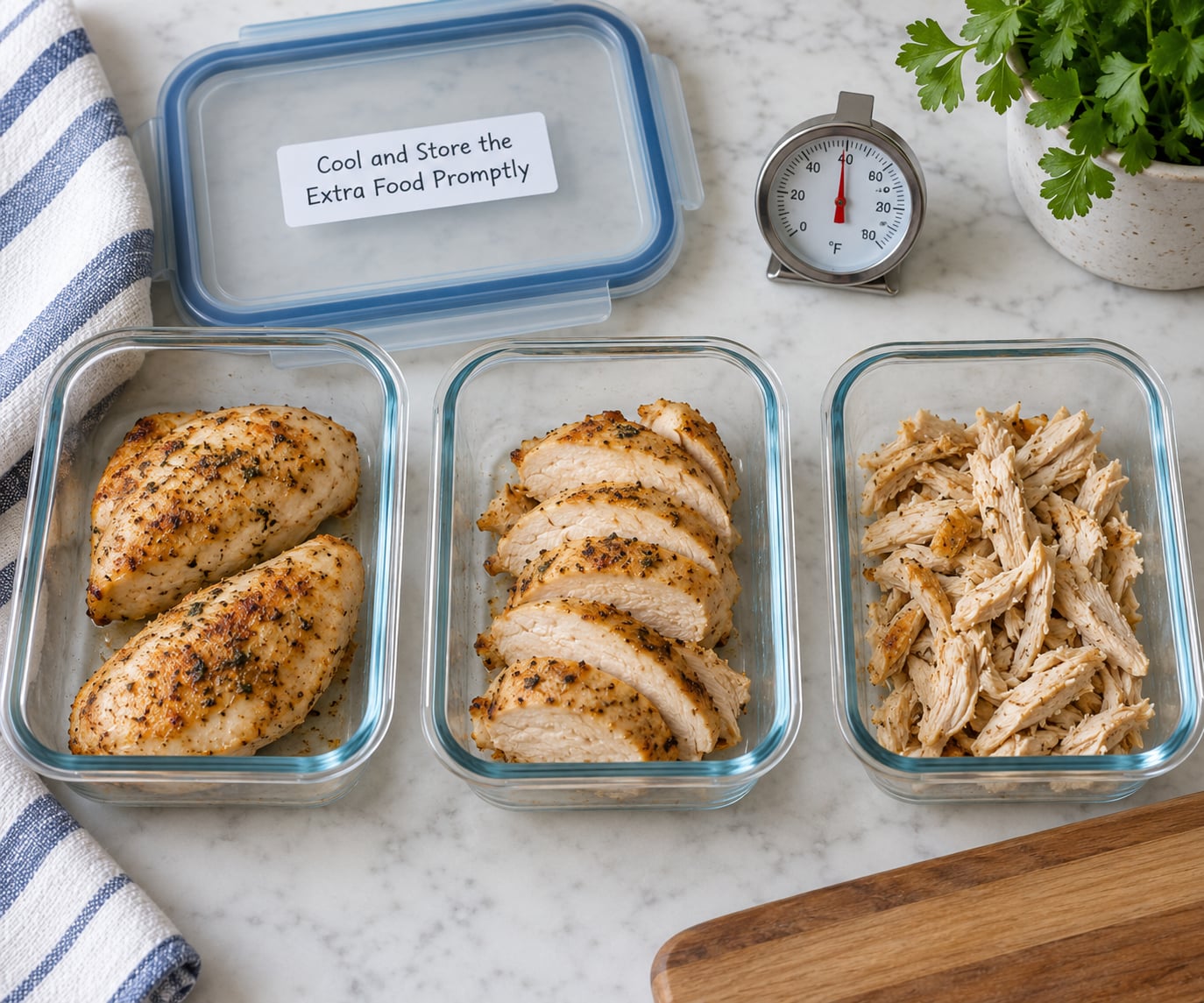
Split extra food into single-meal portions while it is still warm, then get it into the refrigerator within two hours. If you are serving a big crowd and two hours is not enough, divide the batch into shallow containers so the middle cools fast.
Use airtight containers, label each one with the food and today’s date, and set the refrigerator to 40°F (4°C) or below. Cook food to the USDA safe minimum internal temperature before it goes anywhere near a container: 165°F (74°C) for poultry, 160°F (71°C) for ground meat, and 145°F (63°C) for whole cuts and fish.
The realistic window is three to four days in the refrigerator for cooked meat, poultry, fish and deli meat. Past that, the quality falls off long before the food becomes dangerous, and that is when most people start taking chances.
2. Inventory Leftovers Before Planning the Next Meal
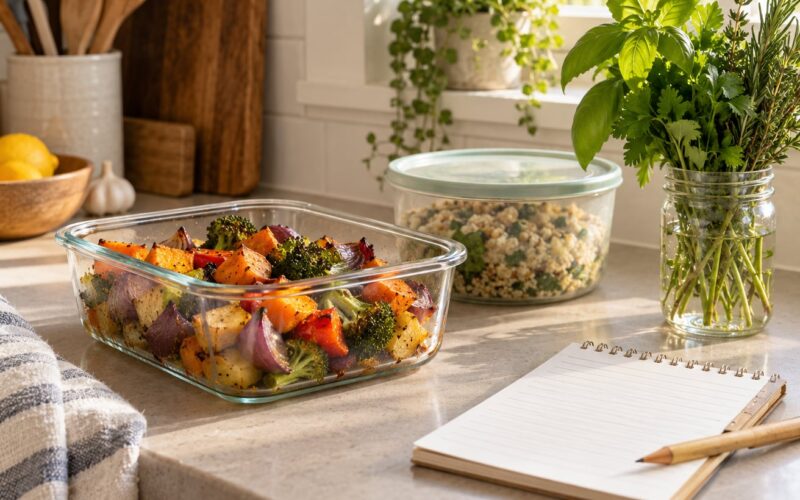
Open the refrigerator first and read the labels. Take the oldest containers out first, and group them by where they are going rather than by what they came from. Two roast vegetables from Sunday and a half-container of cooked rice both belong in the same soup.
Some things to know before you decide:
- Still fresh: looks and smells like it did when you cooked it, with no slime, discoloration or off smell.
- Freezes well: cooked meat, poultry, rice, cooked vegetables, soups without dairy, curries, cooked beans, bread, and hard cheeses grated.
- Freezes badly: dressed salad, cucumbers, tomatoes, cooked leafy greens, raw onion, eggs in shell, mayonnaise-based salads, and anything with a creamy sauce.
- Bin it: anything with mold, a sour or ammonia smell, a slimy texture, or an unusual color. Small amounts of mold in soft food mean the whole container goes.
Write the intended dish on a second piece of tape once the food is in the container. A box of chicken labeled “fried rice, Tuesday” gets used; the same box labeled “chicken” usually goes to the bin on Thursday.
3. Change the Base Instead of Rewarming the Whole Dish
This is the single most useful move for anyone searching how to use leftovers without eating the same meal twice. Keeping the protein and replacing the foundation creates a different dish, not a repeat.
- Roasted vegetables become soup with broth, or a topping over toast with goat cheese and a hot drizzle of honey.
- Rice gets spooned into lettuce cups with a chunky salsa, or becomes fried rice with egg and soy. It also works as a binder in a leftover-vegetable frittata.
- Chicken fills tortillas with avocado and pickled onion, sits on a salad with a sharp dressing, or goes on toast under melted cheese.
- Ground meat becomes nachos with pickled jalapenos, stuffed peppers, or the meat layer of a shepherd’s pie with cold mash on top.
- Fish goes into tacos with a cabbage slaw and lime, or breaks up into a salad with cucumber and dill.
- Beans get mashed with olive oil and lemon for toast, folded into an omelet, or fried until crisp and salted.
4. Add a New Sauce, Seasoning, or Crunch
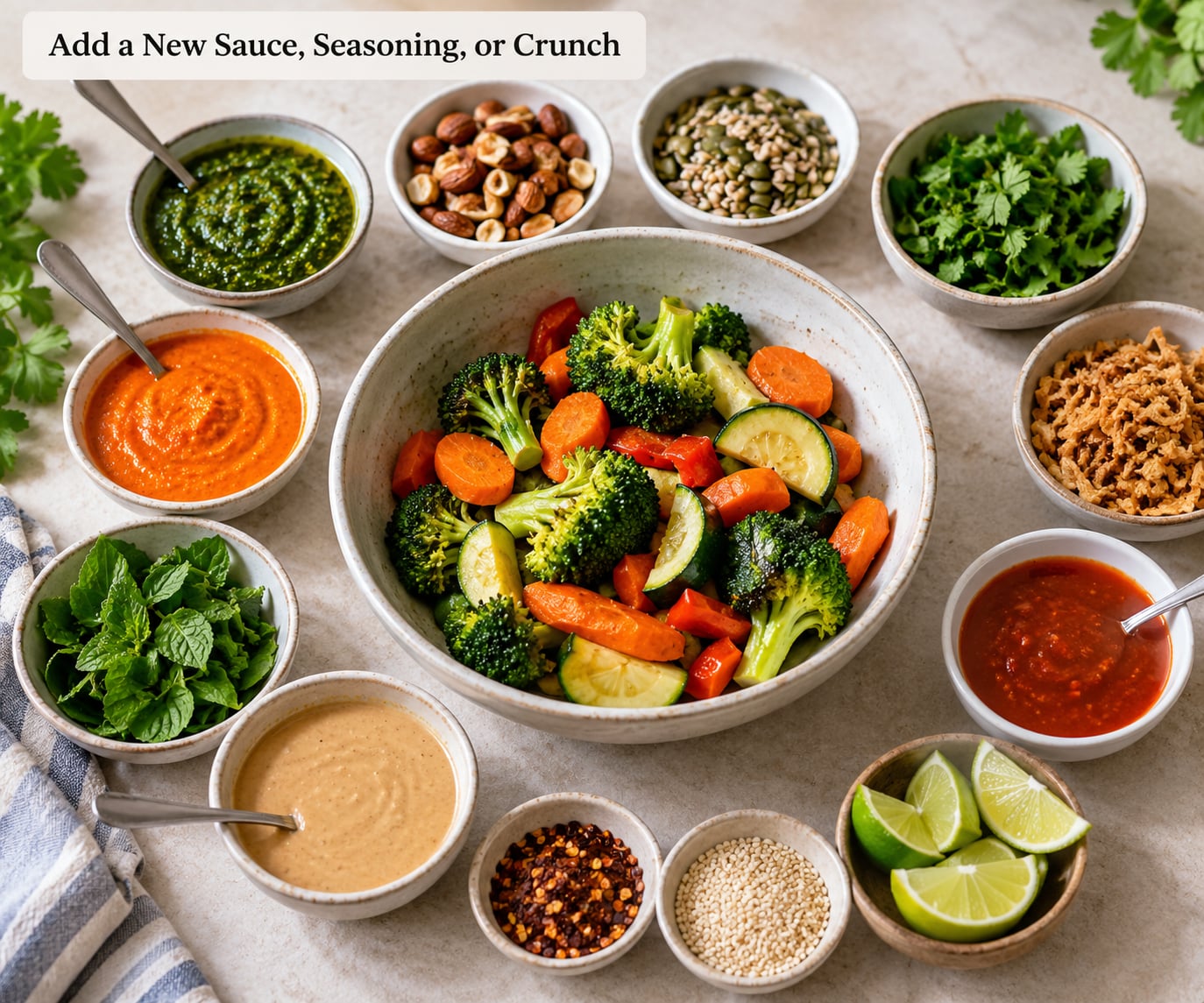
A reheated meal tastes flat mostly because it has lost its fresh top note. Acid and contrast put it back, and contrast is what your brain registers as a different dish.
- Chili crisp and lime on plain chicken or rice.
- Pesto and halved tomatoes over roasted vegetables or a grain bowl.
- Curry paste and coconut milk turned into a quick curry with any cooked meat or vegetable.
- Barbecue sauce and chopped pickles on leftover pulled pork or ground beef.
- Tahini, lemon and herbs loosened with a spoon of water, drizzled over anything.
- Crunch: toasted nuts, seeds, fried onions, crispy breadcrumbs or a spoon of sour cream mixed with chopped pickles.
Add the sauce and the crunch after reheating, not before. Anything that needs to stay crisp will go soft in a microwave, and dried herbs lose their smell within minutes of coming out of the heat.
5. Switch the Cooking Method
Four methods cover almost any leftover, and each one produces a different result from a plain reheat.
- Crisp it in a skillet. A thin layer of oil, medium heat, leave it alone for a few minutes before turning. This works for leftover chicken, potatoes and cooked vegetables.
- Bake it until it browns. Spread on a tray under the broiler for the last three or four minutes. Watch it closely; the tray gets hot enough to scorch herbs and cheese.
- Stir it into eggs. Frittata, omelet or a breakfast hash. Eggs are the most forgiving binder because they supply moisture, protein and structure in one go.
- Heat it into a bubbling casserole. Leftovers under a top of mash, cheese or breadcrumbs, baked until it bubbles and browns. Casseroles also reheat better than most leftovers, which matters if you are cooking for two.
Match the method to the food. Fish and delicate leafy greens want gentle heat and a splash of liquid; rice, potatoes and shredded meat want high heat and a dry pan or a hot tray.
6. Reheat Only What You Will Eat
Reheating the whole container and putting the untouched half back in the refrigerator is how leftovers go bad. Heat only the portion on your plate, and keep the rest cold and covered.
Bring reheated poultry, ground meat and fish to 165°F (74°C) in the centre of the thickest piece. Stir or rotate food halfway through for even heating, cover food loosely in the microwave so steam does not make the edges rubbery, and use the microwave only if the container is labelled microwave-safe. Then check that any portion has not been standing out longer than two hours before you eat it or chill it again.
Common Mistakes
- Reheating the same batch over and over. Fix: portion what you will not eat tonight into separate containers before the first reheat.
- Storing one deep tub. Fix: divide into shallow containers no more than about two inches deep so the middle cools quickly.
- Expecting a spoonful of mustard to change everything. Condiments do not fix a dish that is structurally the same dish. Fix: change the base or the cooking method, then season.
- Using leftovers that have gone off. Fix: bin on smell, texture or appearance rather than tasting to check.
- Skipping the date. Fix: label every container with the day you cooked it, not the day you plan to eat it.
- Pairing every leftover with the same flavor profile. If last night was saucy and tomato-based, make tonight’s version sharp and herb-led. Fix: alternate rich and bright across the week.
Simple Leftover-Planning Tips
- Cook slightly less than you need and accept one extra round of cooking instead of three rounds of reheating.
- Reserve ingredients before you start, so you know whether there is enough for the planned second meal.
- Freeze dated portions before they reach day four, laid flat on a tray first so they freeze quickly and stay separable.
- Keep a running list on the fridge of what needs using and what could pair with it.
- Change the seasoning before you change the recipe. New acid and new heat will fix a lot of “same meal” feelings on their own.
- Shop for the second meal when you shop for the first. It costs three extra items instead of a whole second dinner.
Frequently Asked Questions
How long can I keep leftovers before using them?
Most cooked leftovers stay good in the refrigerator for three to four days at or below 40°F (4°C). Get food refrigerated within two hours of cooking, cool it in shallow containers first, and label each one with the date you cooked it. Freeze anything you will not eat inside that window, and bin food that smells sour, looks discolored or has developed mold.
What is the easiest way to make leftovers taste different?
Add acid and crunch before anything else. A squeeze of lemon or a splash of vinegar wakes up food that reheated flat, and a crunchy topping restores the texture the microwave removed. Beyond that, change the cooking method, since crisping in a skillet or baking until browned produces a genuinely different result from reheating.
Can I freeze cooked chicken, rice, or roasted vegetables?
Yes, all three freeze well. Cool them fully, divide into single-meal portions, label with the date, and freeze flat on a tray before stacking so the pieces stay separate. Cooked rice should be cooled quickly and frozen rather than left to sit, and frozen vegetables do not need thawing, so they can go straight from freezer to pan.
Is it safe to reheat leftovers more than once?
Reheating food repeatedly is not recommended, because each cycle of cooling and reheating gives bacteria more chances to multiply. Reheat only the portion you are about to eat, bring it to 165°F (74°C) in the centre, and put the untouched remainder straight back in the refrigerator rather than leaving it in the pan.
Which leftovers should not be reheated or refrozen?
Skip freezing for dressed salad, cucumbers, raw tomatoes, cooked leafy greens, eggs still in the shell, and mayonnaise-based salads, since they turn watery or go unsafe once thawed. If reheating, be careful with reheated leafy greens and seafood, and watch for signs of spoilage before cooking rather than after.
Conclusion
Cooking once and eating twice without repeating yourself comes down to one habit: decide the second meal before you serve the first, then change one thing that matters. Keep the protein, swap the base. Keep the base, swap the sauce. Add acid and crunch after the heat, and use a different cooking method so the food lands somewhere else entirely.
That is how to use leftovers without eating the same meal twice: start tonight with the oldest container in your refrigerator. Check it, then pick a new base, a new sauce or a new pan technique before it comes out of the box. That single decision is the whole method, and it turns a leftover into a meal instead of a repeat.