How to cook ahead and reheat without ruining texture comes down to three controls: moisture, heat level and time. Cool the food fast in shallow containers, stop cooking it just short of its final texture, then reheat it with exactly the moisture that food needs. Covering traps steam for tender food, while leaving things uncovered in a hot oven or air fryer brings the crunch back.
Soggy pizza crust and dry, clumped rice almost always trace back to one of two mistakes: food that cooled slowly in a deep pot, or food blasted on full microwave power with no liquid added. The active work runs about 15 minutes per dish, and you need nothing more exotic than a thermometer and a couple of shallow containers.
Before the steps, these are the rules that do most of the work:
- Divide large batches into shallow containers as soon as they come off the heat.
- Refrigerate within two hours, and treat three to four days as the realistic fridge window.
- Keep crisp things apart from moist things until the moment of reheating.
- Add liquid only to foods that have lost moisture, and only as much as the food can absorb.
- Reheat in short bursts, checking between each one, rather than setting one long timer.
- Let the food stand a few minutes before serving so the juices redistribute.
Table of Contents
- What You Need
- Step-by-Step
- Step 1: Choose a Make-Ahead Cooking Method
- Step 2: Stop Before the Texture Is Fully Set
- Step 3: Cool and Store the Food Safely
- Step 4: Reheat for the Texture You Want
- Step 5: Check the Center and Finish With Rest Time
- Common Mistakes
- How to Fix Dry, Soggy, or Rubbery Leftovers
- Frequently Asked Questions
- How far in advance can I cook food for reheating?
- Can I make-ahead chicken and keep the skin crisp?
- What foods become soggy when reheated?
- Should I cover food when reheating it?
- How do I reheat leftovers without drying them out?
- Can I cook food ahead and freeze it for later?
- Conclusion: Start With the Texture You Want
What You Need
The equipment is modest, and each piece solves a specific problem.
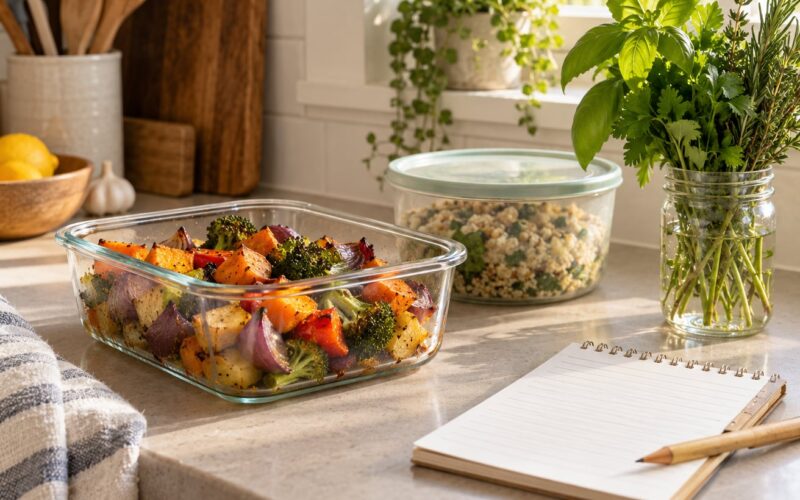
- Shallow glass or ceramic containers — the single biggest factor in how a make-ahead dish re-heats. A deep pot cools from the middle out and drops into the temperature danger zone while the center is still warm.
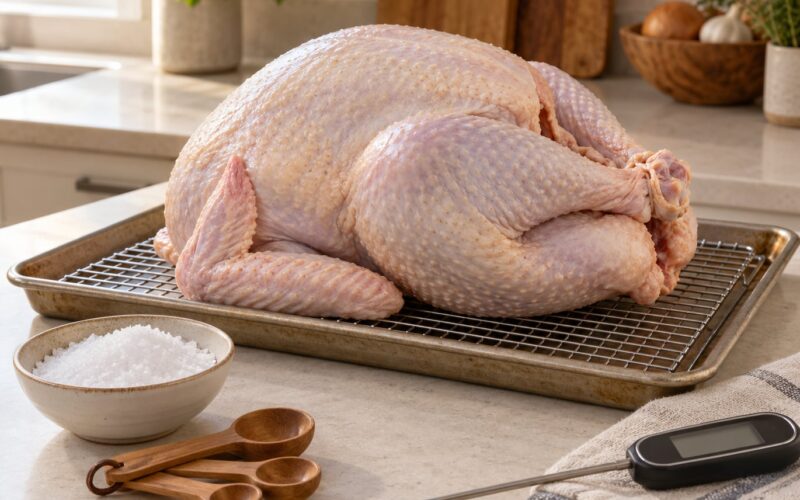
- A wire cooling rack over a tray — lifts roasted vegetables and meat off the pan base so air circulates underneath instead of steaming.
- An instant-read probe thermometer — the only reliable way to know when reheated food is hot all the way through instead of hot around the edges.
- An oven-safe dish with a lid, plus foil and parchment — for covered oven reheating and for crisping.
- A skillet, ideally cast iron — for proteins, bread and anything that needs browning.
- A microwave, a toaster oven or air fryer, and a steamer basket or a covered pot with a few inches of water — three different ways to apply steam, heat or dry heat.
- Staples that do the heavy lifting — a splash of broth, water or stock, a damp paper towel, butter, olive oil, and a lemon wedge for acid.
Which of these you reach for depends on three things: the food itself, the portion size, and whether you want it crisp or moist. A single serving of rice and a family-size tray of lasagne need different approaches even though both are leftovers.
Step-by-Step
Step 1: Choose a Make-Ahead Cooking Method
Some dishes lose nothing when they are finished a day early. Braises, roasts, soups, stews, curries, cooked grains and casseroles all improve or hold steady after a night in the fridge, because long, moist cooking already tenderizes everything it touches.
Other dishes depend on a final burst of high heat, and that burst cannot be stored. Roast chicken skin, breaded and fried coatings, seared fish, and anything finished under a broiler go leathery once they are cooked fully a day ahead. For those, finish 90 percent of the way on cooking day and let the oven or pan do the last ten percent right before serving.
Vegetables are the easiest group of all. Roasted broccoli, carrots and peppers hold up well because they are already dry and browned. Leafy greens and zucchini do not; they release water the moment they hit a hot surface.
Step 2: Stop Before the Texture Is Fully Set
This is the step nobody skips and everybody notices. Food pulled from the heat a little early keeps cooking from its residual heat during resting and reheating, so it lands on the plate at the texture you wanted.
- Pull chicken thighs when the thickest part reads about 160°F / 71°C, not 165°F / 74°C. Resting finishes the job.
- Blanch vegetables 30 to 60 seconds in boiling salted water, then shock them in ice water to lock in color.
- Cook pasta one to two minutes shy of al dente so reheating does not push it into mush.
- Cook rice until the grains are tender but still firm at the center, then let it steam dry, uncovered, off the heat.
Keep the USDA and FDA minimum internal temperatures in mind while you cook: 165°F / 74°C for poultry, 160°F / 71°C for ground meat, and 145°F / 63°C for whole cuts and fish. Those figures are about safety on cooking day. They are not a substitute for checking the center again on reheating day, which is where most under-heated leftovers come from.
Step 3: Cool and Store the Food Safely
Texture protection begins at the moment you take the pan off the heat.
- Divide and spread. Spoon the food into shallow containers no more than about two inches deep. A big pot of soup cools from the outside in and spends hours in the danger zone of 40°F to 140°F / 4°C to 60°C.
- Vent first, then seal. Leave the lid ajar or loosely cover with foil until the food stops steaming. A sealed container traps condensation that drips back onto the food and softens any crust.
- Separate the textures. Store crispy elements — croutons, fried onion, roasted nuts, breaded coatings — on their own or on top, and add them after reheating.
- Cool on a rack when you can. A wire rack moves more air than a flat counter, and it prevents the bottom from sitting in warm juices.
- Label and date. Most home cooks keep leftovers three to four days safely; treat anything older as a gamble and freeze it instead.
Freezing is fine for most cooked dishes at 0°F / -18°C or below. Portion into single servings rather than one large tub, press out the air, and expect a slight softening in breaded coatings and leafy greens. Two to three months is the window where quality holds up best.
Step 4: Reheat for the Texture You Want
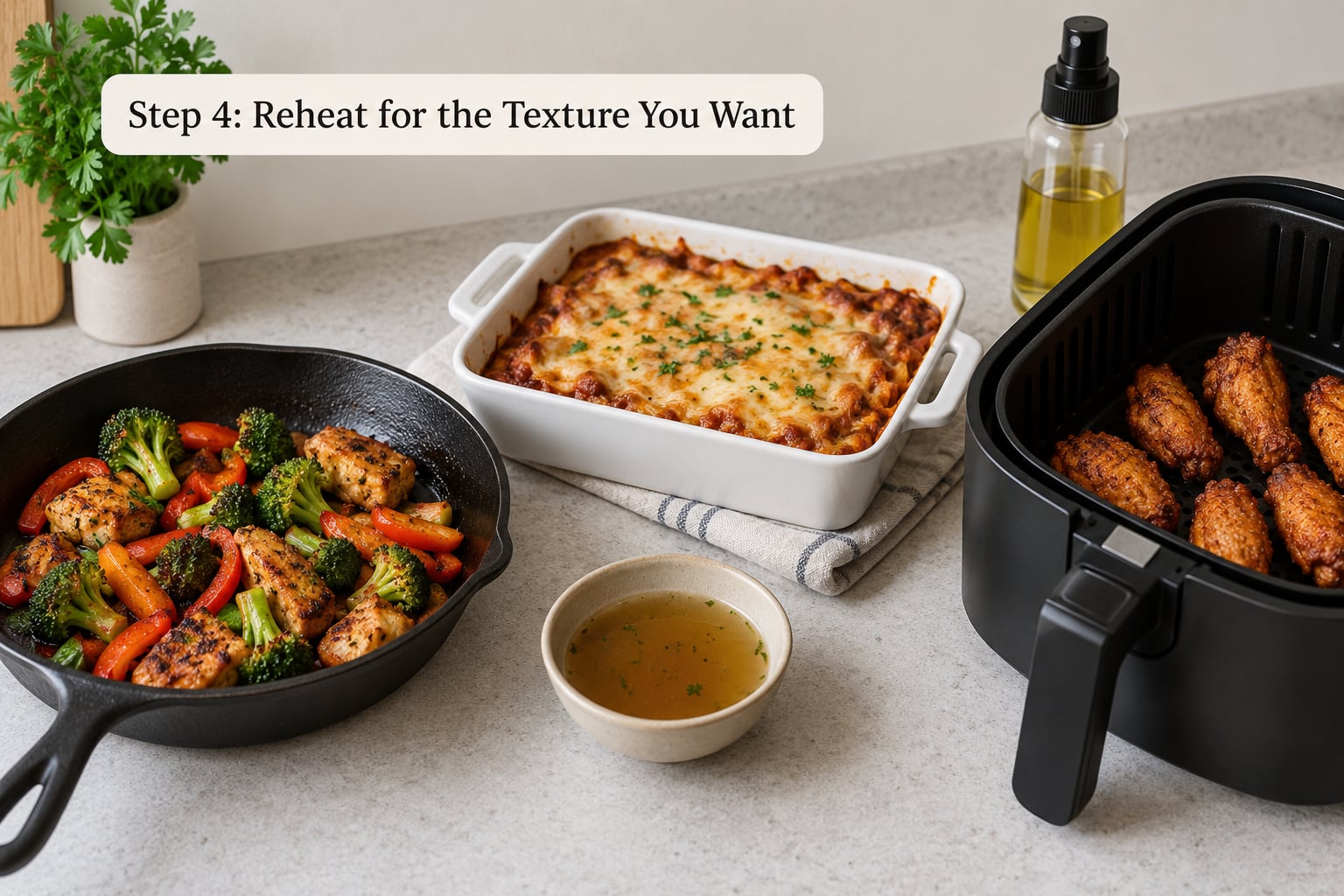
Match the method to the result you want rather than reaching for the microwave every time.
| Food | Best method | Heat | Time | Add liquid? |
|---|---|---|---|---|
| Chicken and other proteins | Skillet or oven, covered then uncovered | 350°F / 175°C | 15-20 min | A few tablespoons of broth |
| Rice | Splash of water, covered, microwave or skillet | Low or 50% power | 1-2 min | 1-2 teaspoons of water |
| Pasta with sauce | Covered skillet with sauce and a splash of water | Medium-low | 5-8 min | Splash of water or broth |
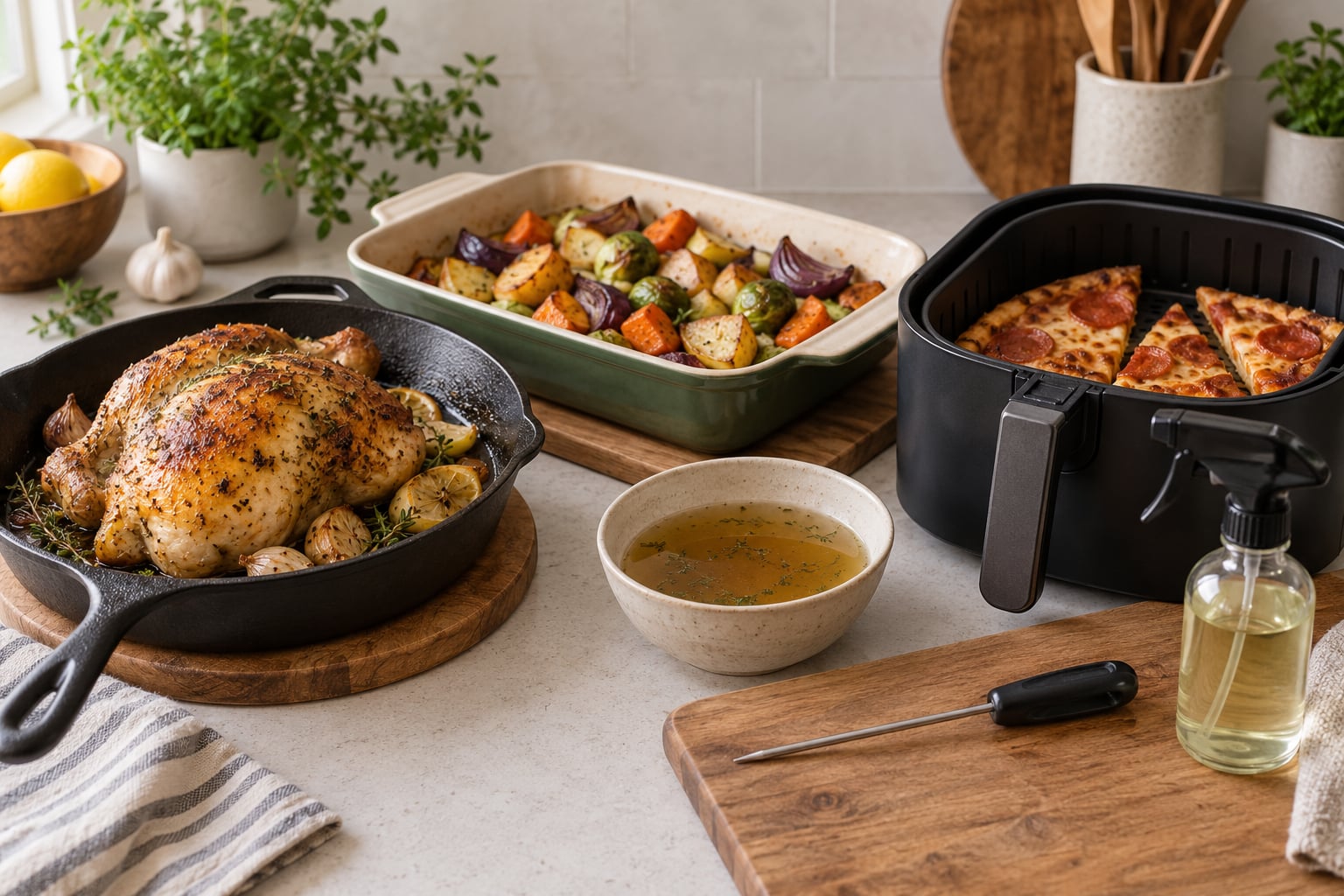
| Pizza | Oven or air fryer, uncovered | 375°F / 190°C | 8-10 min | No — a thin sprinkle of oil instead |
| Roasted vegetables | Oven or air fryer, uncovered, single layer | 400°F / 205°C | 10-12 min | No |
| Soups and stews | Stovetop or microwave, covered | Medium / 50% power | 8-10 min | Broth or water to loosen |
| Bread and breaded items | Skillet or toaster oven | Medium / 350°F | 4-6 min | Butter or oil in the pan |
| Casseroles and lasagne | Oven, covered, then uncovered | 350°F / 175°C | 25-30 min | A little broth in the dish |
For protein, a skillet over medium heat with a splash of broth does the best work. Bring it to a simmer, turn the pieces once, then take the pan off the heat and let it sit covered for five minutes. A microwave run at 50 percent power, stirred every minute, is the fallback; full power is what turns chicken stringy.
For grains and sauces, moisture is the whole game. A tablespoon of water dropped into dry rice and covered for a minute at 50 percent power steams the grains back to soft. Pasta reheats in its sauce with a splash of water in a covered skillet, which keeps it from drying into the container. An ice cube does the same job if you have no liquid to spare.
For anything that should be crisp, dry heat wins. No covering, a single layer with space between the pieces, and a hot oven or air fryer. A sheet pan crowded with vegetables steams them instead of browning them, so use two pans rather than one.
And for steamed vegetables that have gone flat, steam is the restoration. Put a few inches of water in a pot, set the food in a glass container above the water, cover, and give it five minutes.
Step 5: Check the Center and Finish With Rest Time
Push the thermometer into the thickest part, not the edge, and heat only until the center reaches 165°F / 74°C for a mixed dish or leftovers. Thick layered dishes heat unevenly, so cut into the center first and check there.
Then stop. Let proteins stand five minutes under a loose foil tent so the juices settle back into the meat instead of running onto the plate. Give rice and casseroles about three minutes, and serve vegetables straight away, while they still have some bite.
Common Mistakes
- Reheating too early in the cooking schedule. Cooked food sitting out for hours loses moisture before it ever reaches the fridge. Reheat in the last ten minutes.
- Microwaving everything. Uneven energy dries the edges and leaves cold spots in the middle. Use it for speed only, at reduced power, with a stir between bursts.
- Crowding the tray. Touching pieces steam each other. Spread food in a single layer and rotate the pan halfway through.
- Reheating sauces and toppings with the main dish. Cheese, gravy and croutons go rubbery or soft. Add them in the final few minutes, or after.
- Stacking food in a pile. A heaped container heats the bottom and leaves the top cold. Portion into a single layer or use two smaller dishes.
- Adding liquid everywhere. A splash helps dry food and ruins crisp food. Match the liquid to the moisture the dish has lost.
- Covering food that needs a crust. Foil traps steam and softens what should be browned. Cover to warm, then uncover to crisp.
- Cooling food in a deep pot. The center stays warm too long. Portion into shallow containers straight away.
How to Fix Dry, Soggy, or Rubbery Leftovers
Almost nothing is beyond repair. Dry rice gets a teaspoon of water and a minute of covered steaming. Dry chicken goes into a hot skillet with a tablespoon of broth, cooked uncovered for three minutes until the surface tightens. Mushy greens get five minutes over steam, then a flash in a hot pan. Soggy pizza crust gets ten minutes in a hot oven with the lid off. Rubbery cheese or over-microwaved meat cannot be softened, but it can be improved with butter, stock or a fresh sauce, then hidden under new toppings.
If reheated food still refuses to cooperate, stop reheating it a second time and eat it as-is. Twice-heated proteins are dry by definition.
Frequently Asked Questions
How far in advance can I cook food for reheating?
Most cooked dishes hold their quality for three to four days in the fridge, and two to three months in a 0°F / -18°C freezer. Braises, soups, curries and cooked grains are fine that far ahead. Roast chicken, seared fish and breaded items are best cooked one day ahead at most, because their crust depends on a final blast of heat you cannot store. Portion everything into single servings so you only reheat what you plan to eat.
Can I make-ahead chicken and keep the skin crisp?
Yes, with one adjustment: cook the chicken only to about 160°F / 71°C, then refrigerate it uncovered on a rack so the skin dries out. Cover it loosely for the first few hours of storage, and never let it sit submerged in sauce. On reheating day, put it skin-side down in a cold skillet, add a splash of broth, cover for 10 minutes, then uncover and finish at 375°F / 190°C or in the air fryer until the skin crisps.
What foods become soggy when reheated?
Thin-crisped items are the usual culprits: pizza crust, fried chicken, breaded vegetables, roasted potatoes and crackers. Their moisture turns to steam inside a covered dish, and the coating never dries out enough to crisp again. Leafy greens and zucchini release their own water and go watery in any method. Reheat all of these uncovered in a hot oven or air fryer, in a single layer, with a light spray of oil on anything that needs browning.
Should I cover food when reheating it?
Cover it when you want tender results: chicken, rice, pasta, soups, casseroles and any dish that has already lost moisture. The cover traps steam so the food softens instead of drying out. Leave it uncovered when you want a crust or browning: pizza, roasted vegetables, fried and breaded items, and anything finished under a broiler. A loose foil tent works well for a two-stage reheat, covered first and then uncovered to crisp.
How do I reheat leftovers without drying them out?
Add moisture only where moisture has been lost, and use moderate heat rather than maximum. For dry rice, drop in a teaspoon of water and microwave covered at 50 percent power for a minute. For chicken or other meat, a few tablespoons of broth in a covered skillet over medium heat restores moisture without overcooking. Stir or turn the food partway through, heat only until hot in the center, and let it stand a few minutes before serving.
Can I cook food ahead and freeze it for later?
Yes. Most cooked dishes freeze well at 0°F / -18°C or below, including soups, stews, curries, casseroles, cooked grains, sauces and roasts. Cool the food completely first, portion into shallow airtight containers or freezer bags, press out the air, label with the date, and leave a little room for expansion. Breaded coatings, leafy greens and dairy-heavy sauces soften most, so add those fresh. Thaw in the fridge overnight, not on the counter.
Conclusion: Start With the Texture You Want
Learning how to cook ahead and reheat without ruining texture comes down to three decisions made in order: pick the method that matches the food, cool and store it fast and shallow, then reheat with the right amount of heat and moisture. Get those three right and reheated food stops tasting like leftovers.
Start with something forgiving. A pot of soup, a batch of rice, a tray of roasted vegetables or a whole roast chicken will teach you the cooling and reheating rhythm without much to lose. Once that feels routine, add the crispier dishes, which need more attention but reward it.