You can absolutely learn how to cook dried beans without soaking. Sort and rinse the beans, cover them with 2 to 3 inches of fresh water, bring the pot to a boil, then drop the heat to a gentle simmer and cook them 90 minutes to 3 hours until tender. A pressure cooker gets the same beans done in 25 to 40 minutes.
The soak is a shortcut, not a requirement. Skipping it means the beans soften during cooking instead of overnight, so unsoaked beans take roughly 1.5 to 3 hours on the stove, 5 to 6 hours in a slow cooker, or 25 to 40 minutes in a pressure cooker.
The trade-off is texture. Soaked beans cook more evenly, and no-soak beans sometimes finish with a mix of creamy and still-firm ones in the same pot. Partially covering the pot and stirring more often smooths that out.
Table of Contents
- What You Need
- Pick your bean variety before you start
- Choose a pot with a lid
- Aromatics and the seasoning rule
- Two optional extras
- Step-by-Step: How to Cook Dried Beans Without Soaking
- 1. Sort and Rinse the Dried Beans
- 2. Add the Beans and Fresh Water
- 3. Bring the Beans to a Simmer
- 4. Cook Until Tender: How to Cook Dried Beans Without Soaking by Variety
- 5. Season, Drain, and Store the Beans
- Common Mistakes
- The beans never soften
- The broth turns muddy
- Tough skins and uneven texture
- The pot boils over and the bottom scorches
- Too much salt or a ruined pot of beans
- Gas and bloating when you cannot soak
- Frequently Asked Questions
- How long does it take to cook dried beans without soaking?
- Can I add salt before the beans are cooked?
- Why are my no-soak beans still hard?
- Should I keep the lid on while cooking dried beans?
- How much water should I use for dried beans?
- How do I store cooked beans that were cooked without soaking?
- Conclusion
What You Need
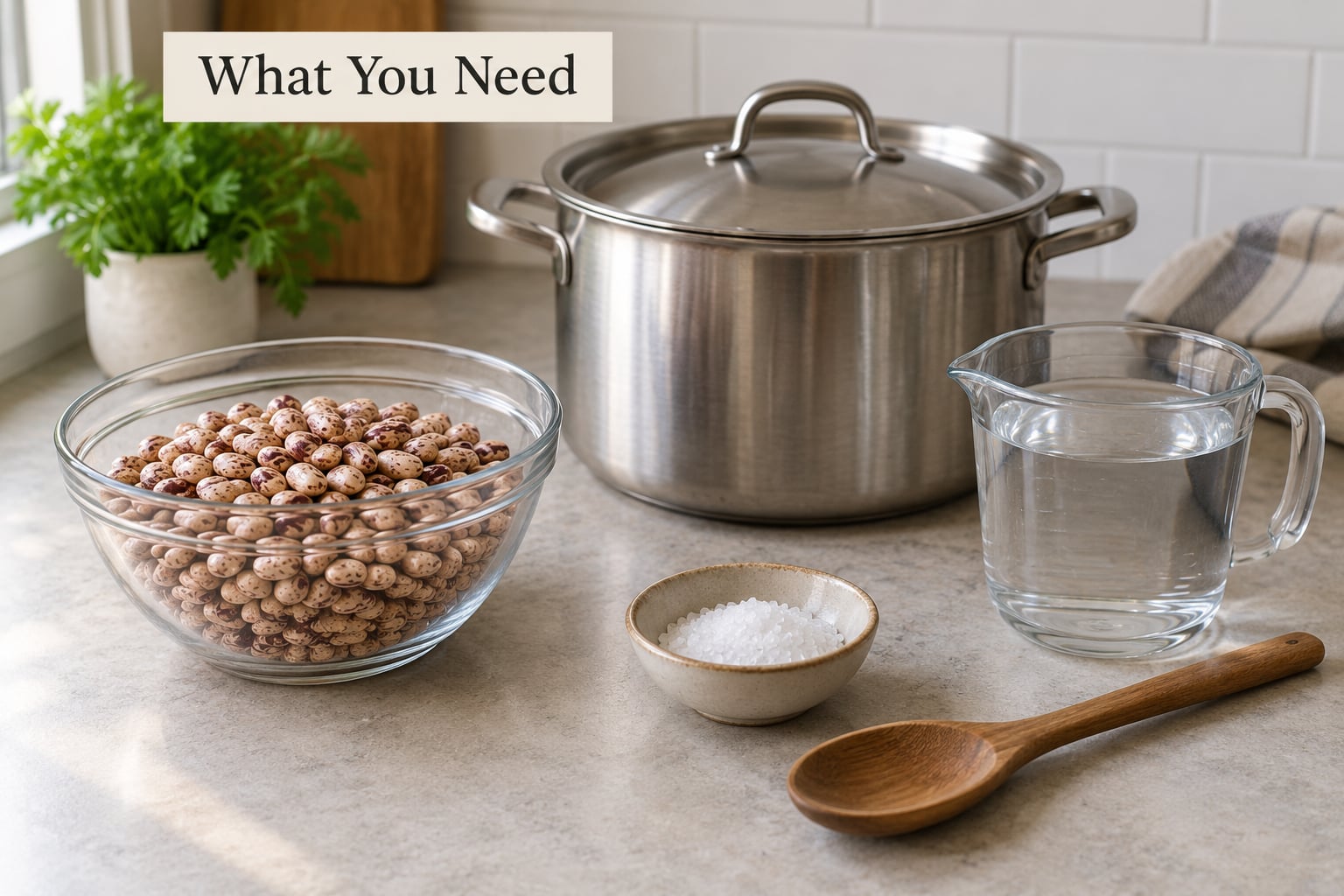
Dried beans. Water. A pot. That is genuinely the whole list, but a few small choices make the difference between good beans and great ones.
Pick your bean variety before you start
Smaller beans like black beans and navy beans cook faster and stay creamier. Larger ones like cannellini, lima and kidney beans hold their shape better and want a longer simmer. Chickpeas and adzuki are in between.
Buy beans that are less than a year old if you can check the date. Older beans cook unevenly no matter how long you give them, and no soak will rescue them.
Choose a pot with a lid
A heavy-bottomed pot about 8 inches deep gives the beans room to swell without boiling over. The lid matters more than most recipes admit: a partially offset lid holds heat while letting steam escape, which keeps the simmer steady instead of collapsing to a chill.
Use broth instead of water if you want flavor in the beans themselves rather than just on top. Plain water with aromatics works just as well and lets you season later.
Aromatics and the seasoning rule
Onion halves, a bay leaf, smashed garlic, dried chiles and a few peppercorns go in at the start with no problem. Hold back anything acidic, including tomatoes, vinegar, lemon juice and molasses, until the beans are fully tender. Acid slows the softening of the starch and keeps beans tough.
Salt is different from acid. Add 1 to 2 teaspoons of kosher salt once the beans have cooked about two-thirds of the way, so the seasoning goes into the bean rather than sitting in the water.
Two optional extras
A small pinch of baking soda in the cooking water softens skins and speeds things up, but use less than you think and taste as you go. A strip of kombu or a small piece of dried kelp added at the start is a common home-cook trick for reducing the gas beans can cause, since you cannot soak your way out of it this time.
Step-by-Step: How to Cook Dried Beans Without Soaking
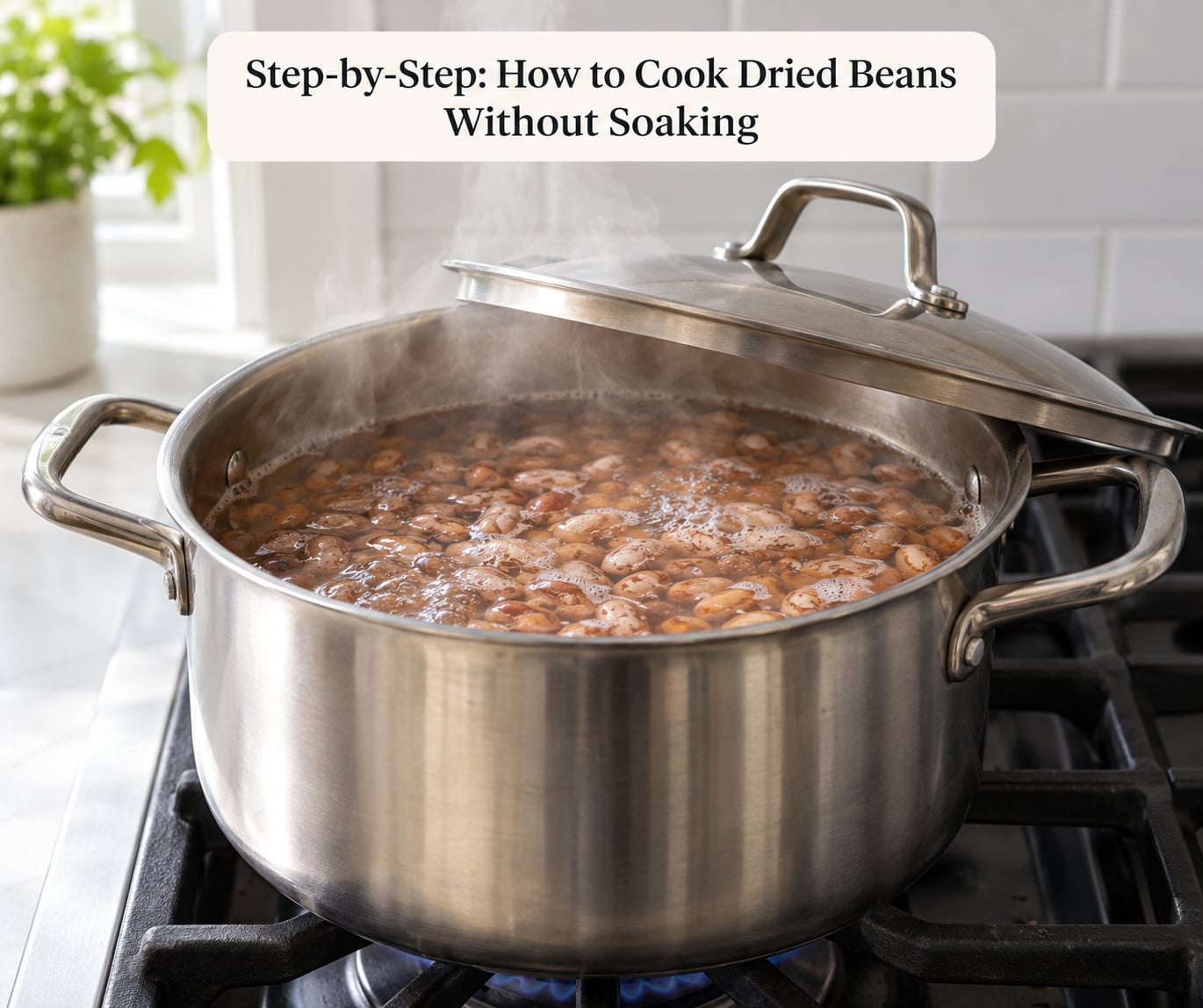
1. Sort and Rinse the Dried Beans
Spread the beans on a rimmed baking sheet or a folded towel and pick through them. Most bags contain a few stones, bits of stem, and beans with insect damage.
Throw out anything shriveled, broken, pale with a hole in it, or dusty white. Those beans will not soften no matter how long you cook them. Then rinse the rest in a colander under cold running water for a minute or two, until the water runs clear.
2. Add the Beans and Fresh Water
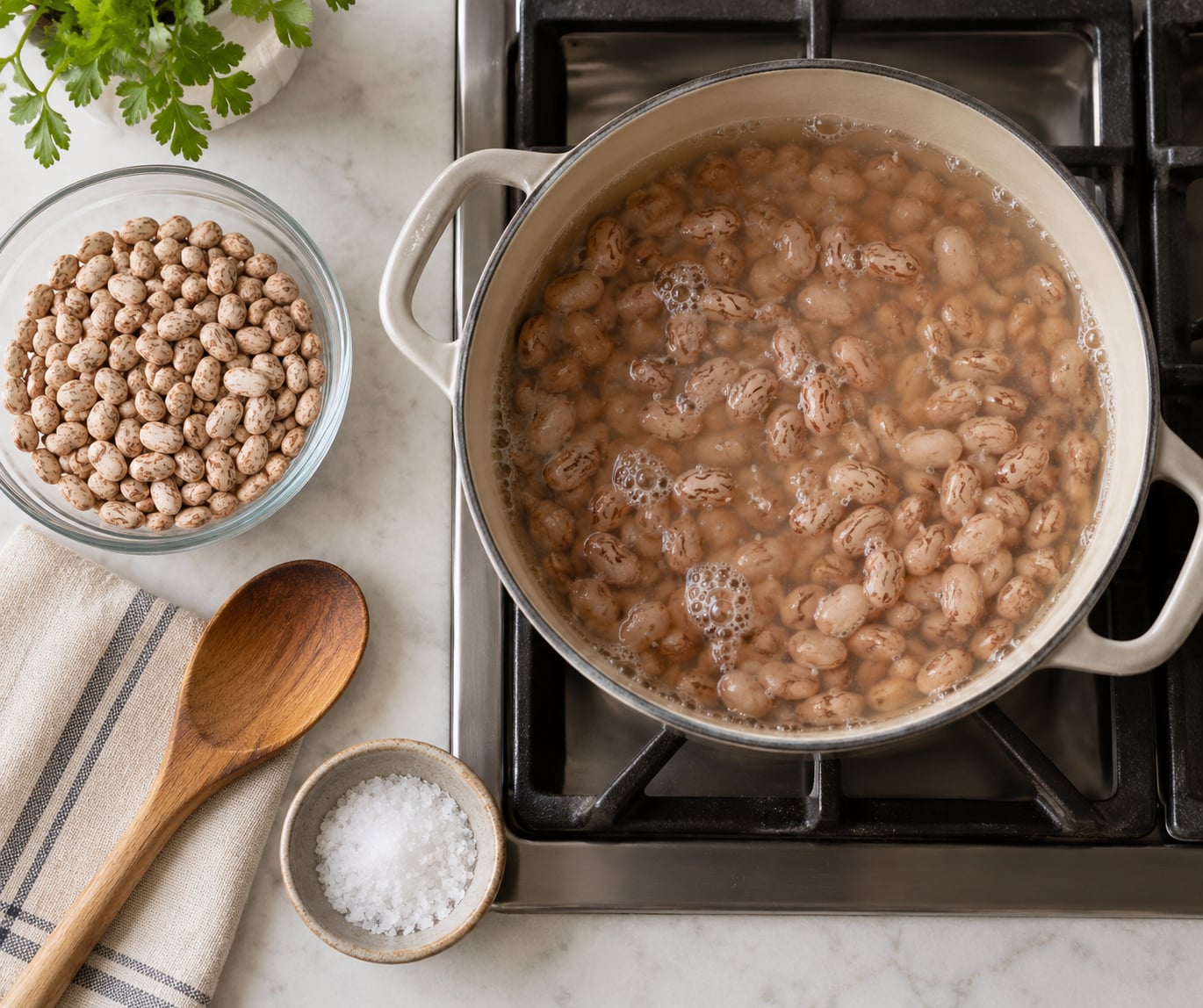
Put the rinsed beans in the pot and add enough cold water to cover them by 2 to 3 inches. For most people that lands somewhere around 8 cups of water per pound of beans, or roughly 3 cups for every cup of dried beans.
The water has to be able to cover the beans even after they swell, so err toward the deeper end. You can always top up with hot water mid-cook, and adding cold water drops the temperature right when you need it steady.
This is the step people assume needs a soak. It does not. The only thing the soak did was start the hydration, and a pot of simmering water finishes that job. No soaking required.
3. Bring the Beans to a Simmer
Set the pot over high heat and bring it to a rolling boil, uncovered. Once it boils, stir so nothing is sticking to the bottom, then reduce the heat to the lowest setting that still keeps a steady bubble.
Stir again every 15 to 20 minutes for the first hour, then more often. A violent boil crushes the skins and leaves some beans chalky in the middle, so a lazy simmer is doing more for you than high heat is.
Check the water level each time you stir and top it up with hot water if the beans are peeking out. They drink a lot.
4. Cook Until Tender: How to Cook Dried Beans Without Soaking by Variety
Start checking at the low end of the range below, then taste every 15 minutes. Age and bean size move these numbers more than anything else, so treat them as a starting point rather than a schedule.
| Bean variety | Stovetop, no soak | Pressure cooker, high pressure | Slow cooker |
|---|---|---|---|
| Black beans | 90-120 min | 20-25 min | 5-6 hr |
| Pinto beans | 90-120 min | 25-30 min | 5-6 hr |
| Kidney beans | 100-130 min | 25-30 min | 6 hr |
| Navy beans | 90-120 min | 25-30 min | 5-6 hr |
| Great northern beans | 90-120 min | 25-30 min | 5-6 hr |
| Cannellini beans | 90-130 min | 35-40 min | 6 hr |
| Chickpeas | 100-140 min | 35-40 min | 6-7 hr |
| Lima beans | 100-130 min | 30-35 min | 6 hr |
| Adzuki beans | 90-120 min | 25-30 min | 5-6 hr |
| Tepary beans | 120-150 min | 30-35 min | 6-7 hr |
Pressure cooker beans need about 8 cups of water per pound, and a natural release of 15 to 20 minutes after the pressure time is part of the cooking. Slow cookers work from dry with no changes at all, just 8 cups of water and low heat for 5 to 7 hours.
Test doneness the way Samin Nosrat described it: take five beans from different spots in the pot, cool them, and eat them in a row. All five need to be fully cooked with no crunch. If one is still firm, give the pot 20 more minutes and test again.
The second test is faster. Press one bean against the side of the pot with the back of a spoon. Tender beans mash easily, while underdone ones slide or split into a firm half. Taste the cooking liquid too, and if it is thin and starchy, cook a few minutes longer to thicken it naturally.
5. Season, Drain, and Store the Beans
Add your salt now, along with any acid you held back. Taste, adjust, and remember that broth-based cooking liquid carries plenty of salt on its own.
Drain the beans in a colander. Save a cup of the cooking liquid if you are making soup or chili, since the starch in it thickens the finished dish.
Cool leftovers on the counter for no more than two hours, then move them into shallow containers and refrigerate. Cooked beans keep 3 to 4 days in the fridge. For longer storage, freeze them in portions with a little cooking liquid, where they hold their texture for 2 to 3 months.
Canning dry beans is a different job with its own safety rules, including a tested processing time for your altitude, so follow a current USDA or extension service procedure for that rather than improvising.
Common Mistakes
The beans never soften
Four things cause this, and it is usually a combination. Beans that are more than a year old will not soften no matter what you do. Hard or alkaline water makes it worse, so if your tap water is very hard, use filtered water. Salting only at the very end or not at all can stiffen the skins, which is why salt goes in partway through. And a hard rolling boil cooks the outside while the center stays chalky, so turn the heat down.
The broth turns muddy
Stir less often than you think, use a partially covered pot so the liquid reduces without splashing, and keep the heat low. Long boiling agitation is what turns clear cooking water grey. If you need the beans separated for a salad, drain them and spread them on a tray to cool rather than rinsing them off.
Tough skins and uneven texture
That is the honest trade-off of skipping the soak. A pinch of baking soda softens skins, and older beans soften faster than new ones. If you can spare the time next time, a hot soak of an hour or an overnight soak still gives you the most even result, so it is worth it for beans you are serving to people rather than folding into chili.
The pot boils over and the bottom scorches
Use a taller pot, fill it no more than a third full of beans, and set the lid slightly ajar. Do not use a very large burner on a small pot, since the pot catches the heat before the liquid can respond.
Too much salt or a ruined pot of beans
Season in layers instead of dumping in a heavy pinch. If you oversalted, serve the beans in a dish where salt is not the main flavor, such as a bean salad with vinaigrette, rather than trying to dilute them with more water.
Gas and bloating when you cannot soak
The soak exists partly because soaking draws out some of the sugars that cause gas, so skipping it means that option is off the table. Add kombu or dried kelp to the cooking water, start with smaller servings, and eat beans more often rather than less, since your body adjusts to regular servings faster than to an occasional large one. Red lentils cook soft without soaking and are much gentler if beans are a problem for you.
Frequently Asked Questions
How long does it take to cook dried beans without soaking?
Unsoaked beans take about 90 minutes to 3 hours on the stovetop, depending on the variety. Black, pinto and navy beans sit near the 90 to 120 minute end, while chickpeas, lima and tepary beans run 100 to 150 minutes. A pressure cooker cuts that to 25 to 40 minutes and a slow cooker to 5 to 7 hours.
Can I add salt before the beans are cooked?
You can, and the beans stay tender, but most cooks salt about two-thirds of the way through so the flavor moves into the bean instead of sitting in the water. Hold back anything acidic until the beans are soft. Tomatoes, vinegar, lemon juice and molasses all slow the softening of the starch and will leave beans tough.
Why are my no-soak beans still hard?
Old beans, hard or alkaline water, no salt, and a hard rolling boil are the usual causes. Beans more than a year old rarely soften no matter how long you cook them. Lower the heat to a lazy simmer, keep the pot partly covered, and salt partway through. A small pinch of baking soda in the water helps skins soften.
Should I keep the lid on while cooking dried beans?
Leave the lid slightly ajar rather than fully on or fully off. A partly covered pot keeps the simmer steady and lets steam escape, which stops boil-overs and keeps the liquid from reducing into starch. If you have no lid, cook uncovered and stir more often to keep the temperature from dropping.
How much water should I use for dried beans?
Cover the beans by 2 to 3 inches after they are in the pot. That works out to roughly 3 cups of water per cup of dried beans, or about 8 cups per pound. Use enough that the beans stay submerged as they swell, and top up with hot water if they start peeking above the surface.
How do I store cooked beans that were cooked without soaking?
Cool them within two hours, then refrigerate in shallow containers for up to 3 to 4 days. For longer storage, freeze in single-meal portions with a bit of the cooking liquid, which keeps them from drying out, and use them within 2 to 3 months. Canned beans follow separate tested procedures and their own altitude adjustments.
Conclusion
Sort and rinse the beans, cover them by 2 to 3 inches of fresh water, bring to a boil and then settle into a lazy simmer with the lid ajar. Stir every 15 to 20 minutes, salt when they are two-thirds done, and test five beans in a row before draining. That is the whole method, and it works without a soak.